

Article content
Do you also find that during the day – especially in the afternoon – you feel tired, your work performance worsens and even your favorite pick-me-up – coffee – doesn’t help? Do you feel the need during the day to go lie down for at least a little while? Don’t hesitate and if you have the opportunity, do it! A simple nap can work wonders for our body and mind.
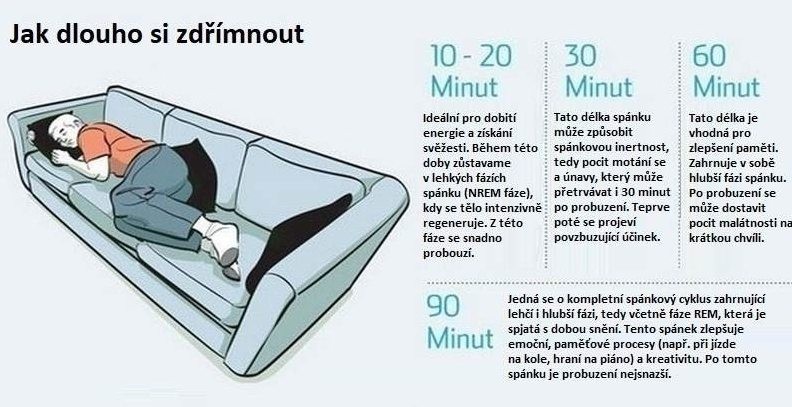
Length of daytime sleep and its effect on your body
10- 20 Minutes
Ideal for a quick energy boost and to gain freshness. The body remains in light sleep phases and regenerates intensively. You can wake up from this phase easily and feel rested after waking.

20- 30 Minutes
This nap duration is considered optimal for an active person. It has a pronounced stimulating effect, improves memory, attention and overall readiness to respond. It also consolidates memory traces, which is useful for students while studying. This nap duration can cause slight sleep inertia in some people – a feeling of dizziness and tiredness. It can last up to 30 minutes, but once this phase passes, the stimulating effect arrives.
60 Minutes
This length is good for improving memory functions.
You go into a deeper sleep phase, and on waking you may briefly feel tired and groggy. However, that quickly passes.
90 Minutes
This length reflects a complete sleep cycle with a deeper REM phase associated with dreaming. This sleep duration improves emotional and memory processes and creativity. After this amount of sleep you will find it easiest to wake up.
What can a short nap during the day (only 20-30 minutes) do for our body?
Better memory and attention
A short nap helps maximize your cognitive performance. Just a few minutes of rest and you can function actively without feeling tired. In addition, a short rest increases concentration and thus your work performance.
Good for your heart
Lack of sleep is very dangerous for our health – especially for the condition of our heart. A Harvard study showed that people who nap at least 3x a week during the day for at least 30 minutes have fewer heart-related health problems and better physical fitness.
Reduces stress, tension and anxiety
People who nap at least 20-30 minutes during the day are better able to cope with stress and do not experience bursts of anxiety and tension. Conversely, a recent study found that people who don’t have time for a short nap during the day are more stressed, nervous and suffer from anxiety more often. This state is reflected in their physical condition and more frequent health complications. This problem affects men more than women.
Helps you lose weight
When you feel tired, you intuitively reach for more calorie-dense foods that give you quick energy. The effect of such a quick boost is very short-lived and soon you’ll need another sweet or fatty food. However, if you nap for a while instead, you would recharge the needed energy and at the same time not feel the urge to reach for quick energy fixes.
Increases performance throughout the day
Short daytime sleep is also recommended by top athletes. In fact, scientific studies have confirmed that those who are used to napping during the day achieve better results in physical activities, have shorter reaction times and their performance curve during the day is stable without dips caused by fatigue. However, don’t overdo daytime sleep — 20 to a maximum of 40 minutes of daytime sleep is recommended.
Coffee will work better
If you want to increase the effect of your cup of coffee, then after you drink it take a nap for at least 15 minutes. Neuropsychological research has shown that a short rest can dramatically increase the stimulating effect of caffeine. After all, it’s worth a try.