
Article content
Approximately a year ago a reader, Zuzana, sent a tip to the uRecept.cz editorial office, in which she proudly showed her unique technique that she uses when growing cucumbers.
We tried it and were truly surprised how well it works. That is why we decided to share with you not only Zuzana’s but also other growing tips on how to increase cucumber yields even without chemicals and store-bought fertilizers.
Miracle fertilizer from hard bread
If you want a really good cucumber harvest, you need to give them proper nutrition. And an old familiar process — fermentation — can help with that.
Fill a bucket two-thirds full with bread crusts and pour water over them. Weigh down the soaked crusts with something, otherwise they will float when the bread starts to ferment. Place the bucket in a warm spot for one day. The resulting consistency is diluted with water at a ratio of 1:3 and used as a fertilizer with which we water newly planted cucumbers — it comes out to about half a liter per seedling. We then water from the start of flowering until the fruits are large.

Proven fertilizer for cucumbers, tomatoes, eggplant and other vegetables
“I swear by this old proven recipe — pour water over poultry manure and let it ferment. Although it smells strongly, it is a nutritional bomb for the harvest. After dilution the fertilizer is excellent for tomatoes, zucchini, pumpkins and other crops – Riedel 1:10.” Juraj S.
Nutrition and protection against pests and diseases in 1 step
The biggest problem when growing cucumbers is that during active fruiting they are attacked by fungal diseases and pests. Because cucumbers grow quickly, chemical spraying must not be done. For this reason it is recommended to work with organic harmless solutions. This is one of them.
We need:
- 500 ml whey
- 2 tbsp 10% ammonia
- 4 – 5 l room-temperature water
Procedure:
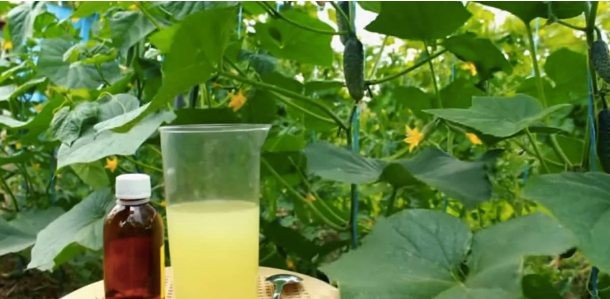
1. Mix the whey with the ammonia.
2. Pour the mixture into the water.
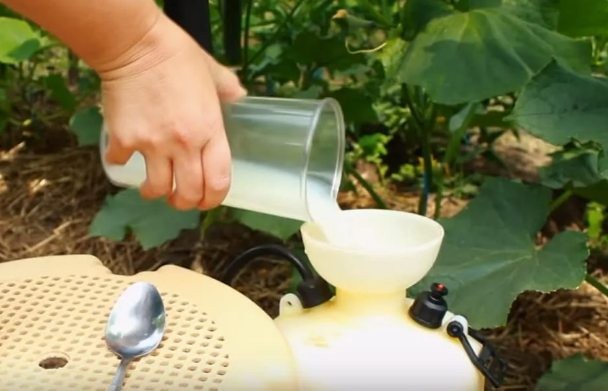
3. Treat the plants with the solution by spraying both sides of the leaves, at least once a week, early in the morning or late at night so the solution remains on the leaf surface as long as possible.
Whey contains a huge amount of beneficial substances for plants (nitrogen, potassium, phosphorus and microelements).
After spraying the leaves a thin film forms on the surface that perfectly protects them from fungal spores. Small pests will also avoid them because they do not like this film.