
Article content
Ornamental grasses
Many ornamental grasses are drought-tolerant because they originate from steppe regions. In fact, there are many species of grasses and in gardens there are varieties that look beautiful.
Fescue is a tufted grass of green or bluish-green color. It gets by with dry, moderately fertile soil. It is ideal for dry rock gardens, the edges of stony paths and roofs. It is undemanding and completely frost-hardy and remains green even in winter. On the ground it looks like a green hedgehog. 🙂
Ornamental grass for alpine slopes
Zblochan vodní is a magnificent year-round grass up to 1 m tall with flat green leaves. Long cream stripes on the leaves provide a refined and elegant appearance to the plant. It easily tolerates both high humidity and prolonged drought.
Decorative grasses
Foxtail barley is a majestic and attractive perennial with medium-sized ornamental spikes with a light hint of purple. With proper care the grass will not freeze. The spikes are also used in the making of dried bouquets.
Ornamental grass in the garden
Bunny-tail grass has quite rightly earned its name: its small plush flowers resemble a hare’s tail. This unusual cereal is very popular among gardeners for its elegant look and ability to give a beautiful accent to dried bouquets.
Decorative grasses
Feather grass also looks very nice in the garden. During flowering it attracts attention with iridescent silky threads. Near the flowering plant it seems as if it is surrounded by a cloud of smoke. Feather grass does not lose its charm until late autumn.
Decorative green grass
Panicum (millet) maintains a decorative appearance all year round. The small fine flowers combined with leaves of red or yellow color confirm that you simply won’t be able to resist it! Most varieties have a pleasant green or bluish-green leaf color in summer and some are even red-brown.
The emperor’s ornamental grass
Imperial cylindrical will not leave even the most experienced gardeners indifferent! The specific shape of the leaves with a rich red shade combined with clean lines fully justify the popular name “red flash”. The plant is especially popular for its undemanding nature and elegant colorful appearance.
Cortaderia ornamental grass
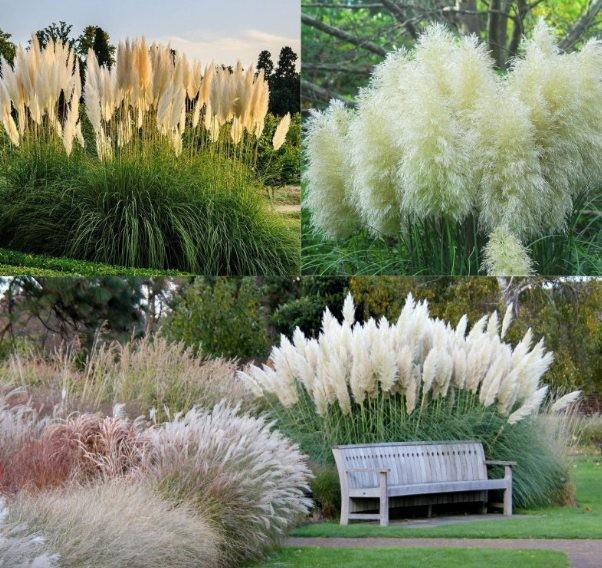
Cortaderia looks picturesque both in solitary plantings and in smaller groups. It looks great with various low plants that do not cover its graceful leaves. If you trim the plant at the beginning of the flowering stems, you will have excellent material for dried bouquets.
Decorative grasses for the home
Cortaderia is also a very elegant ornamental grass. It blooms from August until the frosts, creating silver, pink and golden-yellow inflorescences. In winter it will perfectly decorate your apartment if you leave the dried flowers in a vase.
Miscanthus ornamental grass
Miscanthus is the most popular giant ornamental grass in gardening. Its beauty, variety of shapes and cultivars is unsurpassed; it adapts to cultivation conditions and uses in garden design. This grass thrives during the summer, in autumn and in early winter.
It creates fresh beds up to a height of 2.5 m. Long elegantly curved leaves create a fountain effect. Playful golden, gold-pink or silvery flowers are used in winter bouquets.
Decorative perennial grasses
Among plants that tolerate dry and warm summers well is fragrant lavender. Besides decorating your garden, like rosemary it also finds use in the kitchen. Lavender is frost-hardy, but it needs a sunny position and well-drained soil.
Red Mavuň
A clump-forming perennial that will adorn your bed with small red or pink flowers, it also requires dry conditions and well-drained soil. If it likes its site, it can bloom for a very long time and its flowers are a great lure for bees and butterflies. The homeland of this centranthus is Turkey, so a warm summer suits it.
Speckled carnation
A perennial. It grows quickly in clumps. It attracts butterflies.
Syrian hibiscus
We increasingly find it in Slovak gardens. The reason is simple: undemanding care, resistance to hot summer temperatures and continuous flowering from July until the beginning of September. You can grow it as a shrub, as a colorful hedge, or in larger pots.
Gomphrena globe
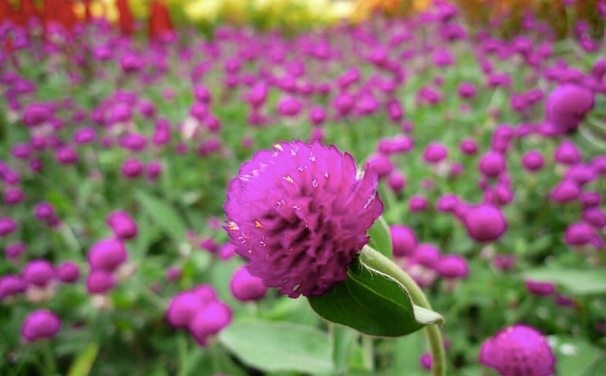
This annual reaches a height of approximately 30 cm. It loves sunny spots and its purple heads will please you all summer – from early July until the end of September. It is said that this plant does best if you don’t fuss over it too much. It does not require regular fertilizing or watering, but if a longer period of drought persists, you may need to mist it occasionally. Besides purple, they can be white, lilac, magenta or red.
Coastal kotouč
A plant of exotic appearance originating from the dry coastal areas of the Caucasus and Iran. Hot and dry summers are ideal for them and therefore they flower from early summer into autumn. They also do well in poor soil and do not need any special nutrients or care. The only thing you need to protect the plant from is excessive moisture.
Dry plants are ideal for arranging.
Iberis
Iberis are popular rock garden plants. They bloom with white flowers that resemble a constantly fresh white veil. They prefer sunny, drier spots – well drained. The plants begin to bloom in May and if you trim them occasionally, they will bloom until autumn.


