Article content
The skin is the largest organ on our body. It reflects our health, and it is one of the organs that can clearly express our lifestyle habits. Unhealthy foods, or intolerances to certain foods, are responsible for the development of skin problems, especially on the face.
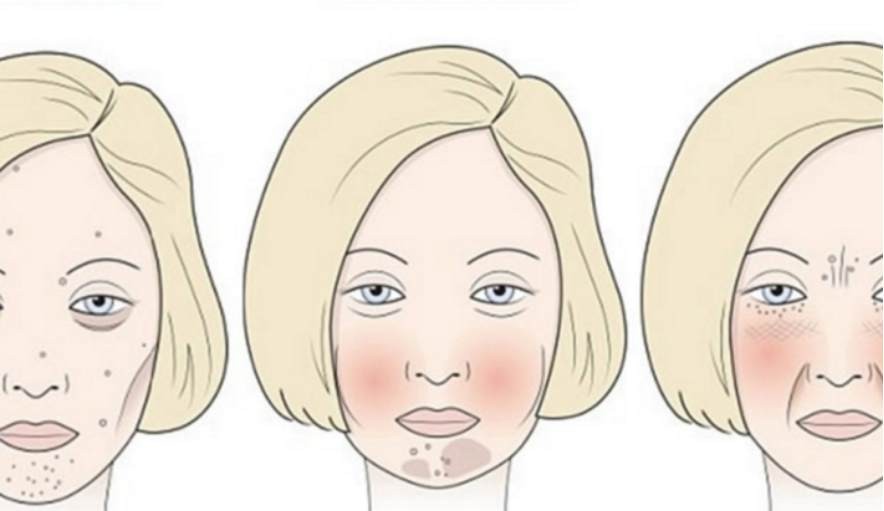
The famous doctor Nigma Talib wrote a study on 4 skin types that show which foods your body cannot tolerate.
1. Intolerance to alcohol
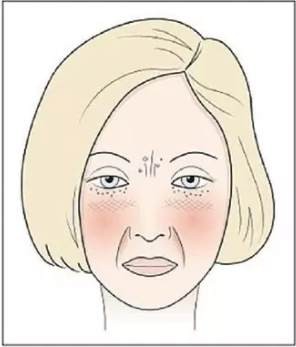
Among the common phenomena observed on the face are symptoms associated with alcohol consumption. If your skin has enlarged pores, red patches and dry skin with deep wrinkles between the eyebrows, it is possible that your body cannot cope with processing alcohol or that your consumption is higher than it should be. In this case you should consider eliminating alcohol from your life.
2. Intolerance to gluten
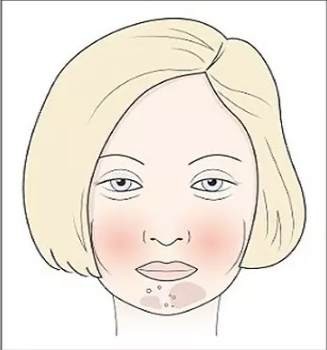
Among the most common symptoms of gluten intolerance are severe acne with swollen and reddened contours and strong pigmentation, especially in the chin area. Doctors say that almost 15% of the total population suffer from a high sensitivity to gluten, and that the body, as a result of gluten intake, produces inflammatory reactions. If you notice one of the problems described above, consult your doctor, who will determine how your body reacts to gluten, or simply try cutting out gluten for a few days and observe what effect it has on your skin.
3. Lactose intolerance
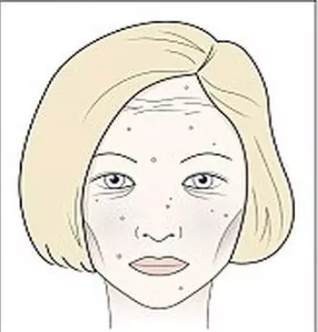
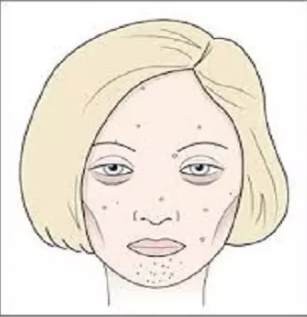
Symptoms of lactose intolerance are swollen eyelids along with the entire eye area, dark circles under the eyes and acne-prone skin. Therefore, in this case too, consider your consumption of dairy products.
4. Sugar intolerance
People sensitive to sugar usually lose skin elasticity because the body cannot make use of the sugar molecules that deliver collagen to the skin. Dry, sometimes swollen and wrinkled skin is a clear sign that your body is sensitive to sugar.