Article content
Knowledge of the basic facts about first aid can literally help you save lives, including your own.
When you find yourself in an emergency situation, it’s best to know how to assess it, know how you can help, and also recognize the difference between what helps and what doesn’t.
Let’s just say that when stopping bleeding, a simple gauze pad is usually more effective than a tourniquet.
We want you to always know current ways to take care of yourself. That’s why we’ve prepared a few quick first aid tips that can literally save your life one day!
10 quick first aid tips that can save you
1. Wounds
Whenever you treat a wound, you should try to raise it above heart level. This reduces swelling and helps drain fluid from the area.
If you have a wound on your hips or buttocks, lie down and raise it with pillows. If you can’t raise the wound, try to keep it as close to heart level as possible.
2. First-degree burns
First-degree burns, also known as superficial burns, affect only the top layer of your skin. Although they can be painful, they are not serious.
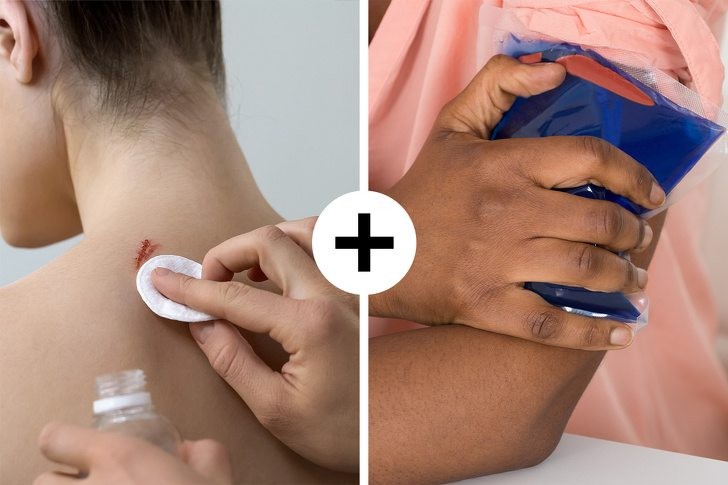
When treating them, rinse the wound with lukewarm water. Although cold water might seem more suitable, it can actually cause greater tissue damage.
After cleaning the burn, apply an ice pack or cold compress. A traditional folk remedy is using butter or lard, but these can actually damage the wound further because they slow the release of heat.
A paste made by mixing water with baking soda can help release this heat.
3. Heart attacks
When it comes to heart attacks, timely intervention helps prevent damage. Sucking on aspirin can help because it slows platelets that cause clots blocking arteries.
When taking aspirin, it’s important to take small doses and to chew or let the tablet dissolve in the mouth rather than swallowing it whole or washing it down with water, which helps it act faster. Try to call an ambulance as soon as possible.
4. Bee stings
When a bee stings you, you need to remove the stinger. Although people commonly believe that pulling the stinger out of the skin minimizes the venom, the most important thing is timing.
You must remove the stinger as soon as possible, whether you scrape it out, pick it with tweezers, or pull it out. When a bee loses its stinger it releases a scent that attracts other bees to the spot, and they may sting you more in a defensive reaction.
After removing the stinger and leaving the area, wash the wound and apply a cold compress. If you are allergic, try to have an auto-injector on hand, also known as an EpiPen, and contact emergency services as soon as possible.
5. Fractures
When it comes to fractures, do not try to realign the injury; simply stabilize and immobilize the limb with a splint and padding. It’s important to keep it in the same position.
Even if the fracture might only be a dislocation or sprain, you should always seek medical treatment to ensure the injury isn’t more serious and to avoid causing further harm.
6. Eye injury
The first thing you should do when injured is clean the wound (if possible, preferably by another person). However, with an eye injury the most important thing is to cover the eye and then seek help.
Trying to clean your eye yourself at all costs could risk causing further harm or even permanent damage.
The main exception to this rule is when chemicals get into your eye. In that case, you should immediately rinse it with water.
7. Splinters
Splinters are full of germs and can easily infect broken skin, so always keep sterility in mind when removing them.
If the splinter is fully embedded in the skin, you should first treat the area with an antiseptic solution and then loosen the splinter with a needle sterilized in boiling water.
After loosening the splinter you can pull it out with tweezers. Finally, wash the area with soap and water.
8. Snake bite
When someone is bitten by a venomous snake in TV shows and movies, their first reaction is to suck out the venom. In reality the venom has entered the victim’s bloodstream, so that actually doesn’t help.
When a snake bites you, the most important thing is to stay calm. You need to maintain a slow heart rate to slow the spread of the venom.
Similarly, painkillers can actually thin the blood and cause the venom to spread faster. Contact emergency services immediately so they can provide the correct antivenom.
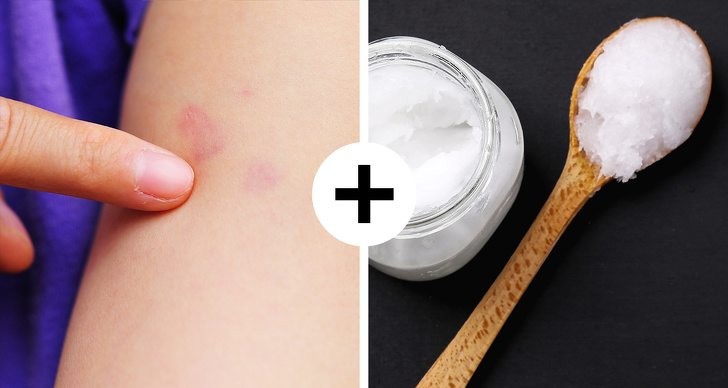
If you must move to get help, walk rather than run to stay calm. If possible, apply coconut oil to the wound, which helps fight bacteria and parasites, and bandage the area.
9. Jellyfish stings
Nothing can ruin a nice day at the beach more than a burn, or rather a jellyfish sting. You can try rinsing the wound with seawater.
You can also rinse it with hot water, vinegar, or cover the wound with a solution of baking soda. Activated charcoal may also help draw out jellyfish venom.
You may have heard the popular urban legend that urine can be used to treat a jellyfish sting. In fact, urine usually doesn’t have enough acidity to neutralize the venom.
While urine is claimed to reduce pain, hot water is just as effective.
10. Scars
When you get injured you may worry about getting an ugly scar, but you can take certain measures to prevent scarring.
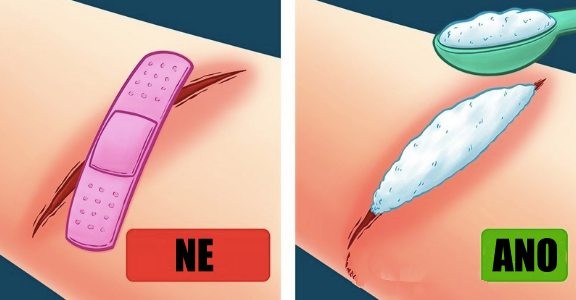
Baking soda has disinfectant properties that help prevent scarring. It can remove hardened scabs and even prevent infection.
When treating a scar with baking soda it is also important to leave the wound uncovered. Additionally, baking soda can be mixed with water to create a disinfectant.
Note: In the illustrative image the wound may appear too large, but here we mean smaller wounds. If the wound is large and deep, then of course it will be necessary to stop the bleeding as soon as possible by pressing sterile gauze to the wound and then seek professional help.
11. Blocked breathing
If someone has stopped breathing, they usually have their airway blocked by something. Turn the person onto their back, look into their mouth and remove anything that could be preventing them from breathing, even fluids.
To open the airway tilt their head back and lift the chin, placing your hand on the top of their head or forehead.
Alternatively you can perform the so-called “jaw thrust” by placing your fingers under the chin and lifting the lower jaw up, without moving the neck, to open the mouth.
This will free the tongue from the airway and help reduce the blockage of airflow. Then perform a head tilt to open the airway.
Bonus: Tips for removing a bandage
First aid is important not only at the moment you are injured but also during treatment. To make it as safe as possible, try to dissolve the adhesive by rubbing the area with baby oil, alcohol, or warm water.
You can also freeze the area with ice cubes. Although you may be tempted to rip the bandage off quickly, it’s important to remove it slowly for the wound as well, otherwise you risk tearing off scabs or even reopening the wound.
Conclusion
Do you have any simple first aid tips for when you are injured or when someone else is injured?
Please share them with us in the comments.