


Article content
Since the dawn of time – or at least since humans discovered fire and our hunter ancestors appeared on the scene – people around the world boiled bones to extract the last remnants of goodness from whatever meat they had eaten.
Bone broth is a time-honored traditional food
Athletes, nutrition experts and even the New York Times praise it as “superfood”.
From Portland to New York City, bone-broth bars are popping up across the country with customers lining up for their cup. That is, for a cup of broth.
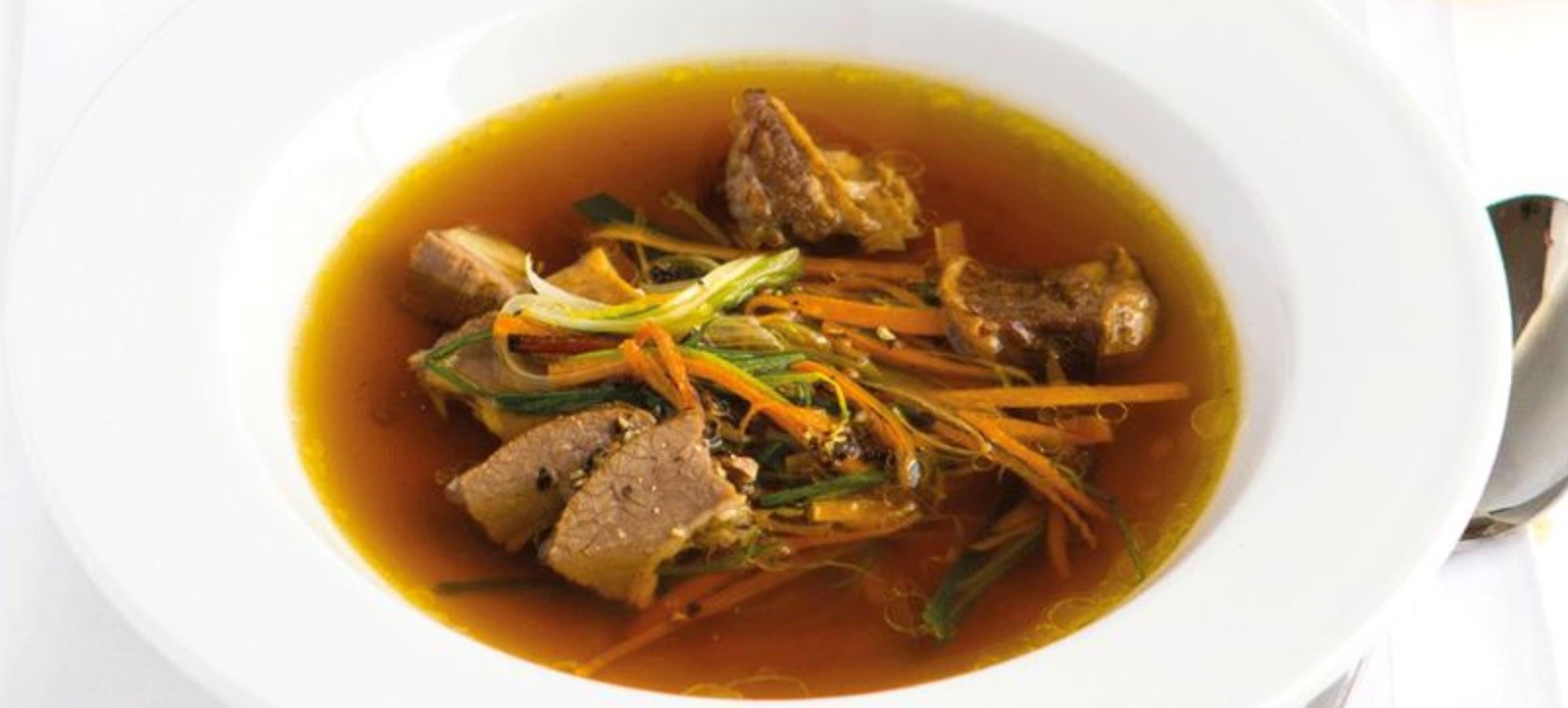
What is bone broth?
It’s a stock made from bones, simmered slowly and for a long time over low heat. It can be made from the bones of any animal, but most likely you’ll know chicken or beef broth.
If you like broth with a gelatinous consistency (you’ll learn why that’s important), you’ll need to add enough jointed bones. Or, in the case of chicken broth, heads and feet.
Bone broth provides minerals in a form the human body can easily absorb, which is good (although it doesn’t supply as much calcium as was once thought).
Consuming bone broth also aids digestion. And when it turns into a gel after cooling, you’ve hit the jackpot for your connective tissue, nails and skin.
So what is the downside of bone broth?
It’s hidden in the “long” part of the slow, low-heat cooking. Bone broth simmers for hours at low temperature, long enough for connective tissues to dissolve and minerals to leach into the broth.
Chicken broth needs to cook 6 – 24 hours (shorter in a pressure cooker).
Beef and bison bone broths, as well as broths from other large mammals, must cook at least 24 hours, or up to 72 hours, to ensure all the cartilage and tendons dissolve.
The bigger the bone, the longer it takes. The result of that long cooking time is a huge amount of glutamic acid. And that is the flip, dark side of bone broth.
As you may know, or may not, glutamic acid and glutamate are tightly regulated by the human brain. When you have a leaky brain, as often happens in people with leaky gut, high levels of glutamic acid can, if you are predisposed, trigger epileptic seizures.
Yes, seizures. It can also provoke other neurological symptoms you may already be sensitive to, such as brain fog, migraine headaches, stimming, nervous tics and sudden mood changes.
Many people – including a huge number of children in our country with nervous system disorders such as ADD, ADHD and autism spectrum disorders – should not drink long-cooked bone broth.
Who should not consume bone broth
Many mothers report how their children with ADHD or hyperactivity reacted after drinking bone broth, even in small amounts.
The same applies to many adults with autoimmune disorders. They should not drink bone broth either.
Why?
Because autoimmune means leaky gut and leaky gut means a leaky brain and a leaky brain means sensitivity to glutamic acid.
A suitable alternative to bone broth
So what to do?
How can you avoid high amounts of glutamic acid when you’re interested in the health benefits of bone broth, but you or your loved ones have been diagnosed with or show some of the symptoms mentioned above?
The answer for you is meat broth.
It is cooked slowly over low heat and not for long. A short cooking time means glutamic acid levels will be low – and therefore not problematic.


