Article content
Old fruit trees are not just a piece of wood in the garden. They are bearers of memories, traditions and flavors we remember from childhood. Apple trees, pear trees or plums, under which whole generations played, often have deep roots and extraordinary resilience. Still, it happens that after years of neglect they are considered „written off“. And that is a great pity.
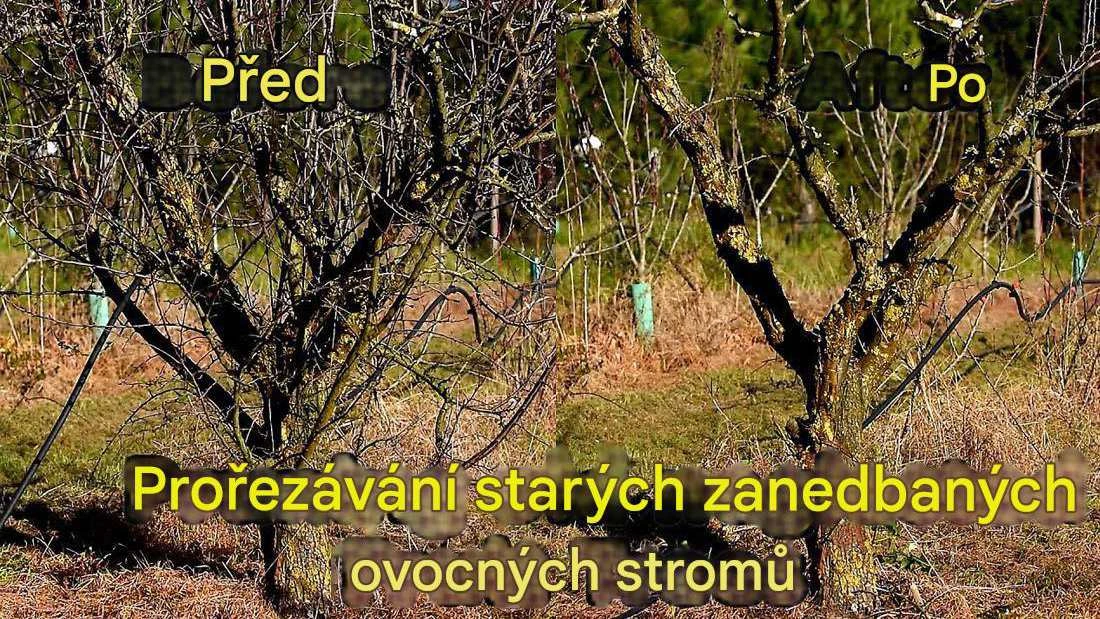
Overgrown branches, dry wood, few fruits or irregular yields – these are all signs that the tree hasn’t received the necessary care for a long time. But that doesn’t mean it’s lost. Quite the opposite. In many cases the right pruning and a patient approach are enough for an old fruit tree to breathe again and start bearing fruit.
Pruning is not destruction, but a renewal of life
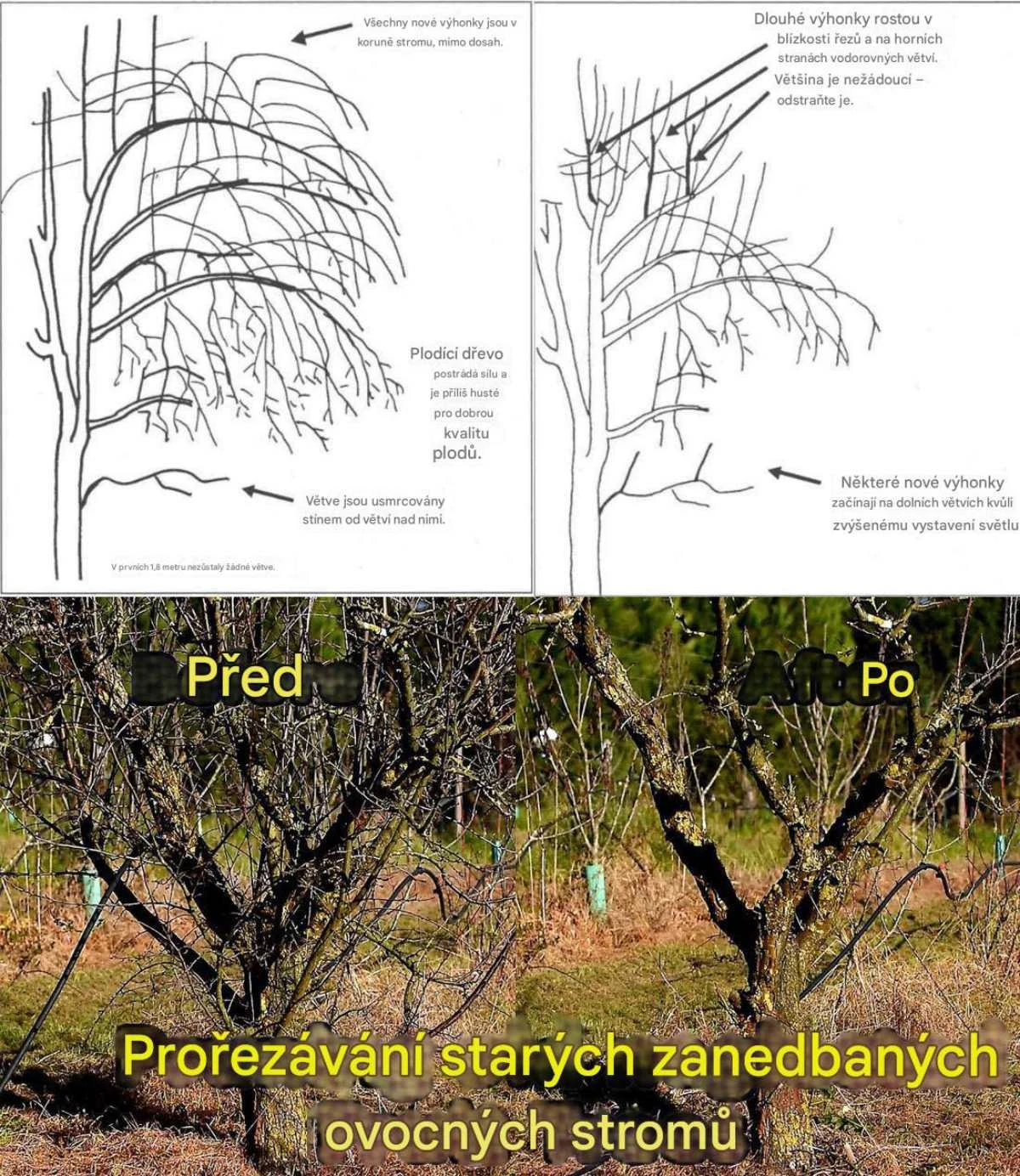
Many people are afraid to take a saw or shears in hand. They fear they’ll hurt the tree. In reality, however, pruning is one of the most important steps to save it. Every well-executed cut means more light, better air circulation and less room for disease. The tree literally breathes.
For neglected trees, the first step is removing dry, broken and diseased branches. They only burden the tree and prevent its regeneration. Next, it’s necessary to open the crown so that sunlight reaches its center as well. It is precisely light that is the key to the formation of blossoms and fruit.
Patience pays off
Restoring an old tree is not a matter of one season. It often takes two to three years before the full effect of the proper pruning shows. The tree must rebuild the balance between roots and crown. The reward, however, is stronger growth, healthier branches and a significantly better yield. It’s there that you’ll realize it was worth it.
Old varieties have one huge advantage – taste. Fruit from old trees tends to be more aromatic, sweeter and often easier to digest than fruit from modern intensive plantations. That’s also why interest is returning today in preserving old orchards and original varieties.
Trees as a heritage, not an obstacle
Old apple, pear or plum trees remember a lot. They are part of the landscape and family history. Instead of automatically cutting them down, it’s worth considering whether we can’t give them a second chance. Every saved tree is an investment in the future – not just because of the fruit, but also because of the shade, biodiversity and a healthier environment.
Pruning is, in a sense, a conversation with the tree. We learn to read it, perceive its condition and respond to its needs. And when we give it the right care, it will answer with new shoots, blossoms and fruit. Sometimes surprisingly quickly.
You can start too
You may think that restoring old trees is work for professionals. The truth is that even a layperson can do a lot. The basis is good tools, basic knowledge and a willingness to learn. The tree itself will hint at what it needs – you just have to look.
So before you decide to cut down an old fruit tree, try giving it a chance. It may surprise you how much life it still has. Sometimes a few proper cuts and one season of patience are enough.