Article content
Similarly adulterated canned goods from Poland were uncovered by food inspectors already at the beginning of April in Penny Market.
Prague – The State Agricultural and Food Inspection (SZPI) uncovered falsified canned goods in the Lidl chain. Meat products from the Polish producer Pamapol contained up to a quarter less meat than stated on the packaging.
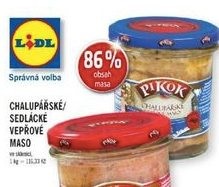
The chain tried to attract people to products with a high meat content in its April leaflet.
Five batches of two different products contained, according to laboratory results, between 16 and 24.2 percent less meat than they declared. „By providing false information the manufacturer deceived consumers about the actual composition of the food,“ said inspection spokesman Pavel Kopřiva.
The same manufacturer was caught falsifying foods by inspectors already at the beginning of April in Penny Market, when it tampered with cans under the brand Sýpka Šlechtická.
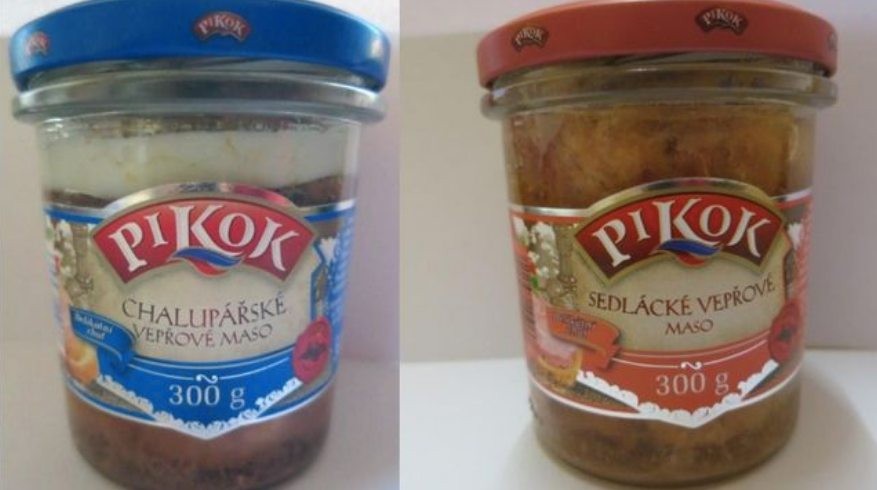
The inspection ordered Lidl to immediately withdraw the defective batches from the entire retail network and at the same time to have all batches of the products Pikok Chalupářské vepřové maso and Pikok Sedlácké vepřové maso and similar pork products from this manufacturer verified in an accredited laboratory before placing them on the market, so that customers could not be cheated.
„The retailer is also obliged to check other batches of the relevant foods with regard to meat content that are already in the market,“ added Kopřiva. The inspectors initiated administrative proceedings with the retailer and entered information about the defective batches into the European system for combating fraudulent foods AACS.
Lidl has already withdrawn all batches from sale.
„We also apologize to our customers; if they purchased the mentioned products, they can of course return them at any Lidl store and will receive their money back,“ said company spokeswoman Zuzana Holá.
Adulterated meat cans
Product/Volume/Batch number/DMT* Declared meat content Actual meat content Percentage difference
Pikok Chalupářské vepřové maso/ 300 g/L 1576/07.02.2020 89 % 67,5 % -24,2 %
Pikok Chalupářské vepřové maso/ 300 g/L 13586/19.09.2019 89 % 75 % -16 %
Pikok Sedlácké vepřové maso/ 300 g/L 13326/14.09.2019 72,3 % -16,6 %
Pikok Sedlácké vepřové maso/ 300 g/L 3301/27.11.2019 70 % -19,2 %
Source: SZPI, Note * DMT = date of minimum durability (After the end of the date of minimum durability the manufacturer does not guarantee the taste and nutritional qualities of the product, but the product can still be consumed)
Lidl faces a fine of up to 50 million.
However, SZPI does not impose such a high sanction automatically. The amount of the fine depends on several criteria, for example how much the company cheated on the product, how much of it was produced, whether it was a first offense and how many people were deceived by the misleading goods.
The Food Inspection will initiate administrative proceedings with the controlled person regarding the imposition of a fine. SZPI will also enter information about the defective batches into the European system for combating fraudulent foods AACS.
The Polish manufacturer subsequently stated that it was surprised by the findings of SZPI in Lidl and in Penny Market. „We are very sorry that consumers in the Czech Republic are facing this unpleasant situation regarding our products. We are currently actively cooperating with Lidl and Penny Market to resolve the situation, which also includes open communication with SZPI. Our main goal is to deliver quality products to the market,“ said Tomáš Cafourek on behalf of Pamapol.
According to him, the company launched an internal investigation into possible causes of the problem on April 5. „At this moment we have a certain hypothesis and we are prepared to transparently share the final results of this investigation with the public,“ added Cafourek.