Article content
Watermelon is a juicy fruit with a refreshing taste that almost everyone likes. It can be eaten fresh, turned into desserts, smoothies, ice cream and much more. Different watermelon varieties can vary in taste, however.
How to choose the best?
A watermelon is 92% water. It is especially useful to enjoy it on hot days when the body needs extra hydration. Besides that, this product contains many beneficial vitamins and trace elements that can support good health. To get the most out of a watermelon, you must learn how to choose it correctly. A dry stem and a special sound when tapping are not the only tricks that will help you buy ripe fruit. A farmer said what else to pay attention to.
Shape of the stem
Many people tend to believe that a dry stem indicates that a watermelon is fully ripe. However, it is not always a clear indicator. In addition, a very dry stem may indicate that the fruit is overripe. Such a watermelon may, for example, be rotten inside. The best is a green, slightly dry stem, not completely dried out.
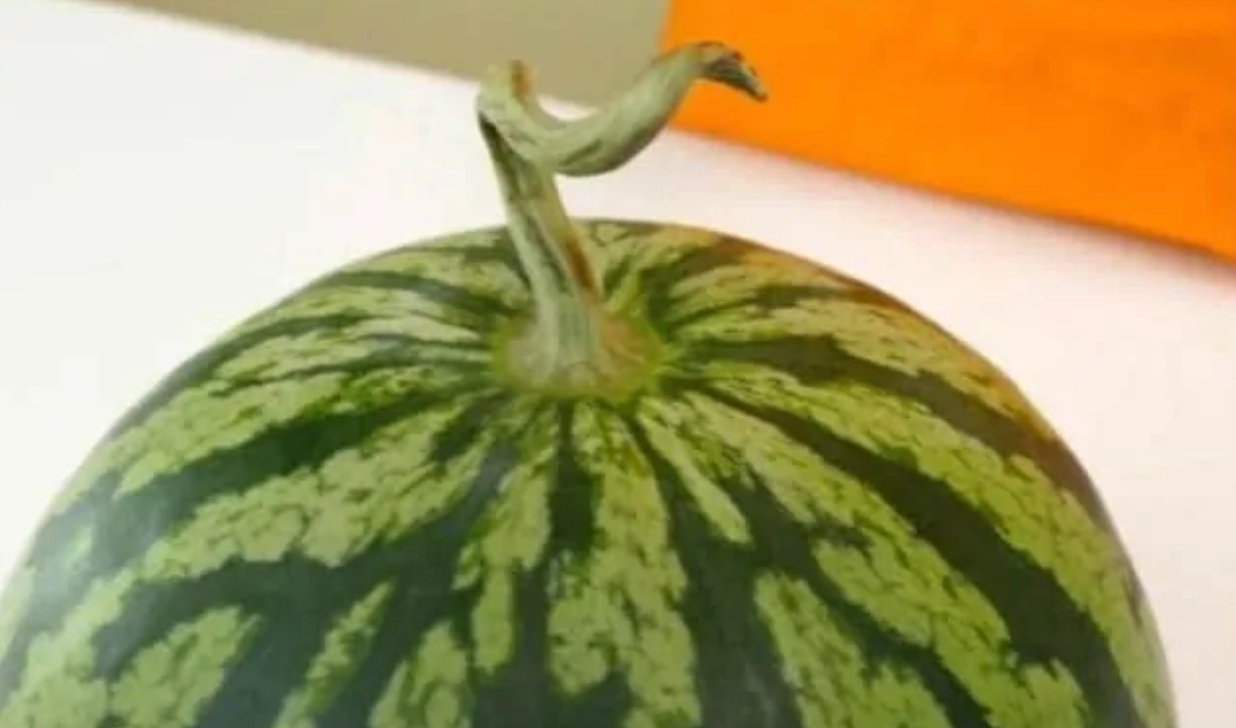
The shape is also important. If it is straight, the watermelon will not be very sweet. The more curved the stem, the sweeter the fruit’s flesh.
Pay attention to the “belly button”
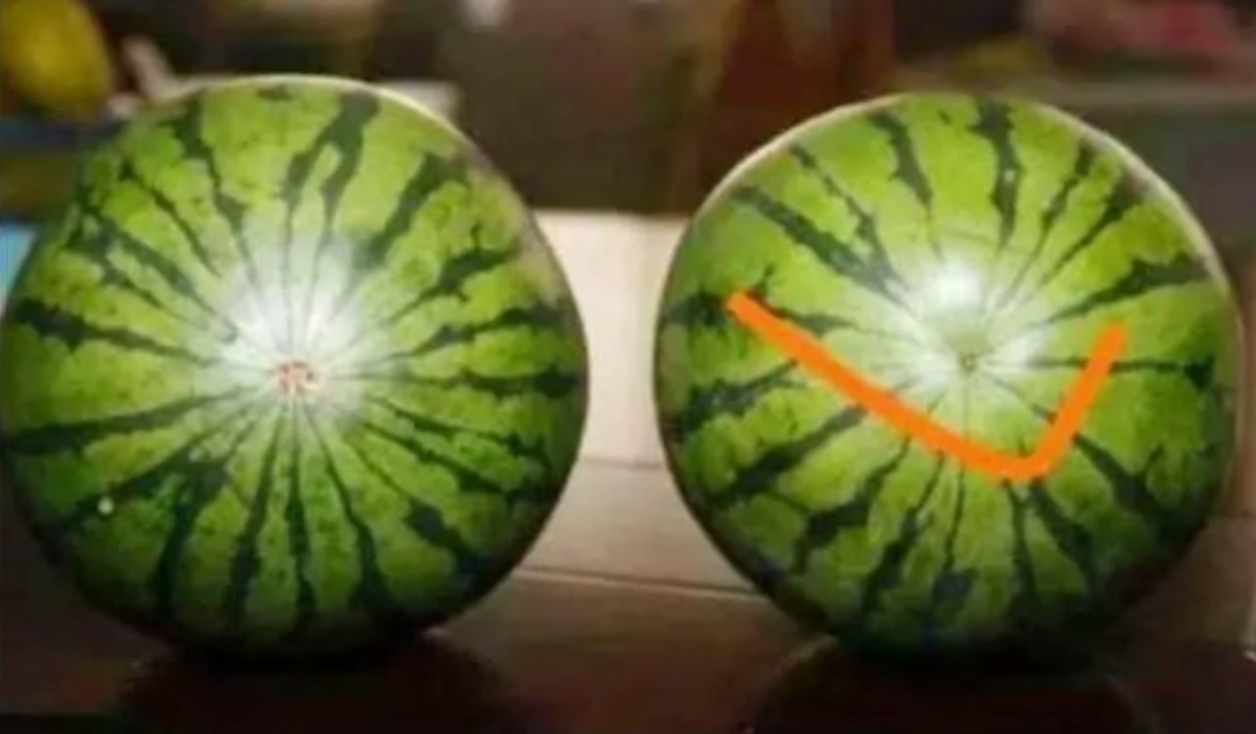
You should look at the watermelon from the opposite side. Ripe fruits can be recognized by the so‑called “navel.” This is the spot where the flower was during ripening. A too wide “navel” means that the fruit is not yet ripe. The smaller the “navel,” the juicier and sweeter the watermelon will be.
Color
A ripe watermelon has clear alternating stripes. If the pattern on the rind is faded, it means the fruit was picked too early. You also should not buy watermelons with large light spots.
Size matters
A good watermelon is large and can easily weigh up to 10 kg. However, small fruits can also be ripe. On farms they are often grown mainly as feed for animals, because such watermelons do not have a pronounced taste. However, be careful of enormous watermelons; they are often not the best choice. Fertilizers and artificially growth‑promoting agents are used when cultivating them. Unfortunately, at the expense of the fruit’s quality and taste. Such fruits are often tasteless.
It is also not recommended to buy watermelons sold on the roadside. They collect a lot of dust and exhaust fumes. Eating such fruit can cause unpleasant stomach problems.
Yellow spot
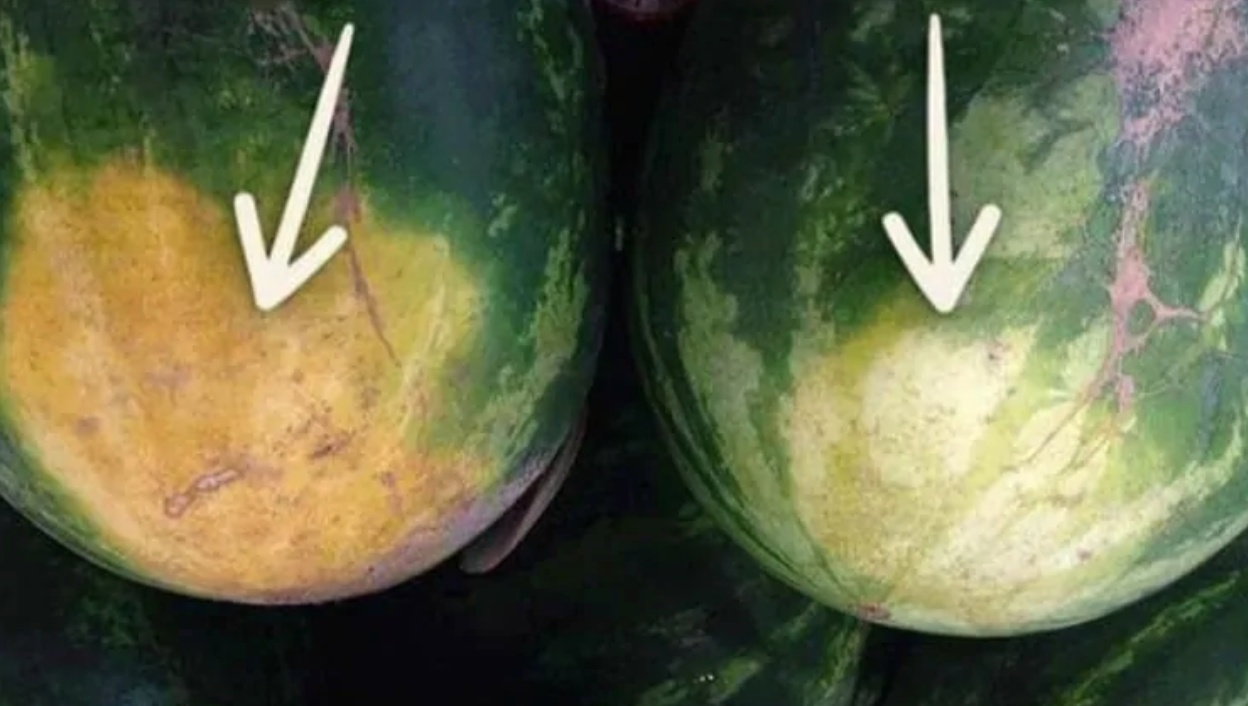
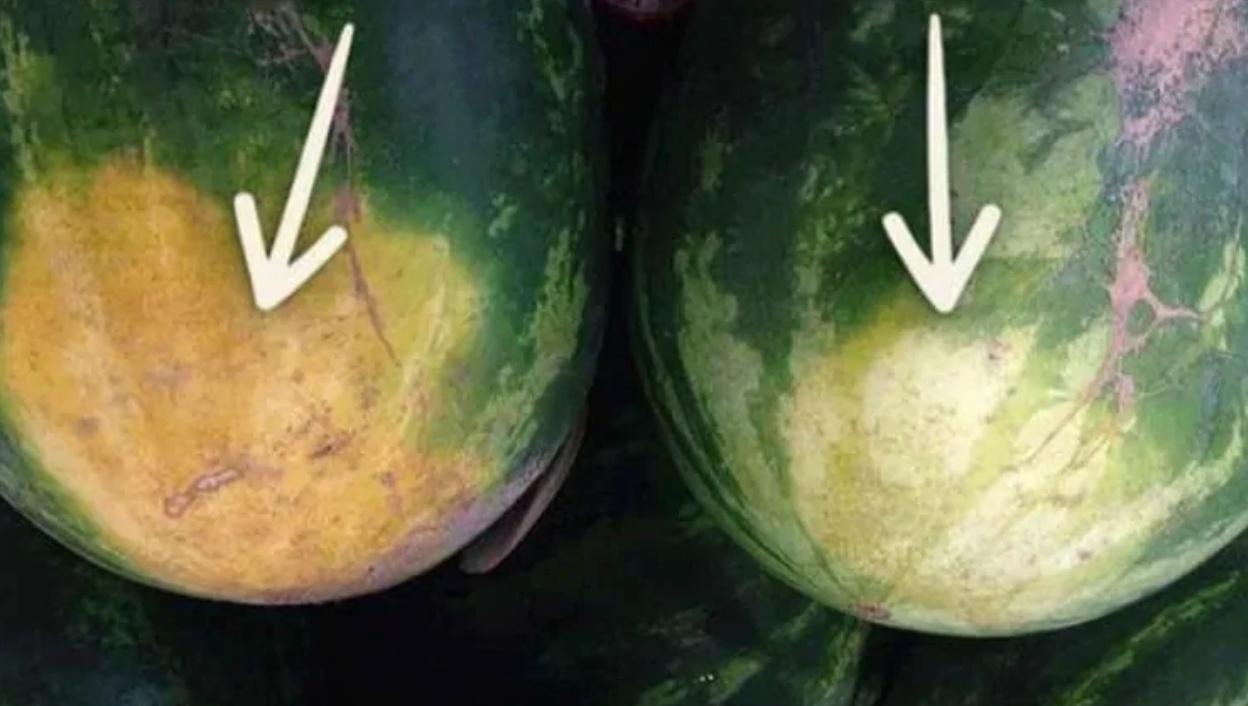
A watermelon should have a yellow spot on one side. It is not any defect; this spot is the area on which the watermelon lay on the ground during ripening. The darker and larger it is, the better. It means the fruit had time to ripen and was not picked too early. If the spot is pale in color or is small (or completely absent), the fruit was picked too early and will not be ripe.