Article content
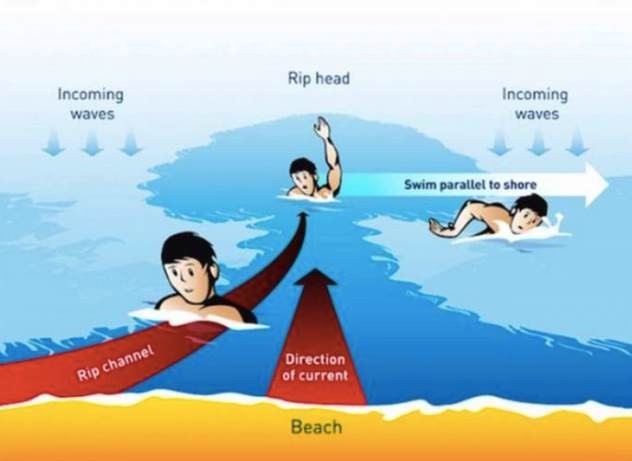
These corridors can form along the entire coastline of the beach. A large amount of water is therefore carried into the sea, which causes a reaction in such a way that more and more water rolls toward the beach in the form of waves and creates a strong backflow. In extreme cases one corridor can have a width of up to 50 meters, 200-400 meters in length and the water can move in it at a speed of 15km / h. Escaping from such an enormous current would probably be impossible for anyone …
However, coastal currents are usually about 2-3 meters wide and move at a speed of about 4-5 km / h. That does not mean they are not dangerous, quite the opposite … Here are some tips on how to detect that a coastal current is in the water before it is too late:
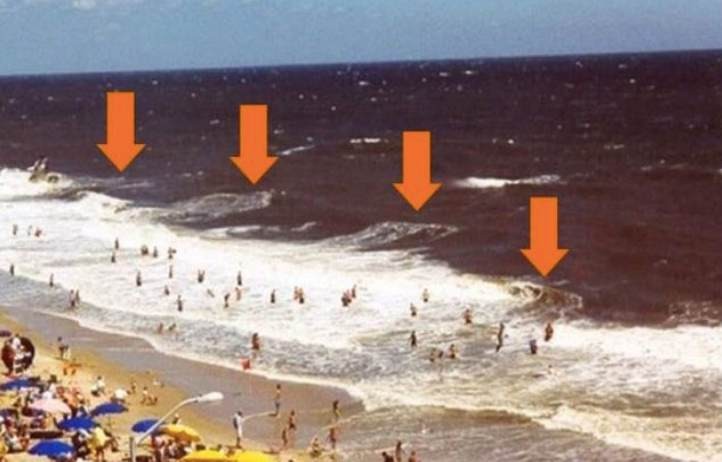
- The water moves toward the shore at a right angle
- The water by the shore has a different color than the water farther from the coast
- An area covered with foam, seaweed and other vegetation is moving out toward the open sea
The gaps between the waves are 5-10 meters
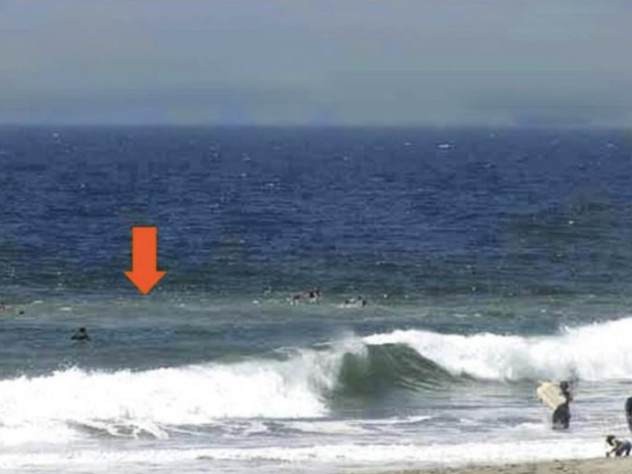
So if you see these signs, do not enter the sea. Of course also watch the warning flags and notices on the beaches, which will tell you about the current sea situation. Finally, we must disappoint you, because up to 80% of coastal currents cannot be detected by sight. So what to do if you do get into one? Here are some good tips.
Don’t panic!
It is important not to succumb to panic. Yes, that’s easy to say. However, stress speeds up your breathing and a person is then guided by the instinct of self-preservation. What you need, however, is to think rationally about what you are going to do. So try to stay calm.
Conserve your energy!
It is important to conserve your strength, so don’t even think about swimming straight to the beach. If you find yourself in a current that carries water out toward the open sea, you have no chance of overcoming it; you would only exhaust yourself, which may not end well. Swim, for example, perpendicular to the direction of the current; don’t be afraid that the water will carry you a bit farther, because you will get out of the current and with the remaining strength you should be able to make it to the shore.
What if the current is too wide?
The most important thing is to follow the first two rules; nevertheless getting out of such a current will not be easy at all. Try to swim perpendicular to the current for as long as possible. Your greatest hope is that the coastal current will end — they usually last about 5 minutes. If that happens, in no case swim straight to the shore, but continue at least 50 meters parallel to the beach. There is a high probability that the coastal current will form again a short time later, and in the same place.
And finally three things you should still remember about coastal currents.
- A coastal current will never pull you under the surface of the water
- Its width is never more than 50 meters, usually it does not even exceed 20 meters
- Its length only rarely exceeds 100 meters
You should also inform your friends who are planning to go to the sea over the summer about coastal currents. In fact only a fraction of those who plan to bathe in the sea each year know about this phenomenon. We hope, however, that you will not encounter them and that you will fully enjoy your summer holiday!