
Article content
Wireless technologies are today an inseparable part of modern life. Mobile phones, laptops, tablets, smart TVs or Wi-Fi routers surround us at home, at work and in public places. This naturally raises a question that more and more people are asking: can long-term exposure to electromagnetic radiation from Wi-Fi and other wireless devices affect our health?
The answer is not black and white. While short-term effects are not conclusively proven, there is professional debate about long-term and intensive exposure. That is why the so-called precautionary principle is increasingly discussed — sensible measures that can reduce unnecessary exposure to radiation without giving up modern technologies.
What is electromagnetic radiation and where do we encounter it
Wi-Fi, mobile networks and wireless devices operate on the principle of electromagnetic waves. These waves are non-ionizing, which means they do not have the same energy as, for example, X-ray radiation. Nevertheless, research is investigating whether their long-term effects at low doses could have biological impacts.
We encounter electromagnetic radiation almost constantly today:
- at home (Wi-Fi routers, smart appliances),
- at work (computers, wireless networks),
- in public places (restaurants, schools, transport),
- through mobile phones, which we often carry directly on our bodies.
Possible problems associated with long-term exposure
Some studies and observations point to possible links between long-term exposure to electromagnetic radiation and certain problems. These are not definitive proofs, but recurring reports that deserve attention.
The most frequently mentioned problems include:
- frequent headaches,
- chronic fatigue,
- sleep disturbances,
- reduced concentration,
- ringing or pressure in the ears.
In more sensitive individuals and children these symptoms may occur more often. However, this does not mean that Wi-Fi automatically causes illnesses – it may rather worsen pre-existing issues.
Why children are more sensitive than adults
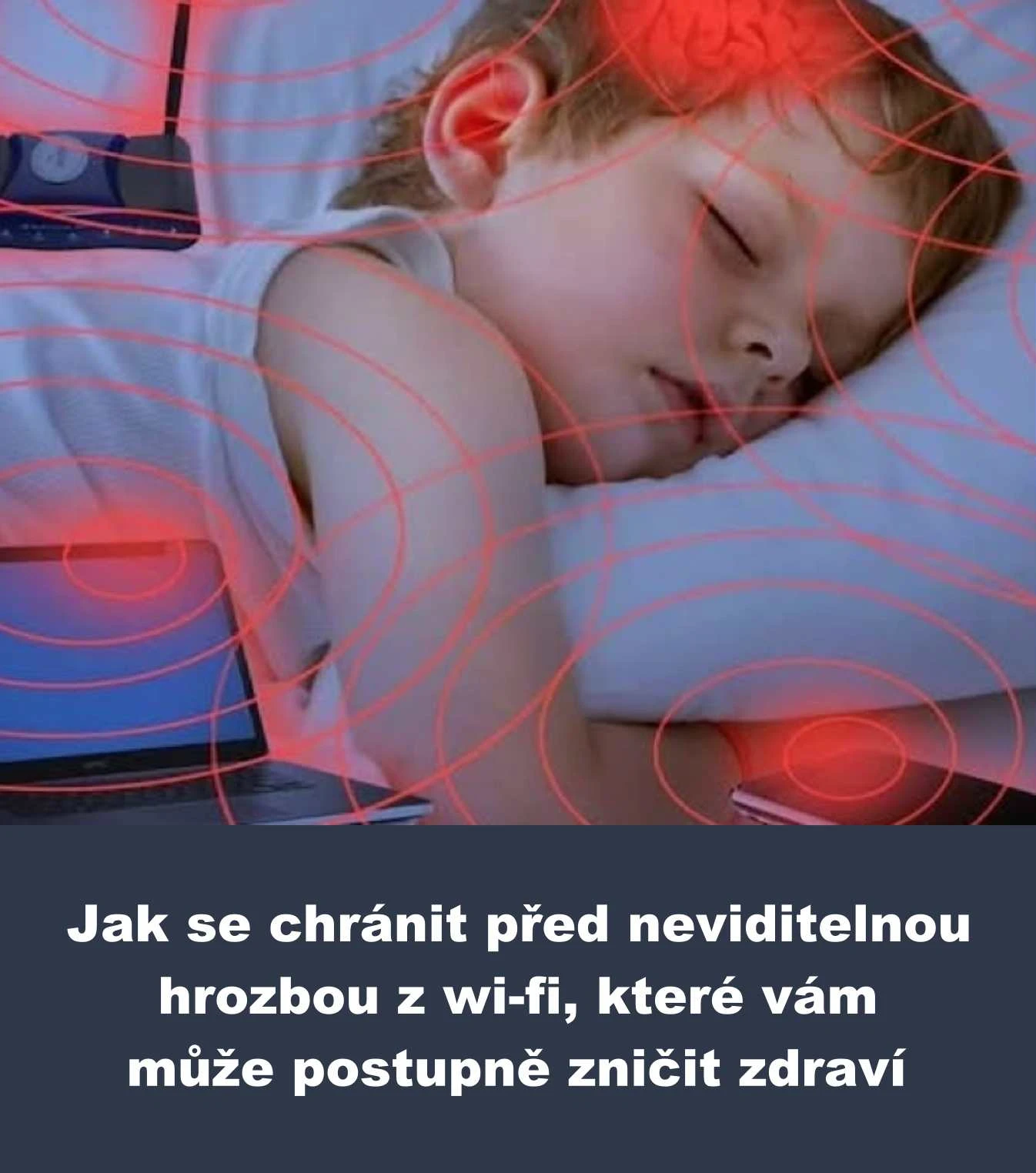
A child’s body is developing, the skull is thinner and the nervous system is more sensitive. That is why experts recommend limiting unnecessary exposure to electromagnetic radiation in children, especially at night and in environments where they sleep or spend a lot of time.
This is not a ban on technology, but about its sensible and conscious use.
How to reduce exposure to electromagnetic radiation in everyday life
It is impossible to completely avoid wireless technologies, but there are a number of simple steps that can significantly reduce the burden.
1. Turn off Wi-Fi when you don’t need it
If you are not actively using Wi-Fi, especially at night, it is advisable to turn off the router or unplug it from the socket.
2. Limit wireless devices during sleep
At night Wi-Fi and unnecessary electronics should be turned off. Quality sleep is key for the body’s regeneration.
3. Do not keep your mobile phone by your head
Do not leave your phone on the bedside table or under the pillow. Ideally put it farther from the bed or switch it to airplane mode.
4. Proper router placement
A Wi-Fi router should not be in the bedroom, a child’s room or in rooms where you spend a long time.
5. Use wired connections
When working for long periods on a laptop, it is advisable to connect to the internet via cable. This will reduce wireless load.
6. Replace cordless phones with wired ones
Home cordless phones can be replaced by traditional corded phones, which emit no radiation.
Position of professional institutions
International health organizations have long monitored the effects of electromagnetic radiation. Radio frequencies have been classified as „possible carcinogen“, which means that the risk cannot be completely ruled out, but at the same time there is no clear evidence of direct harm from normal use.
Therefore caution and a sensible approach are recommended, not panic.
Final summary
Wi-Fi and wireless technologies are not the enemy, but neither are they an entirely harmless element of modern life. Their impact on health is still being studied, and therefore it makes sense to minimize unnecessary exposure, especially in children and during sleep.
Simple preventive measures will not limit your comfort, but can contribute to better sleep, greater well-being and long-term protection of health.