
Article content
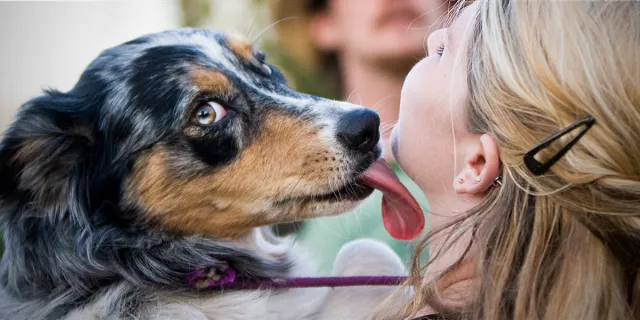
Statistics show that almost all pet owners consider their pets part of the family. As such, it’s no surprise that kissing these pets is common practice. But is it safe? We’ll show you what hidden danger lurks if you hug or kiss your four-legged friend.
Is a dog’s mouth really cleaner than a human’s?
It’s a myth. Marty Becker, author of Chicken Soup for the Soul for Dog Owners, tries to dispel this popular misconception when he says: “All you have to do is look into them and smell them. Then you’ll realize that it’s not true.”
How many bacteria are in dog saliva?
John Oxford, professor of virology and bacteriology at Queen Mary University in London, talks about how many bacteria are found in your dog’s nose and mouth: “It’s not just about bacteria in the saliva. Dogs spend half their lives sniffing dog feces, so their noses are full of bacteria, viruses and pathogens of all kinds.”
What would happen if these bacteria got into the human body?

These viruses and bacteria can cause serious health problems. This even happened to a British woman who contracted an infection from her dog’s saliva. She began to notice that her speech sounded more and more slurred. Blood tests revealed that she had an infection caused by the bacterium Capnocytophaga canimorsus, commonly found in the mouths of dogs and cats. Thirteen similar incidents have occurred in recent years across the United Kingdom.
What other diseases can you catch from your dog?
Skin diseases are among the most common illnesses you can get from kissing your dog. If your pet is infected with a skin condition and you kiss it, then, unfortunately, you will suffer from that disease as well.
MRSA infections usually affect the skin. It can be caused by just a single lick from your dog.
Capnocytophaga canimorsus is a bacterium that can cause serious health problems if it enters your body through open wounds.
How to prevent getting infected from your pet?
Always follow these rules:
1. Do not let your pet kiss you, do not let it lick your face, and never allow feeding your pets at the table
2. Wash your hands thoroughly after contact with animals
3. Vaccinate your pet against common diseases
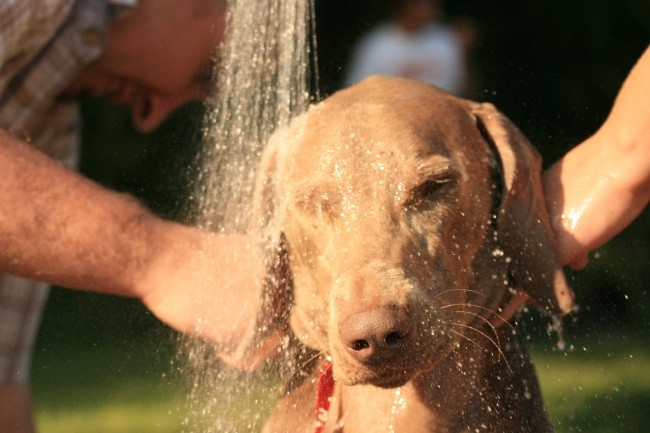
4. Use special antibacterial and antifungal shampoos when washing your furry friends
5. Make sure your dog or cat has no contact with wild or stray animals
6. Do not feed your four-legged friends raw eggs, meat, or fish
7. Regularly clean and disinfect your pet’s food and water bowl
8. Visit your veterinarian immediately if your pet is not feeling well, or if it refuses to eat or suffers from digestive problems


