Article content
At first glance it looks like an ordinary elementary school problem. A few simple additions, no complicated formulas, no unknowns. Yet this logic puzzle managed to confuse thousands of people and sparked long debates about where we are actually making a mistake.
Similar tasks are popular not only on social networks but also on websites focused on brain training, logic, and critical thinking. It’s not classical mathematics, but the ability to look for a pattern where it is not immediately apparent.
Logic puzzle task
Look at the following sequence:
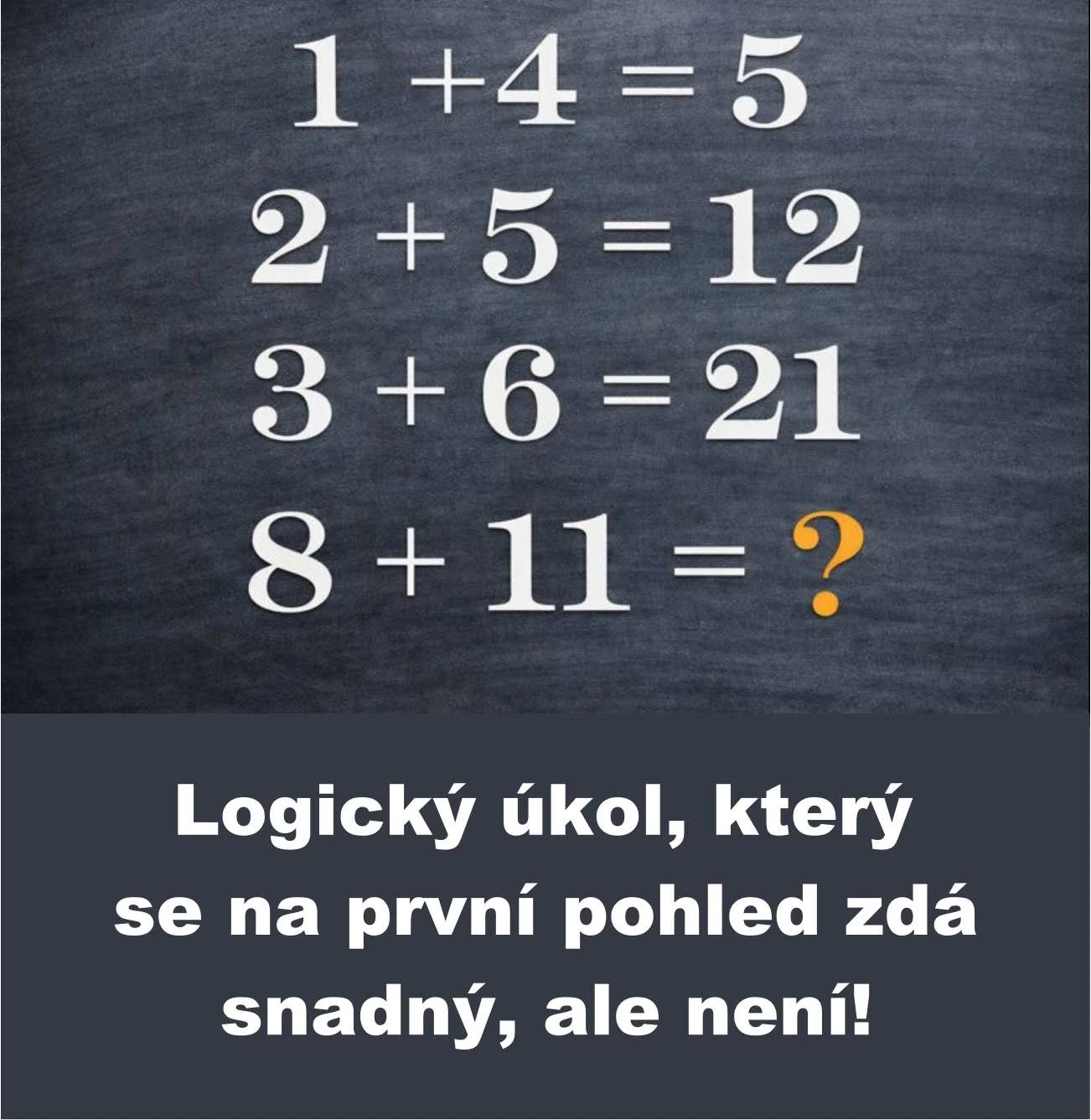
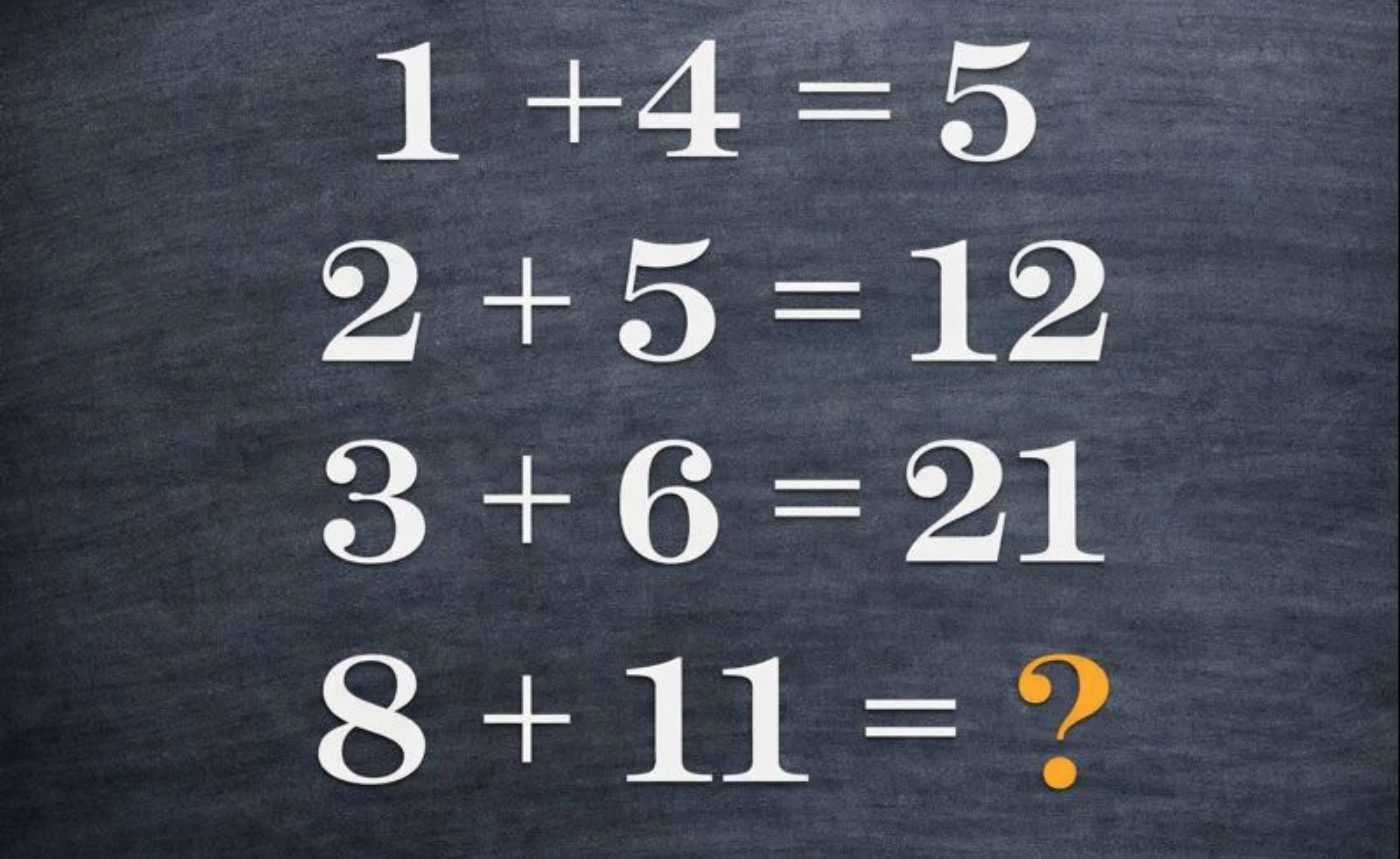
1 + 4 = 5
2 + 5 = 12
3 + 6 = 21
8 + 11 = ?
Your task is to find the correct result of the last example. Try to think through your answer before you continue.
Why most people answer incorrectly
Most people automatically assume it’s ordinary addition and that each equation stands on its own. But this is where the catch lies. This example is not about the individual lines, but about the dependence of the results.
The brain is used to solving problems in isolation. However, once the rules of the game change and the result depends on the previous step, many people are caught out.
Correct solution step by step
First line
1 + 4 = 5
So far it’s standard addition.
Second line
2 + 5 = 7
But the result is not 7; it is 12.
The reason is simple: we add the result from the previous line to the sum 2 + 5.
5 + 7 = 12
Third line
3 + 6 = 9
The previous result is 12.
12 + 9 = 21
Fourth line
8 + 11 = 19
The previous result is 21.
21 + 19 = 40
Correct answer
The correct answer is 40.
This task is a prime example that the first impression is not always correct. The mathematics here is not about the calculation itself, but about logic and the ability to perceive connections.
Why logic puzzles are so popular
Logic puzzles of this type:
- train the brain and concentration
- improve the ability to find patterns
- teach you to think beyond ingrained stereotypes
- encourage discussion and sharing
That’s why they are among the most read and most shared content on the internet.
How not to get fooled by similar tasks
- don’t rely only on the first line
- follow the sequence of steps
- look for recurring logic
- write down the solution step by step
Often it’s not about a complicated calculation but about correctly interpreting the task.
Summary
This logic puzzle shows how easy it is to be misled by a seemingly simple example. Although the numbers look trivial, the correct solution requires concentration and the ability to see broader connections.
If you found the correct answer, congratulations. If not, it’s okay — that’s exactly what logic puzzles are about.