Article content
If we talk about our stool, it is not the most pleasant topic for conversation.
But the fact is that how our stool looks is important.
What your stool indicates
Our bodies are complex systems that we can easily neglect.
An elevated temperature, pain, fatigue and depression are clear signs that a health problem may be developing, and your stool can warn you in time that not everything is right.
Therefore you should consider your stool an opportunity to diagnose potential health problems early.
How to correctly detect possible health problems
Reading tea leaves or coffee grounds can give you some insight into how rich you are, but it may not always be accurate. An analysis of your stool, however, is precise.
So let’s look at how you can examine your health from your stool yourself.
Get to know your stool
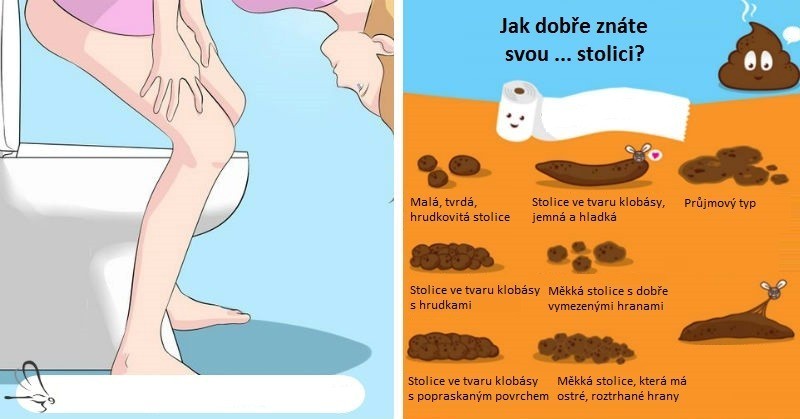
The color of the stool, its consistency, size and smell are all signs that point to your internal health.
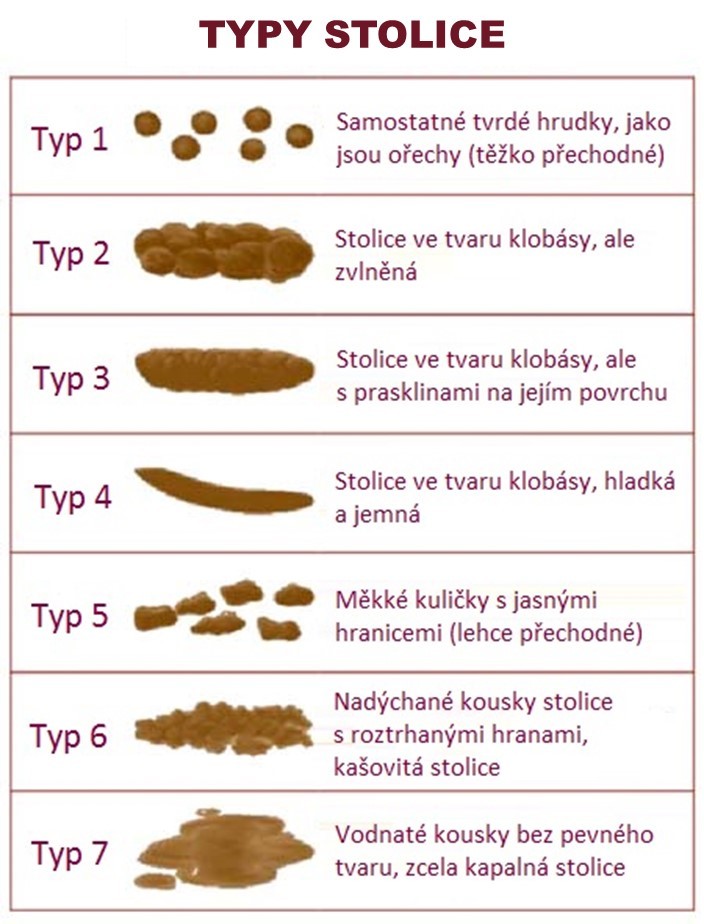
The method you can use to examine your stool is called Bristol Stool Chart (BSF). It was invented by scientists at the Bristol Royal Hospital in the United Kingdom.
Perfect stool
Who would have thought that having perfect stool is a sign that your internal health is fine. This is what average stool contains:
- Water (approximately 75%)
- Solid matter (approximately 25%)
The so-called solid matter can be divided into:
- Dead bacteria
- Indigestible components from food (fiber and cellulose)
- Cholesterol
- Other fatty substances
The exact shape and appearance of your stool will vary depending on what you have eaten and drunk.
The whole process of stool formation takes about 18 to 72 hours. According to the Bristol Stool Chart the best stool types are 3, 4 and 5.
When you have diarrhea, it is because the stool is processed quickly and your intestines did not have time to absorb enough water for the stool to be normal.
At the other end of the scale is the inability to produce stool within 72 hours, which is a sign of constipation that may be associated with other health problems.
Stool type 1 – Small, hard, lumpy stool
This type of stool may be a sign of acute dysbiosis of the intestinal tract. Because certain bacteria are missing in the gut, the stool is small and cannot retain water.
The lumps of stool are small, firm and rough, averaging 1 to 2 cm.
Because they are firm and a little rough, they can cause pain as they pass through the bowel. Such stool can cause anal bleeding.
It is typical for people who have undergone antibiotic treatment, or for those who have little fiber in the gut, or consume a fiber-free diet.
Stool type 2 – Sausage-shaped stool with lumps
This stool has a diameter of 3 to 4 cm and often appears as a result of constipation when it remains in the bowel for several weeks.
As it passes through the bowel it causes pain and can lead to bleeding because it is so firm and its size exceeds the anal opening.
This type of stool is typical for someone who suffers from irritable bowel syndrome.
Stool type 3 – Sausage-shaped stool with cracked surface
This type of stool is similar to type 2, but is processed faster (usually 1 to 2 weeks), and therefore is also associated with constipation and irritable bowel syndrome.
Stool type 4 – Sausage-shaped stool, soft and smooth
This type of stool is very close to the perfect stool. Its diameter is 1 to 2 cm (which is a sign of a relatively short transit time and a good fiber content).
This type of stool is typical for someone who has a bowel movement once a day.
Stool type 5 – Soft stool with well-defined edges
This type of stool is almost perfect. Its diameter is 1 to 1.5 cm and it is typical for someone who has bowel movements 2 to 3 times a day after consuming main meals.
Stool type 6 – Soft stool with ragged, fluffy edges
This type of stool has a very soft texture. It can occur unexpectedly and thus cause problems for people who do not have a bathroom nearby.
You may have difficulty cleaning it with toilet paper. A bidet would be useful in this case. This type signals high blood pressure and stress.
Stool type 7 – Diarrheal type – watery
It is similar to ordinary diarrhea, but in this case it is called paradoxical diarrhea because it occurs in conjunction with constipation, accompanied by type 1 stool. Children and elderly people often encounter it.
Colored stool
Just like the size, shape and consistency of stool, the color of stool can also be an important sign of various health problems.
Normal healthy stool (or stool that does not indicate any health problem) is medium/light brown in color.
- Black, gray, or bright red stool:It is a sign that there may be bleeding present in the intestinal tract or in the rectum. We recommend that you consult your doctor about this without delay. We note, however, that black stool can be the result of taking certain medications, various nutritional supplements and can also appear after consuming black licorice.
- Very light brown, gray, or white stool:This unusual stool coloring can be caused by a lack of bile, although white stool can be the result of taking antacids. Nevertheless, these types of stool can signal health problems such as cirrhosis, hepatitis or pancreatic disease. These are all serious conditions, and therefore you should seek medical help immediately.
- Yellow-colored stool:Yellow-colored stool can be a sign of gallbladder disease, bile duct infection or Gilbert’s syndrome (a hereditary disorder of bilirubin metabolism). If you notice yellow stool, you should see your doctor.
Foul-smelling stool
Regardless of how you examine your stool, stool should not smell. But it should not smell too bad either, because foul-smelling stool indicates:
- A problem with absorption
- Celiac disease
- Crohn’s disease
- Pancreatitis
- Cystic fibrosis