Great trick for gardeners: How to easily propagate thuja
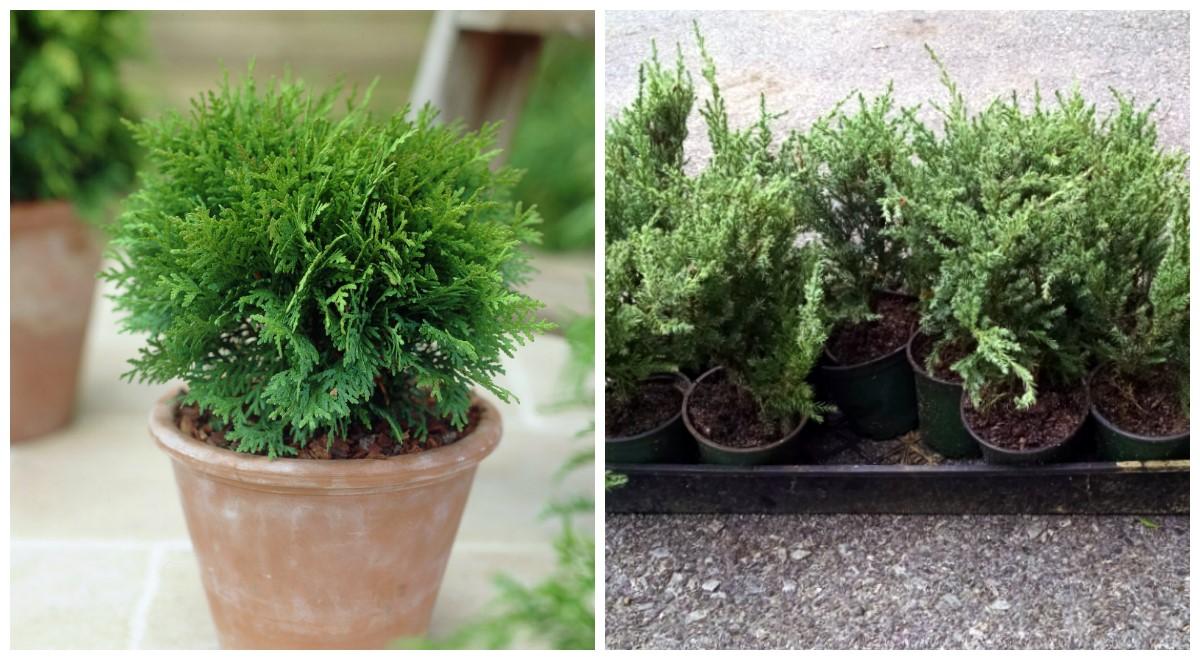
Propagating thuja from branches is a great way to easily create new plants that will take root well and look like healthy, beautiful conifers. This simple method will show you how to turn one branch into a seedling that will grow like a fairy tale.
When to cut a branch for planting
One of the key questions when propagating thuja is when it is best to take cuttings. Different gardeners have different opinions: some recommend February, others prefer March. In general, cuttings can be taken all year round, but the best time is in spring or autumn. Avoid summer, when the plant is actively growing and producing new shoots.
How to cut a branch for planting
-
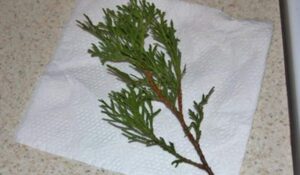
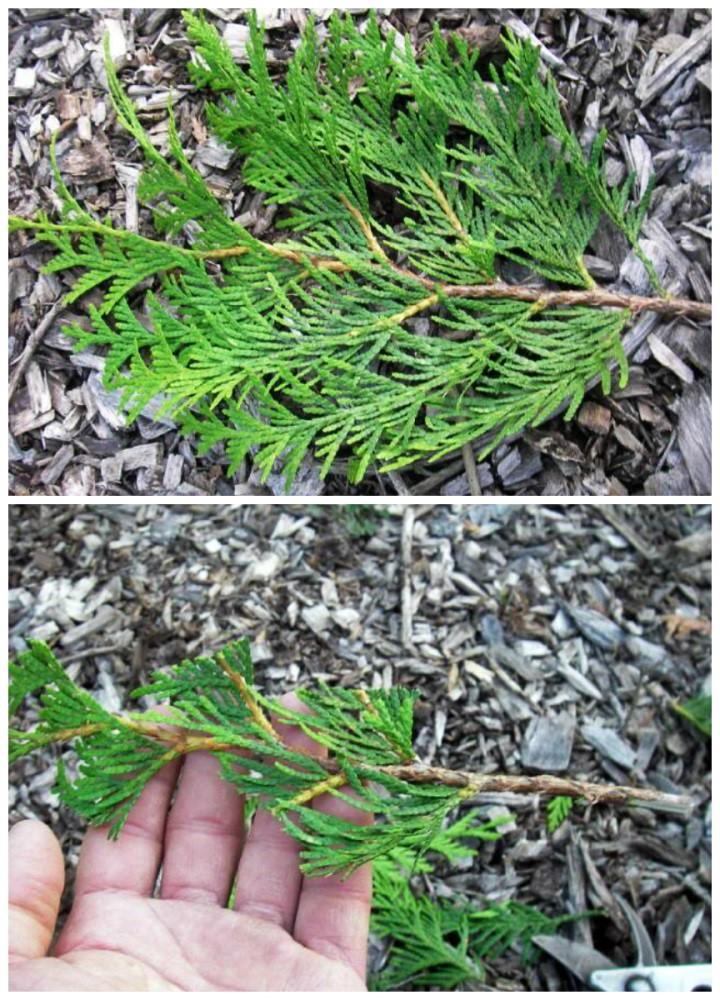
Choose the right tree: Select a large, healthy thuja tree. Focus on a strong branch in the upper part of the tree that you will break off. It is important that the branch comes from the top, because cuttings from side branches may have a worse shape and proportions.
-
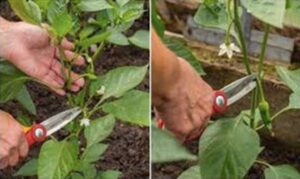
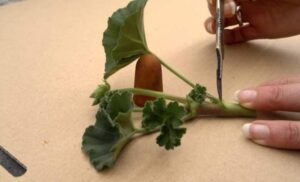
Breaking off the branch: The branch should be about 10–15 cm long. If the branch is very thick, you can cut it with garden shears. Try to break it off in one smooth motion to avoid damage.
How long you can store the branch before planting
Ideally, the branch should be planted immediately after cutting. If you cannot plant it right away, wrap it in a damp cloth and place it in a cool spot until you can get to it.
Preparing the cutting
-
Treating with rooting hormone: The cutting must be treated with rooting hormone before planting. A product called Incit is available in garden stores. Moisten the thuja branch, dip it into the rooting hormone powder, and gently shake off the excess.
-
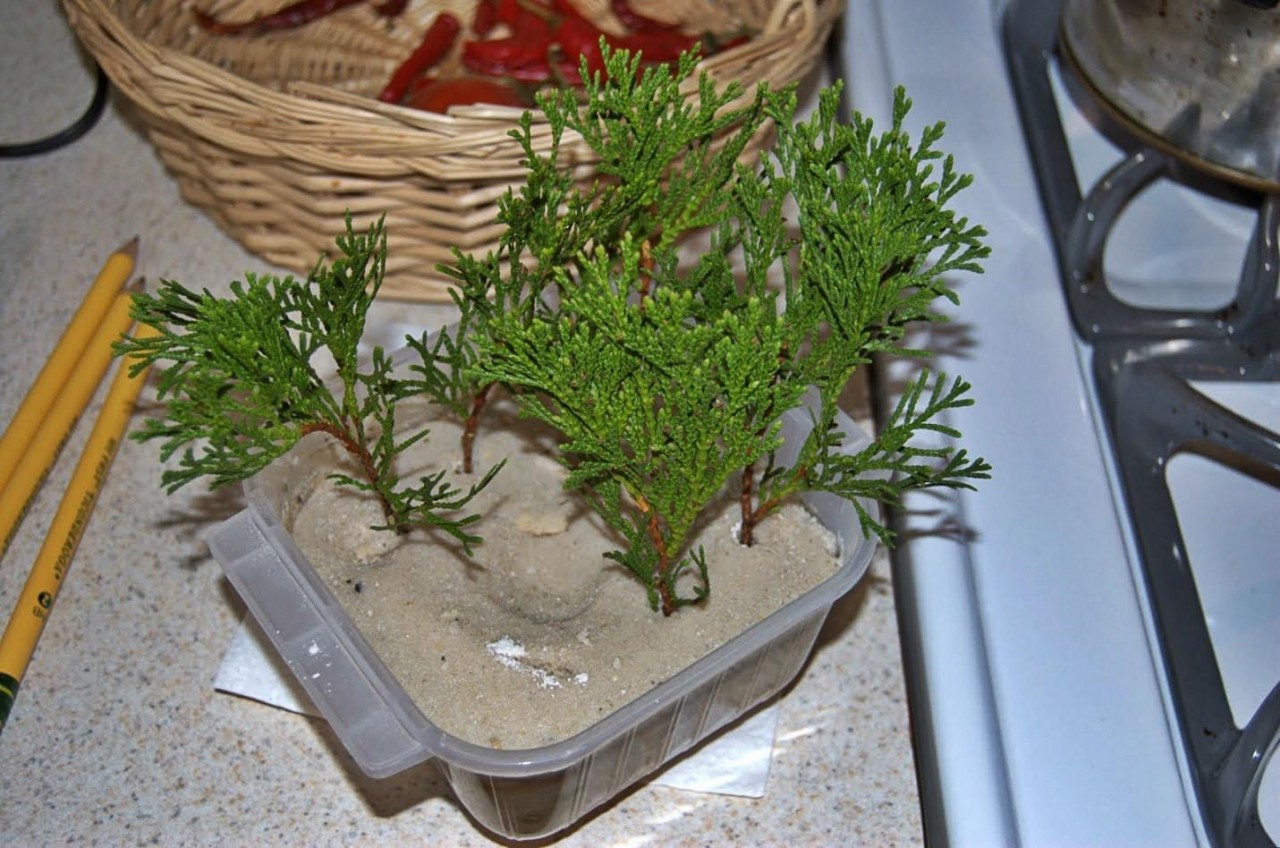
Planting: Choose a flowerpot or plastic box with several holes in the bottom so the soil can drain well. Prepare a mixture of peat and sand and make a small hole in it to insert the cutting. It should be planted about 2 cm deep.
-
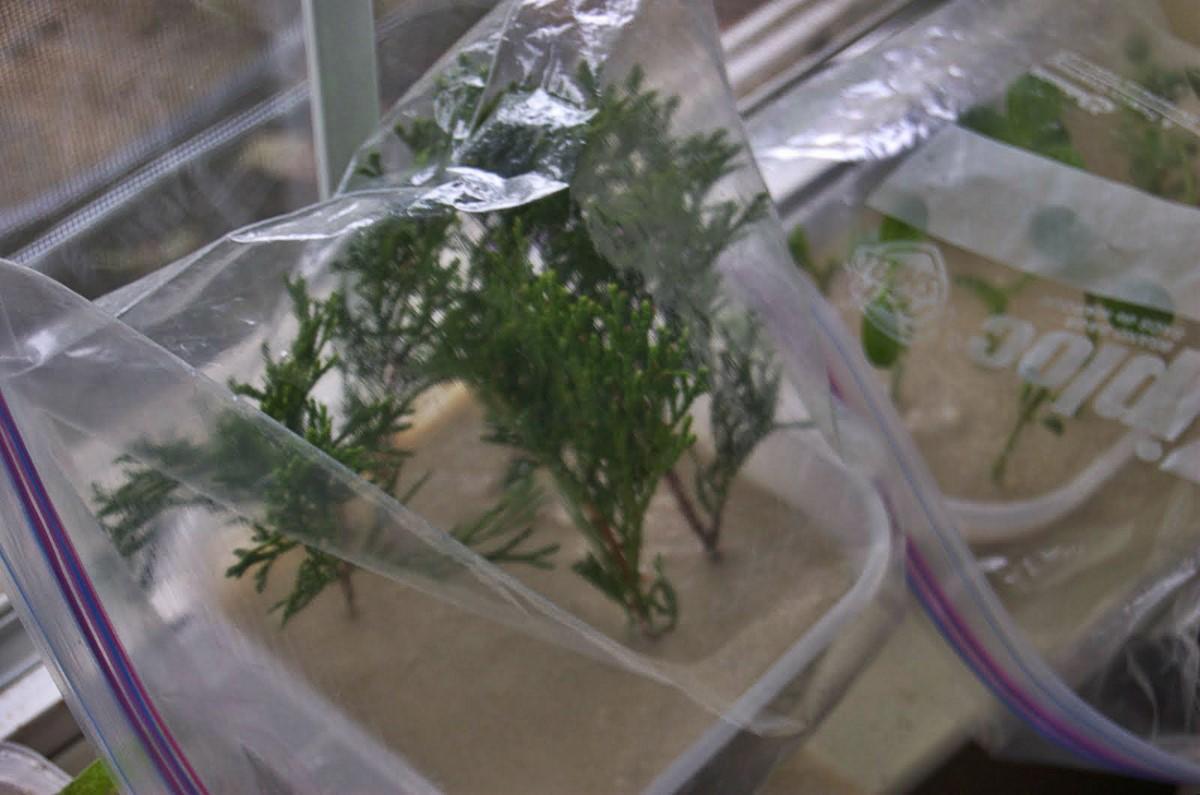
Caring for the cutting: Cover the pot with a jar or a plastic bag to maintain humidity. Place it in a warm, bright spot. Keep the soil moist but not waterlogged.
Transplanting and growth
-
Watering: Once the top layer of soil dries out, water it. Make sure the soil is not waterlogged, as excessive moisture can be harmful.
-
Transplanting: After approximately two weeks, move the cuttings into individual pots so they have enough room for further growth. It is ideal to grow thuja for 1–2 years in a warm place, for example in an apartment or a polytunnel, before planting them in their final spot in the garden.
Conclusion
Propagating thuja from branches is a simple and effective way to enrich your garden with new beautiful plants. Follow these steps and soon you will have beautiful, healthy thuja that will become the ornament of your garden or terrace. Enjoy the satisfaction of your own work and look forward to the results your gardening will bring!