
Article content
A few years ago I didn’t know it existed at all and now I can’t imagine gardening without it. This miraculous ingredient saved my thuja, protects the plants from pests and thanks to it I have a fantastic tomato harvest year after year. We’re talking about Epsom or bitter salt.
How to use it in the garden?
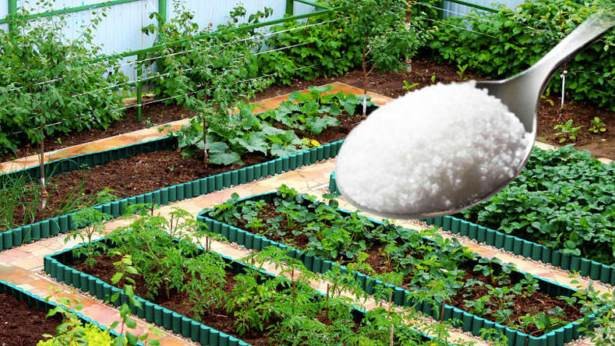
When sowing seeds and planting seedlings: For best results we recommend spreading 1 cup of salt per 10 m 2 of cultivated soil or adding 1-2 teaspoons of salt into each hole where you will sow seeds.
During plant growth, flowering and fruiting: spread 1 tablespoon of salt around each plant and water it. Repeat the procedure every two weeks. Another option is to prepare a spray from 1-2 tablespoons of salt and 5 liters of water and spray it around the plants using a spray bottle.
What can it do in the garden?
greener lawn: A lawn care expert recommends sprinkling the lawn with a few handfuls of Epsom salt. Thanks to its phosphorus and magnesium content, the grass will be thicker and the lawn greener and more attractive.
Improves seed germination
If you use Epsom salt in the garden as a fertilizer supplement when sowing, it will give your garden a strong boost from the very start. The magnesium in it helps seed germination, helps strengthen cell walls and fortifies seedlings.
Helps absorb nutrients
Many commercial fertilizers contain magnesium, which helps plants absorb other necessary nutrients such as nitrogen, phosphorus, or sulfur. For those farmers who use only organic fertilizers, Epsom salt can be an excellent aid because it will naturally improve the absorbability of nutrients.
Prevents yellowing and curling of leaves
Have you noticed that the leaves on plants are yellow or wavy? This is a known magnesium deficiency. If you add Epsom salt to the soil around a sick plant, the amount of magnesium in the soil will increase and this can improve these adverse signs. To further speed up the effect of the magnesium sulfate in Epsom salt, dissolve 2 tablespoons of salt in 3.5 liters of water and spray this solution directly on the leaves.
Protects the garden from pests
Although Epsom salt does not dehydrate slugs and snails like table salt (sodium chloride), it can also be used to control pests. The crystals of this salt are sharp and when scattered around plants, they irritate pests. However, keep in mind that Epsom salt dissolves very easily in water, so any (even small) amount of rainfall will cause it to dissolve and soak into the soil.
For beautiful roses
Abundantly blooming, healthy and beautiful roses. Sprinkle it around the bushes and water, or apply it as a solution to the soil around the roses.
Fruit will be sweeter
The process of fruit ripening is a very demanding phase in the plant’s life cycle. If you use Epsom salt during the ripening of fruit, nuts and vines as well as during seed germination, the concentration of chlorophyll inside the plant cell will increase, which is an essential source of energy for the plant. More energy for the plant means more sugar, which allows the plant to produce sweeter, healthier fruits.
A miracle for tomatoes
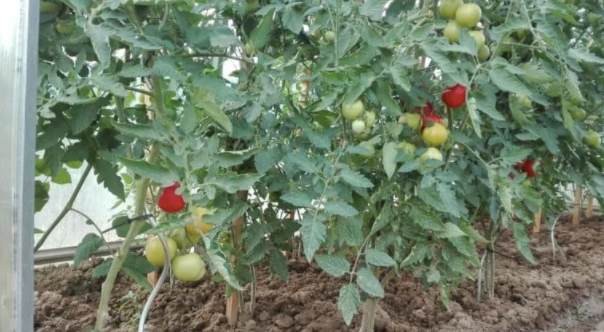
The fruits of the edible tomato are much larger than its other parts, which increases the likelihood that it will lack magnesium. Since tomatoes also need a lot of calcium for their growth, which is absorbed mainly by the roots, we recommend using an Epsom salt solution sprayed directly on the leaves when growing tomatoes. Prepare the solution by mixing 2 tablespoons of salt and 3 liters of water. You should use it every two weeks. After using it, everyone you know will envy your homegrown tomatoes because they will be much tastier and juicier.
More and larger pepper fruits
Pepper fruits are also larger than the plant and need as much magnesium as possible, so we recommend treating them similarly to tomatoes to achieve the highest yield.


