Article content
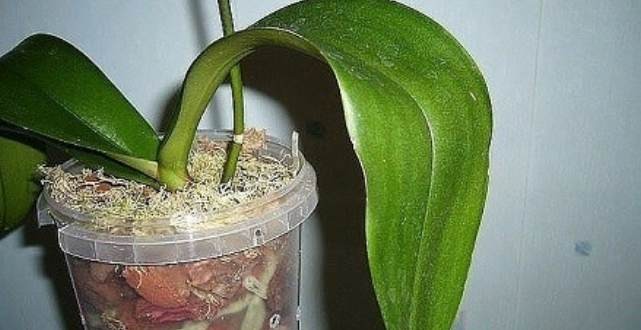
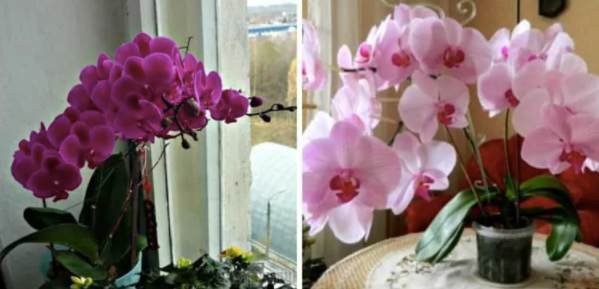
Has your orchid not been blooming for a long time, or is it doing poorly and quickly withering right before your eyes? The best way to help it is to remove it from the conditions it is currently in – the pot, the substrate, and give it a so-called radical cleaning . Not everyone knows how to properly handle an orchid during this procedure. If you do it this way and mix up a miraculous substrate (you won’t buy it in stores) , there is no way it won’t work on it. I’ve tested it on each of my nine plants!
If the plant has been struggling for a long time, don’t expect that any fertilizers or stimulants will revive it. For example, putting it into a new special substrate, which will also replace fertilizers and artificial nutrients for you
Step 1.
So remove the orchid carefully from the pot and place it in the sink. Be very careful not to break or damage the roots. The more developed the root system is, the more tightly the orchid will be locked in the pot. If necessary, rather carefully cut the pot and pull the plant out. If the plant comes out easily it may also be a sign that it has few roots and is weak.
Step 2
Carefully clean the roots and remove any remaining substrate. If the roots are tightly entangled and cannot be untangled, pour some room-temperature water into a bucket and immerse the roots for 10-20 minutes . Do not immerse the rest of the plant, only the roots. After that the roots can be easily separated even with your fingers. Finally, you can simply rinse off the remaining substrate – but be careful with the strength of the water stream. Roots, that absolutely cannot be freed, leave them as they are – do not force them . However, the less old substrate remains on the plant, the better.
Step 3
Now you must carefully inspect the roots – this is the most important step. Rotten and dry roots must all be removed. If only a part of a root is damaged, remove only that part . Always disinfect your scissors before cutting a root – the plant is most vulnerable through its roots. Finally, treat the cut areas with activated charcoal or ground cinnamon.
Step 4
Focus on the leaves – If any are dry, remove them. Be very careful around the stem so you don’t damage the healthy leaves and the stem itself. Also trim any dry and old parts of the spike.
Step 5
Let the plant dry for about 2 hours . It can be placed in the pot no earlier than 2 hours. Before putting it into the pot, make sure there is no water left in the leaves.
Step 6 – substrate that will replace fertilizers and expensive store-bought nutrients
So the base is pine bark, you can use commonly sold mulch bark, I put the material in the oven at 50 degrees for an hour and while still warm we cut it into small pieces – when it dries, it’s hard to do . The second component charcoal – break into small pieces , the third perlite and the fourth expanded clay (keramzite) -that goes on the bottom of the pot as a drainage layer (we can replace it with polystyrene).
Put keramzit on the bottom of the pot and then the substrate mixed from these 3 components. The pot should be sized so that the plant has 1-2 cm of free space on each side.
Level the orchid in the pot so that the neck is even with the rim of the pot. Do not press it down and after repotting do not water for 4-5 days.