
Article content
This autoimmune disease, in which the immune system attacks the body’s own cells, occurs especially in women during menopause, or in girls at the onset of menstruation. Causes can vary, from inflammations and infections, through borrelia and endocrine disorders. Translated from Greek, the name of this disease means „hard skin,“ however in the case of systemic scleroderma organs are also affected.
Localized scleroderma
This (more common) form of the disease affects only the skin and surrounding tissues, mainly localizing on the limbs and chest. If localized scleroderma affects the joints, it can cause arthritis. If it affects the eyes, it causes uveitis. Typical for this form is hard and shiny skin, on which a red or purple border may appear, indicating an inflammatory process. The course of this disease is limited in most cases to a few years, during which healed lesions may leave pigment spots on the skin. Likewise, the hard skin may soften after several years. In children this disease can cause uneven growth.
What treatments are available?
The aim of treatment for this disease is to stop the inflammatory process. If the inflammation is suppressed, the body begins to absorb some of the connective tissue and the skin softens. Treatment of localized scleroderma can proceed in various ways – from mere observation to treatment with drugs that have immunomodulatory effects. In severe cases, an aggressive type of treatment is required. If affected joints are underestimated, the disease can cause limbs of different lengths. Rehabilitation is thus a necessary part of treatment in these cases. Last but not least, regular massage is important in treatment, which in combination with a moisturizing cream fights against the hardening of the skin.
Systemic scleroderma
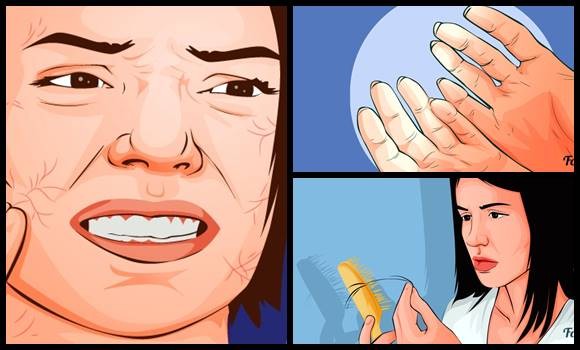
This form of scleroderma begins with a change in the color of the fingers when transitioning between warmth and cold, but also with defects on the fingertips or hard and shiny skin on the nose. The hard skin can spread over the whole body, accompanied by joint pain and swelling of the fingers. Other symptoms may include dilation of blood vessels, subcutaneous calcium deposits or thinning of the skin. Internal organs that may be affected include the lungs, heart or intestines.


