
Article content
Is it bad if you lie down in bed at night with wet hair after a shower or bath?
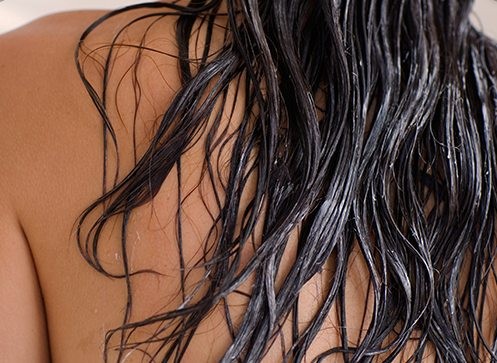
Our mothers always told us that it’s not good to go to sleep with wet hair, because you can catch a chill or even get pneumonia.
Is it true or just a myth? In this article we take a little closer look.
Pneumonia is unlikely. However, if you go to bed immediately after a bath without properly drying your hair, it can backfire on you.
Prolonged moisture held on the head can lead to inflammation of the scalp, which manifests as unpleasant itching. It can also damage the hair itself.
Now let’s take a closer look at the individual points and what can happen.
1. Headaches
Did you know that sleeping with wet hair can cause severe headaches?
The reason is that evaporation of water is actually a physical cooling process. Your head cools during the night to a different temperature than the rest of your body.
Washing your hair with warm water won’t help either. Cooling will still occur, even faster, because warm water evaporates more quickly and thus more effectively removes heat from the body’s surface.
One theory of headache development is that it arises as a result of either excessive or insufficient blood flow to the meninges (the membranes covering the brain).
A changed head temperature will then force the body to change blood flow to compensate for the resulting temperature differences.
2. Hair breakage
Hair that dries after a prolonged period of moisture has increased brittleness.
If you decide to go to sleep with wet hair, there’s a good chance your hair will break more than usual.
3. Hair sticking together
Wet hair tends to stick together while drying. In the morning it will be much harder for you to comb them out.
With short hair this may not be a big problem. However, if you have long hair, you should avoid this bad habit. Otherwise you’ll end up with matted and broken hair.
4. Infections
Pillows are an ideal place to absorb moisture, dead skin cells and body oils. Together they create an ideal environment for the growth of various pathogenic bacteria.
Wet hair will dampen the bedding and pillowcase, and an infection may not be long in coming.
5. Itching
Sleeping with wet hair causes various kinds of itching and irritation of the scalp.
If you suffer from eczema, psoriasis or acne, these problems can be exacerbated. Therefore always thoroughly dry your hair before going to bed.
6. Muscle and joint pain
Similar to headaches, changes in body temperature can also cause pain in the muscles of the head and the joints of the neck.
There have even been cases of severe cramps or even facial paralysis. This can then spread to other parts of the body.
7. Dandruff
Moist skin hinders the proper function of the sweat glands. Then either more or less sebum than optimal will be produced.
The natural pH of your scalp is disrupted and the result is often increased dandruff formation and problems with oily hair.
Conclusion
If you want to avoid all the problems mentioned, avoid lying down in bed with wet hair.
Dry your hair well with a towel and, if it’s long, with a hairdryer; or don’t bathe right before sleeping, but at least 1 hour earlier. Your health will thank you for it!


