




The couple are raising their 6 children. And this is what they look like 30 years later

0
(0)

Jan , 23. 12. 2025

Article content

On November 8, 1983 the Waltons’ lives changed so much that their story became known to almost or literally the whole world.
It was on that famous day that Janet gave birth to 6 children, who thereby became the first set of sextuplets in the world to survive birth in good health and well-being.

Janet remembers that it was an unusually warm autumn day and she was most afraid that she wouldn’t make it to the hospital. The car that was taking them to the hospital got stuck in a traffic jam because a carpet had fallen out of a truck.

More than 30 years later

Today, more than 30 years after the birth, one of their daughters gave them a long-awaited grandchild. When the new grandmother took her in her arms, she couldn’t believe that her granddaughter weighed 3.3 kg, which was considered normal. When Janet gave birth, each of her daughters weighed just a little over 1 kg!

It’s funny that before that the couple had thought about adopting children from an orphanage. No supplements or medicines helped Janet, even though the doctors told them that they were both completely healthy.

The news of the pregnancy therefore came as quite a surprise. Whatever was to happen, they had no intention of turning their backs on their fate. Janet decided to devote herself exclusively to the children and Graham took a whole year off to help his wife.

The girls spent the first six weeks in the neonatal intensive care unit. Then the parents could take them home, where the daily whirlwind began.

Sextuplets on the way home
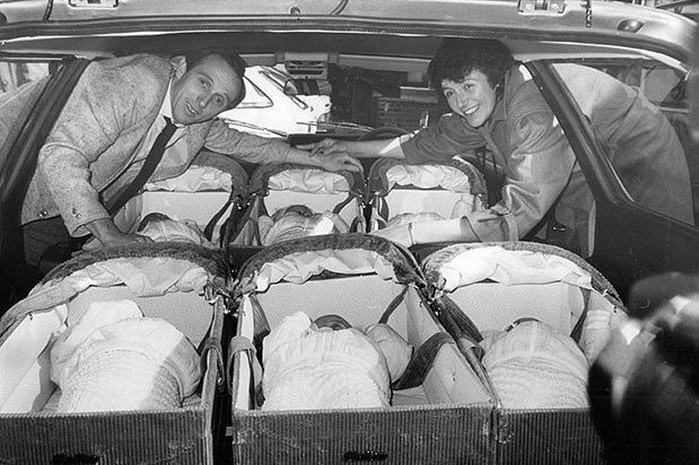
It was constant care

Today, when her daughter says that the granddaughter didn’t want to sleep at night, Janet just smiles. For two years the couple, together with the six children, slept no more than a few hours a day.
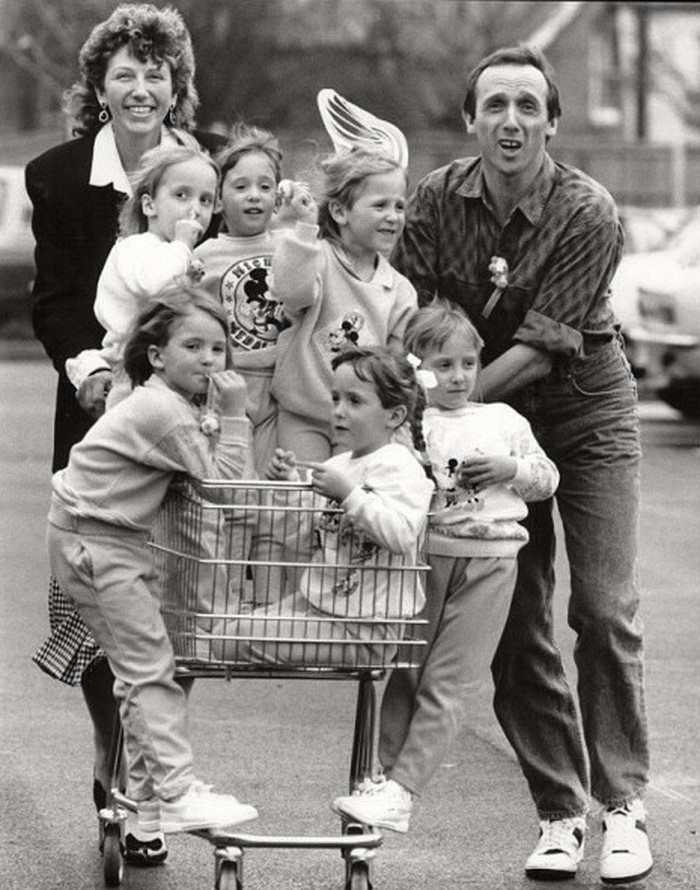
11,000 diapers a year

They recently calculated that during the first year they had to buy their daughters at least 11,000 diapers. The husband still remembers how the whole house smelled of laundry detergent and baby powder.
Walks were challenging

On walks some of the children were in a double stroller and others were carried in their arms. If visitors arrived, the couple would give them the third stroller and they would all go for a walk.

A year after the daughters’ birth Graham returned to his job as an arranger. A few years later Janet also took a job at the hospital in the neonatal ward, where she worked until retirement.

The most interesting thing is that just a few months after Janet retired, her first granddaughter was born in the hospital.

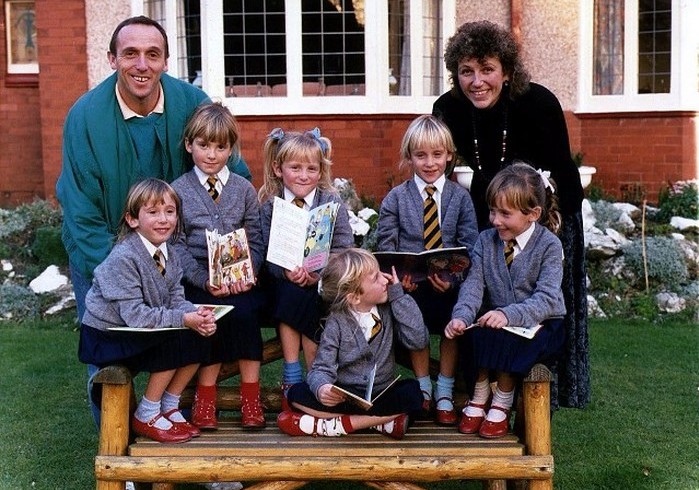
This is how they look today

From the first days of her life the newborn granddaughter became the center of attention, after all the little one has, besides parents and grandparents, 5 aunts! The family meets regularly and the Waltons look forward to when their other daughters will also announce that they are expecting further additions to the family.

However, they are not yet planning to start families themselves, although they have nothing against children. But they are not determined to have sextuplets, as their mother did.

Although Janet could not imagine life with a swarm of children, she passed this test excellently and all of her daughters grew into successful women. For her selfless efforts in raising them, they gained the most precious things – a strong family and the love of all her daughters.


Cholesterol and sugar: what really raises LDL and how to protect the liver

Eggs, liver and bacon are often labeled as the main culprits of high cholesterol. The reality is more complex. For most people, dietary cholesterol has only a limited effect on blood cholesterol levels. Much more important is the overall diet, the proportion of saturated and trans fatty acids, intake of added sugars, body weight, genetics and lifestyle. Below you will find a balanced overview of what the facts say – without myths and shortcuts.

What cholesterol is and why the body needs it

Cholesterol is a fatty substance essential for building cell membranes, producing hormones and vitamin D. In the blood it is carried in the form of lipoproteins. LDL ("bad") carries cholesterol to tissues, HDL ("good") takes it back to the liver. The goal is to keep LDL low and HDL in an appropriate range.

Dietary cholesterol vs. saturated fats and trans fats

In most healthy people, dietary cholesterol (e.g., from eggs) has only a small effect on LDL. A much stronger factor is saturated fats (fatty processed meats, high-fat cheeses, large amounts of butter) and trans fats (industrially hydrogenated fats), which raise LDL and can lower HDL. Eggs are also a source of nutrients (e.g., choline), so for most people they can be part of a balanced diet.

How added sugars and refined carbohydrates worsen the blood lipid profile

High intake of added sugars and refined carbohydrates (sweetened drinks, sweets, white bread) raises triglycerides and promotes the development of nonalcoholic fatty liver disease (NAFLD). The liver then more often releases VLDL/LDL particles and the overall lipid profile worsens. The liver is particularly harmed by excess fructose from sweetened drinks and syrups.

The role of choline and "healthy" fats

Choline (eggs, lean meat, legumes) helps form and export fat particles from the liver, thereby supporting its normal function. Monounsaturated and polyunsaturated fats (olive oil, nuts, seeds, fish) can lower LDL and some fractions of inflammatory lipids, if you also limit saturated fats and added sugars.

When eggs can be a problem

For a portion of the population with a genetic burden (e.g., familial hypercholesterolemia) or for people with very high LDL, even dietary cholesterol can play a larger role. In such cases, individual recommendations from a physician and a nutrition therapist are decisive.

Practical meal plan for healthy lipids and liver

  • Limit added sugars: sweetened drinks, confectionery, excess white-flour baked goods.
  • Prefer unsaturated fats: olive oil, rapeseed oil, nuts, seeds, avocado, fatty sea fish twice a week.
  • Reduce saturated fats and avoid trans fats: processed meats, fast food, toppings made from partially hydrogenated fats.
  • Eat enough protein: fish, poultry, eggs, legumes, fermented dairy products – they support satiety and muscle maintenance.
  • Fiber: vegetables, fruit, whole grains, legumes – soluble fiber helps lower LDL.
  • Alcohol in moderation: excess increases triglycerides and burdens the liver.
  • Hydration and exercise: 150–300 minutes of moderate activity per week (brisk walking, cycling), strength training twice weekly.
  • Body weight: even a 5–10% weight reduction can noticeably improve triglycerides and LDL.

Key takeaway: it's not "forbidden eggs", but the overall dietary pattern

For most people, eggs or liver alone do not "cause" high cholesterol. The key is the combination of fewer saturated fats, less added sugar and more unsaturated fats, fiber and exercise. If you have high LDL, a family history or liver disease, discuss a specific eating plan with your doctor – sometimes pharmacotherapy (e.g., statins) is also necessary.

18. 12. 2025 Jan
0
(0)