Article content
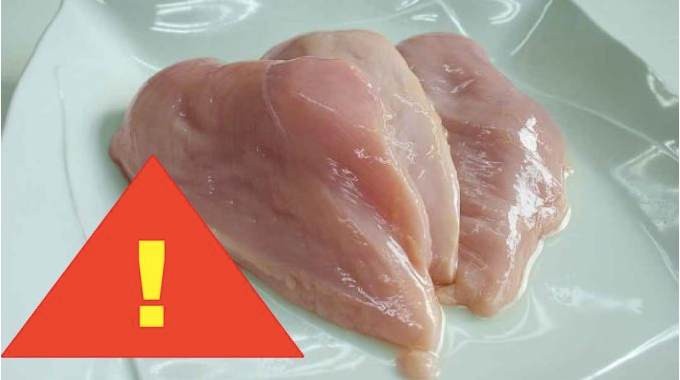
Even if you’ve been used to it until now, it’s time to say goodbye to washing raw chicken. Why?
The Centers for Disease Control and Prevention (Centers for Disease Control and Prevention, CDC) estimate that in the United States alone 3,000 people die each year as a result of foodborne illnesses.
Raw chicken contains a genus of bacteria that are one of the most common sources of food poisoning ( Campylobacter ). Common sense therefore dictates that we should wash raw meat before handling it. It has turned out that in reality it should be completely different.
Meat is usually contaminated with bacteria during processing, and traces of animal feces can also remain on it after this process. If you buy contaminated meat and run water over it, its droplets will spread pathogens onto everything they hit: your hands, kitchen utensils, the apron and clothing.
As the British National Health Portal states, “water droplets can affect an area up to 50 centimeters in every direction. Food poisoning can occur from just a few Campylobacter bacterial cells.”
How to clean the chicken instead?
So if it’s not appropriate to wash the chicken before cooking, how do we remove the harmful bacteria from it? The most effective method is to simply cook or roast it. It is advisable to follow a few rules:
- When thawing, let the chicken thaw. Let the chicken thaw on the bottom shelf of the refrigerator so that the draining juices do not reach foods placed underneath it.
- Wash your hands and used utensils. Everything that comes into contact with raw meat needs to be thoroughly cleaned.
- Don’t underestimate cooking the chicken. When you take the chicken out of the oven or pot, it should be steaming. No part of it should remain pink and only clear juices should run from it. If you have a kitchen thermometer at home, you can measure its temperature, which after cooking should not fall below 74 degrees Celsius.