Article content
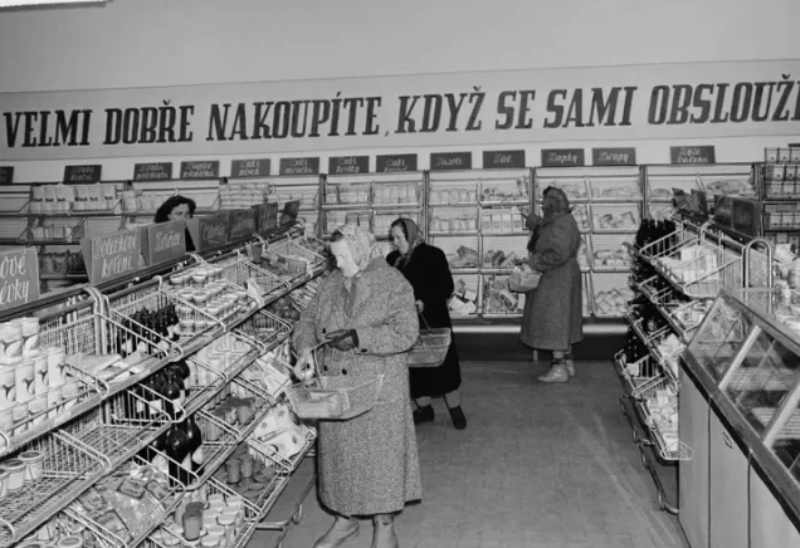
Shopping habits and customs during socialism differed significantly from today’s standard. In Czechoslovakia, where supermarkets did not exist until 1993, people had to rely on self-service shops and counter stores. The first self-service store opened in June 1955 in Žižkov and brought a revolutionary change – customers could choose and buy goods themselves, which was a novelty at the time.
Queues for scarce goods
With the development of panel housing construction in the 1960s and 1970s, self-service shops became the center of everyday life. Not only did people shop there, but they also met and discussed current events. A common phenomenon was queues for scarce goods, such as bananas, oranges or mandarins, which were mostly available only before Christmas. Having access to better products, such as exotic fruit or high-quality cold cuts, required having friends among the saleswomen – which meant access to under-the-counter goods.
The aroma of fresh coffee and milk in a bag
In the shops one could smell the characteristic aroma of fresh coffee. The Standard brand coffee was whole-bean, and after paying everyone ground it themselves in the grinder that stood behind the cash registers. Another typical product from that time was milk in a bag, which was called the “plastic udder” and which sometimes burst even before you had paid for it.
Specialty foods and Tuzex
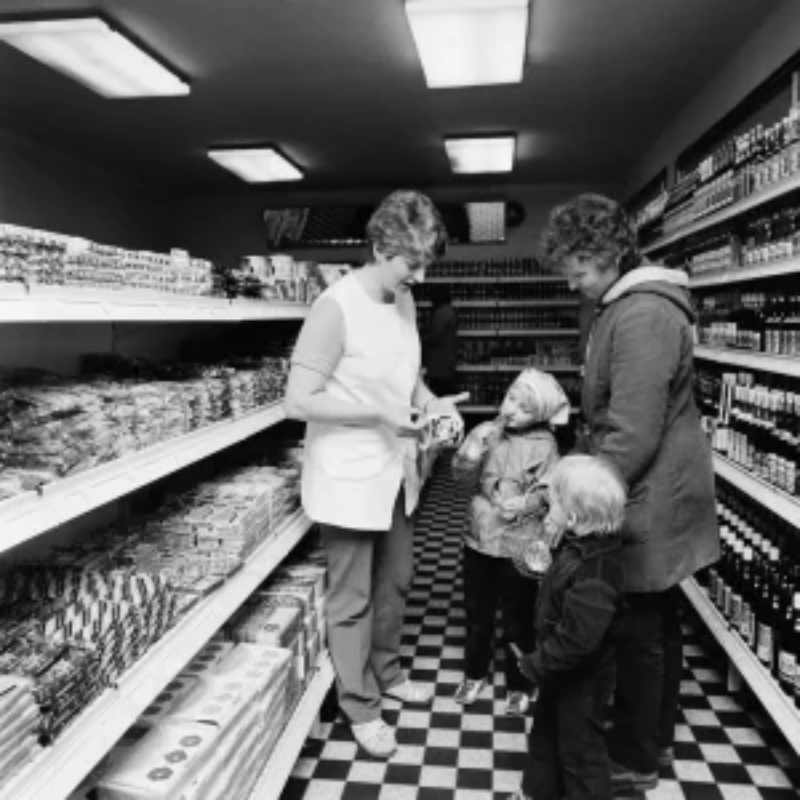
Another type of store was the so-called ESO, where specialty foods were sold. These shops were located only in larger cities and offered more exclusive goods that the average citizen could not afford to buy every day. A special category was Tuzex, the domestic export store. It was a chain of shops where, for foreign currencies or Tuzex vouchers, one could buy goods from Western countries that were not obtainable in the regular distribution.
This is how shops looked during socialism. These were times when the shelves were not full and the selection was limited, but people found ways to cope with these difficulties.