Article content
If you visited one of the Czech canteens or restaurants before November 1989, you would usually encounter beer poured short of a full measure, surly service, and prices that seem fabulously low by today’s standards.
How did these dining establishments operate back then and what was it like to eat in them?
Under socialism, all food-service establishments fell under the state enterprise Restaurants and Canteens (abbreviated RaJ). Price categories for restaurants were established and standardized meal prices were set accordingly.
Opening hours
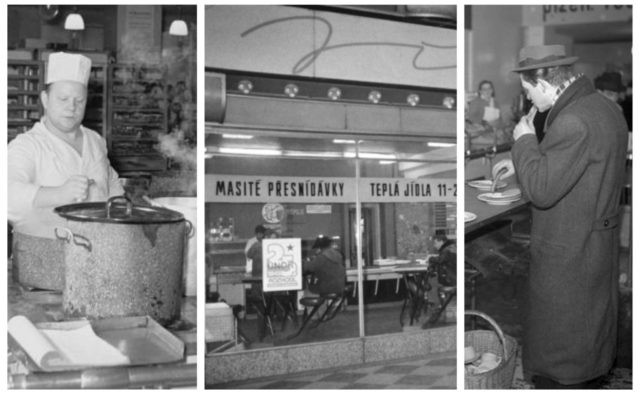
The opening hours of these establishments were precisely determined at the time. Most pubs closed around ten o’clock in the evening, which many of us probably cannot even imagine today.
Workers gathered in restaurants, canteens and inns early in the morning when they came for soup – the menu usually featured cabbage soup, tripe soup, or goulash soup. And there was always beer, a shot, or rum available.
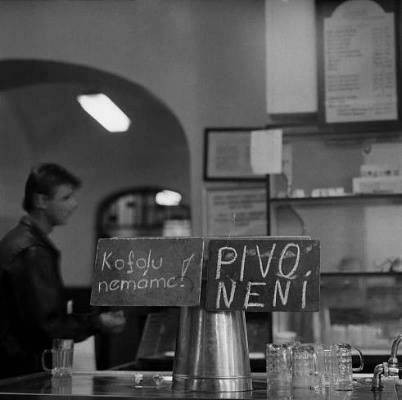
Canteens and inns were frequented mainly by workers, bricklayers or diggers – they came for lunch, sat over a beer and often stayed past working hours until closing time. When inspections came, alcohol was hidden under the table and drinks were swapped for non-alcoholic ones.
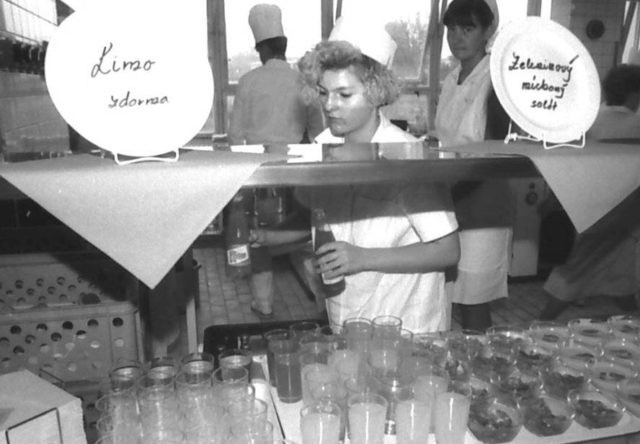
The same dishes everywhere
The dishes most often prepared were goulash, svíčková (marinated beef with creamy sauce) and braised meats. And as was customary, there was often skimping. In some establishments, for example, a leg would be substituted with a shoulder, rear beef would be replaced with front beef, etc. Around the 1970s chefs began adding breaded Edam cheese to menus. French fries were considered something special, so the cheese was usually served with potatoes.
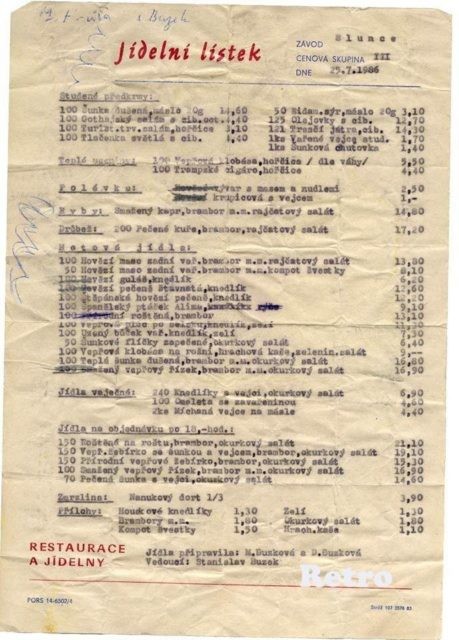
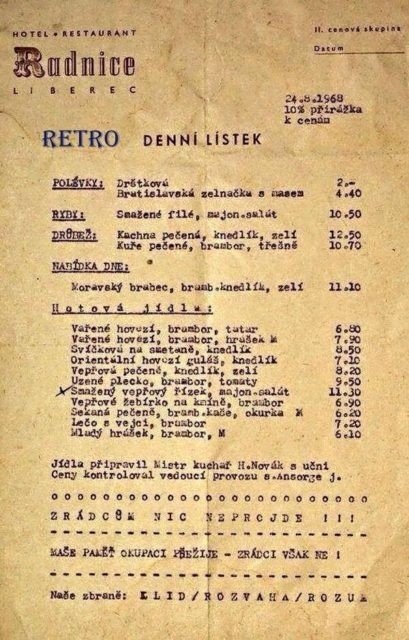
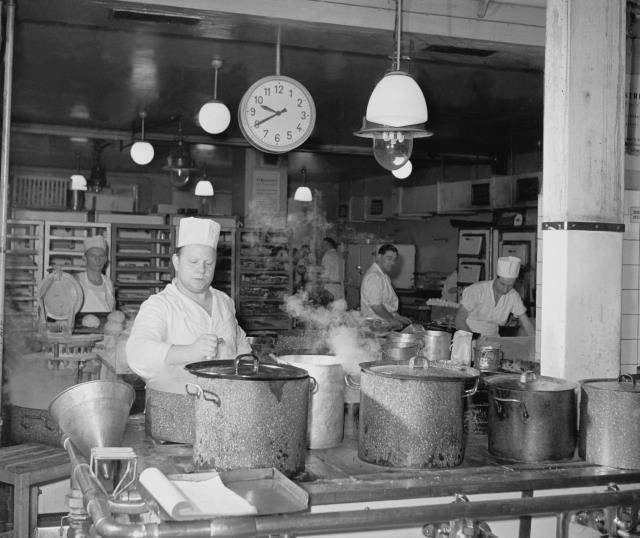
Cooking followed standards; everyone had to use the same ingredients in the same quantities
There were so-called normařky (standard recipes) which standardized for cooks all the ingredients that were to be in a dish. Chemical preparations weren’t used simply because they did not exist.
Restaurants offering other types of cuisine did not exist here; the exceptions were perhaps a Chinese restaurant in Prague or a few establishments focused on the cuisines of the „friendly“ nations of the Eastern Bloc.
The average waiter’s salary was about 1,000 Kčs, and because that was not a staggering sum, many looked for ways to improve their income. Usually, of course, not entirely legal ways.
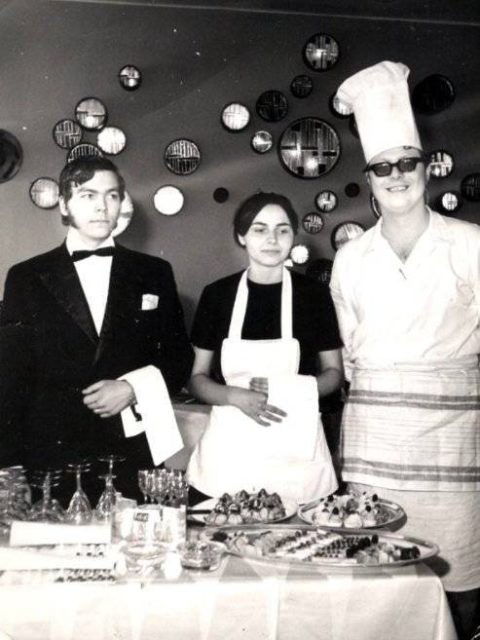
Well-known establishments during socialism included, for example, the pubs U Tygra, U Pinkasů, U Kalendů and U Holubů.
Food „to eat standing up“
The cheapest and quickest meals were offered by automats. The first and also the most famous was the Automat Koruna at Můstek in Prague. It was frequented by all social classes, including President Zápotocký.
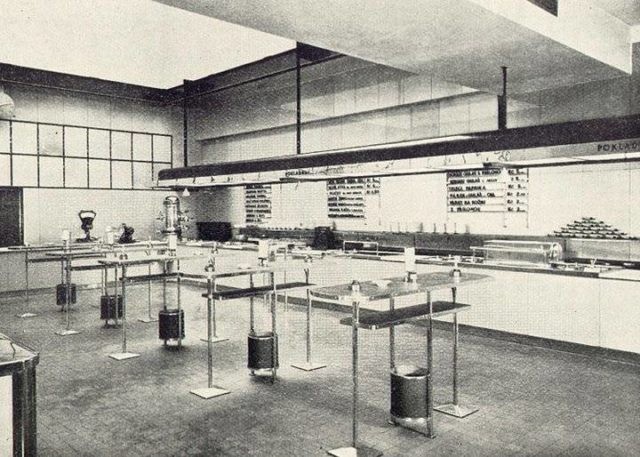
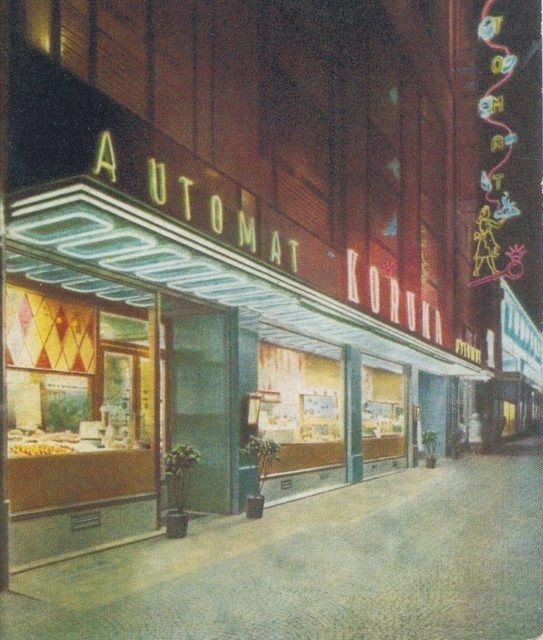
The well-known buffet opened as early as 1931 and its name „automat“ was derived from the fact that here people could, after inserting a coin, pour lemonade from a brass cup and taste a decorated open sandwich from an automatic window.
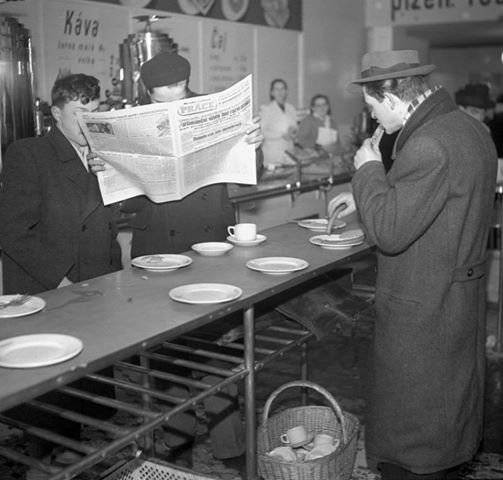
When the Communists came to power, the automat fell into considerable decline. Nevertheless it remained a very popular place where people went for sausages, frankfurters, lemonade, open sandwiches, cocktails or Russian eggs.