Article content
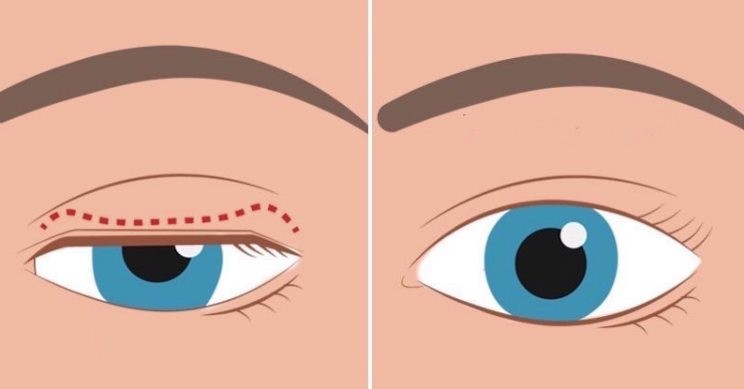
As we age gradually, we not only get wrinkles on our face, but we can also expect sagging of other parts of the skin, for example on the eyelids.
However, drooping eyelids are not just a cosmetic problem. If they sag too much, they can cover the lenses and block vision, significantly affecting our daily life.
This condition is sometimes also called ptosis and it doesn’t only affect older people. It can occur in middle age or even in young people.
In such cases it is not a sign of aging, but rather points to a muscular or nerve disorder that requires a visit to an ophthalmologist. This is especially true if the drooping of the eyelids occurred overnight.
In this article we will focus on ways to firm up sagging skin on the eyelids if it is a natural result of aging or excessive wear due to fatigue, stress, illness or poor lifestyle.
1. Tea bag compresses
To relieve pain, swelling and discomfort associated with drooping eyelids, apply used tea bags, preferably chamomile tea. Of course, only after they have cooled, never while hot.
Squeeze excess liquid from the bags, lie down on a couch or bed, place the bags on your closed eyelids and relax.
According to research from Case Western Reserve University, chamomile suppresses inflammation, calms the nerves and is especially beneficial for eye inflammations thanks to several phytonutrients it contains.
Besides inflammations, it also helps with several other eye problems, such as blocked tear ducts.
2. Acupuncture
If ptosis is caused by neuromuscular reasons, acupuncture can help well in these cases.
An experienced acupuncturist will insert needles into certain points on the face to help specific muscles regain their tone.
It usually requires several repeated visits and acupuncture sessions.
3. Vitamin B12
It is a very important vitamin for the proper function of nerves and muscles. This is especially true for vegetarians and vegans, who quite often suffer from its deficiency.
According to experts, an adult needs about 2.4 micrograms of vitamin B12 per day. If you do not eat fish and beef, you should consider supplementing it in the form of dietary supplements.
Increasing vitamin B12 intake through diet is indeed simple – just include wild fish such as salmon, tuna or mackerel or beef, veal, or possibly chicken in your diet.
4. Exercises to strengthen the eyelids
If your sagging eyelids are caused by aging or weakened muscles, eye exercises can help you quite well.
For the first exercise, close your eyes, place your fingers above the eyes on the brow bones (at the base of the eyelids) and try to open your eyes by lifting your eyebrows as high as possible. Do 10 to 15 repetitions.
For the second exercise you will need a mirror. Sit in front of a mirror, place your index fingers just below your eyebrows. Then raise the eyebrows upwards and then close your eyes. Blink 5 to 7 times and finally gently squeeze both eyes shut. Do this exercise 10 times every day.
5. Eat foods that support eye health
By consuming foods that support eye health you will not only improve your vision, but they will also help you improve the elasticity of the skin and muscles around the eyes and eyelids.
These are mainly foods rich in lutein, of which you should consume at least 6 mg per day, and antioxidants carotenoids, which reduce the risk of macular degeneration and cataracts.
Foods rich in lutein include kale, green leafy vegetables, spinach and Brussels sprouts.
Foods rich in other carotenoids are carrots, peppers, sweet potatoes, tomatoes and other yellow, orange and red fruits and vegetables.
6. Avoid eye strain
Eye strain is quite a big problem in today’s technological world. We spend too much time looking at the screens of phones, tablets, computers and televisions.
Keeping your eyes focused at a constant distance with poor lighting is a direct recipe for tired and overstrained eyes.
Remember one rule. During long work with electronic devices, take a 30-second break every 10 minutes during which you will look into the distance.