
Article content
Who wouldn’t know the cult Czech series “Žena za pultem.” Shelves full of all kinds of open sandwiches, pastries, chocolates, meat straight from the slaughterhouse and other consumer goods for everyone.
How it really was is known only to those who remember that time.
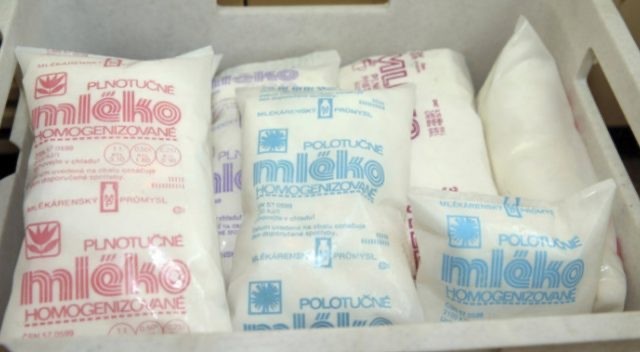
The actual availability of individual items was often laughable; there was a constant queue for meat, often very long, and sometimes someone didn’t get any, oranges, tangerines or bananas we didn’t know at all and a surprise egg (kinder surprise) was a far-off village. The main thing was that there was always enough milk in a bag.
Opinions that it was better under the Communists?
Nevertheless, in recent years opinions have appeared that it was better under the “Communists”. This is mostly in connection with food, its price and quality. Unfortunately people have forgotten what else existed at that time; almost zero public information about anything that did not concern the annual congresses of the Communist Party and similar events.

A misleading impression was deliberately created that everything around was healthy and contained no harmful substances. If someone nevertheless discovered that there was a dangerous substance in a product (and we do not mean only food), that information was swept under the rug.
These reports are important mainly for non-smokers, teetotalers, athletically inclined people and others who take care of their health, and yet have developed, for example, colon cancer, or clogging of arteries and vessels, due to which they lost a limb. “How is that possible?” they ask. “I don’t smoke, I don’t drink, I eat healthily, I exercise and I have such a terrible disease.”
Yes, all this is very likely the consequence of unspoken truths about what was added to the “quality domestic products” in the days when a regime ruled in which everyone put everything into everything and everyone had everything together.
Here you can read about several of them:
Benzene
For a long time after its discovery it was considered a preservative with excellent effects, which is why it was added, for example, to mustard. Further research revealed that it definitely does not belong among health-beneficial substances; it is classified as a Group 1 carcinogen and causes mainly leukemia and lung cancer.
Polychlorinated biphenyls
Polychlorinated biphenyls PCB began to be widely used as additives in paints and varnishes in the 1930s in America, from where they gradually spread around the world. Again, the opinion prevailed that they do not harm human health or nature.
In the 1960s the first signs began to appear that PCBs might not be as harmless as they seemed. Detailed research revealed that although acute toxicity is low, due to their persistence and bioaccumulation, their chronic toxicity is very dangerous. It was proven that they accumulate in meat, milk, eggs or, for example, in butter and fish.
The reason PCBs entered the food chain was their use in coatings on silos and cowsheds, from where these toxins transferred to feed for cattle and hens. After consumption of contaminated food, animals experienced the mentioned bioaccumulation, i.e. poor excretion from the organism and accumulation of toxins in their bodies. It was proven that PCBs are well excreted in milk, which is a risk for subsequent generations. They are proven carcinogens that attack primarily the liver, pancreas and immune system.
DDT
This amazing discovery thrilled many people; after all, it killed insects and was supposedly harmless to health! The opposite is true; research again showed that DDT is indeed a great insecticide, but it has harmful effects on nature and humans.
It is highly bioaccumulative, it is stored in plants, from where it gets into the bodies of small mammals and from them into predators that form the top of the food pyramid. The human body acquires this chemical into its organs by eating contaminated meat, vegetables and water. DDT is a proven carcinogen and disrupts the hormonal system.


