Article content
Bleeding a radiator is an important step when starting the heating season, especially if you find that the heat exchanger does not heat evenly across its entire surface. As the heating medium (hot water) flows, air can enter the system, acting as thermal insulation and preventing the radiator from heating properly. Bleeding is done using a built-in valve that helps maintain the appropriate pressure inside the radiator.
How to properly bleed a radiator
The procedure for bleeding a radiator consists of specific steps that must be followed. The process can be carried out at any time (even if you have already started heating the dwelling). You will only need a container to catch the leaked heating medium and a key to open the valve to the desired position. The valve key is usually left in the apartment by the technician who services the boiler. If you don’t have one, you can buy it at any hardware store – it is a standard type of tool.
Procedure for bleeding a radiator
When bleeding, proceed as follows:
- Turn off the boiler and stop the circulation pump – this ensures that the flow of the heating medium stops and that, when the valve is opened, it will not be under pressure that could cause a large quantity of water to be ejected at once.
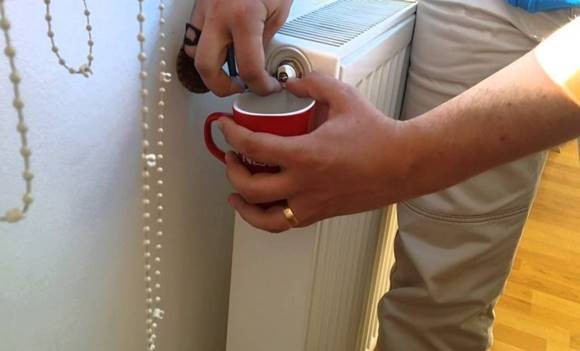
- Place a container under the valve to collect the draining water.
- Loosen the valve by gradually turning the key until water begins to flow from it – open the valve very slowly and as soon as water appears, let it drip slowly; there is no need to open it more, otherwise the water will gush out faster and cause pressure losses in the system.
- Air will start to be released when you hear a hissing sound. As long as only steam escapes, leave the valve slightly open. Close it immediately when drops appear again (this means the air pocket has been removed).
- Wipe the valve of any lingering drops and move on to the next radiator.
- When water flows from the valve again, it means that the system pressure has dropped. Close the valve and check the boiler pressure (if it falls below 0.8 bar, you need to top up the heating medium – open the filling valve) – the correct pressure in the system should be around 1.4-1.5 bar (maximum 2.5 bar).