
Article content
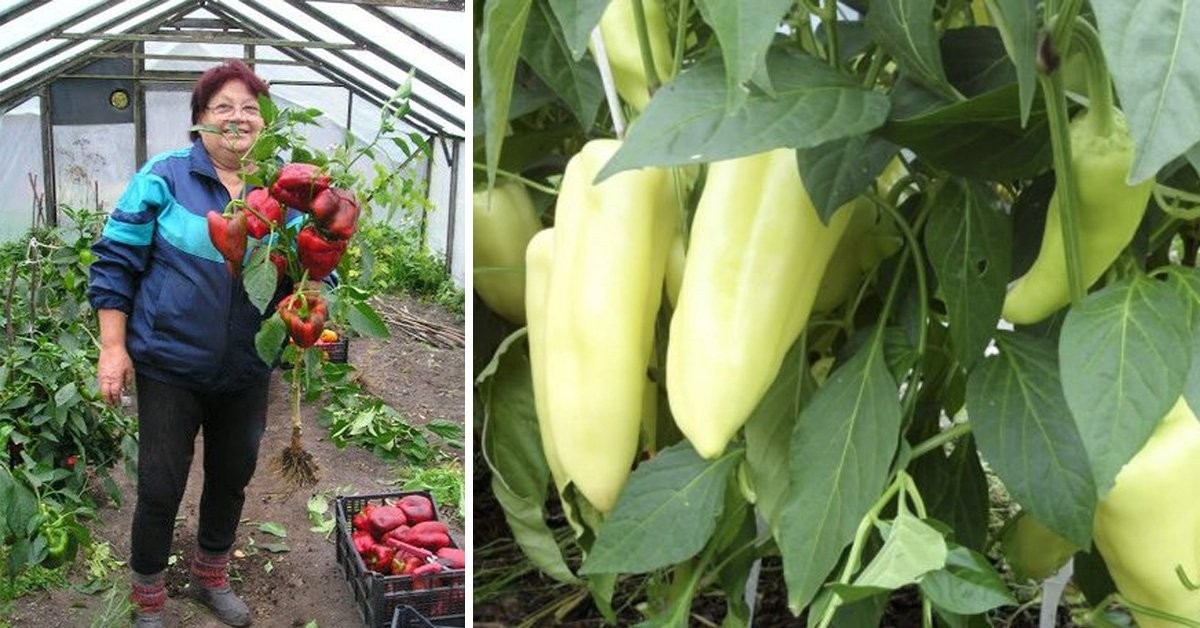
Sweet pepper provides the body with many important and beneficial nutrients – vitamins, minerals, and also fiber. For direct consumption we recommend simple varieties for growing and thick-walled types. However, to grow a thick-walled pepper you need to provide it with fertilization and quality care. The so-called Bulgarian pepper is crunchy, juicy and is ideal for salads, side dishes, and also for direct consumption. How to grow such a Bulgarian pepper?
Selected variety
First it is necessary to understand that different types of peppers can be used for different purposes. For example, varieties Ermak and Victoria can be used for sauces, for canning, and so on. In raw form varieties such as Gladiator or Medaile are suitable. Fresh Bulgarian pepper provides a lot of vitamins C and E, so it will not only be tasty but will also replenish important nutrients, energy and other useful micronutrients. And what is a big advantage of pepper? Minimal calories, so if you are on a diet, pepper will help you maintain a slim waist.
How to grow peppers
If you follow a few recommended steps for growing peppers, cultivation will not be difficult. First, however, you must sow the seeds and obtain seedlings. Once seedlings appear in the container that have at least three true leaves, transplant them into individual pots and wait until the seedling is sturdy and ready to be transplanted into the garden. In the garden prepare light soil. Do not grow them after potatoes, tomatoes or eggplant. It will be ideal if you give the soil at least 5 grams of organic fertilizer a year before planting. And five days before planting disinfect the soil with copper sulfate. It will be enough to dissolve one tablespoon in ten liters of water. You can plant peppers next to each other, but also for example corn. The corn will shade the peppers, which will certainly be good.
Fertilizing planted peppers
Peppers are demanding in this regard, and therefore after planting fertilize them for the first time only after two weeks. For this step the best is a mixture composed of: one tablespoon of urea, one tablespoon of superphosphate and ten liters of water. Pour and only then fertilize the soil around the pepper. This means that for each plant you will use approximately half a liter of fertilizer. Give the peppers the second fertilization at flowering: one tablespoon of urea, one tablespoon of potassium salt and superphosphate, mixed in ten liters of water. After watering, pour one liter of the mixture. The third fertilization will be simpler and is when green fruits are on the plant. Use two teaspoons of phosphate, two teaspoons of potassium sulfate and mix in ten liters of water. Pour a liter of the liquid. It is also possible alternatively to use yeast, which you mix with water and let stand for an hour, then water the soil around the plant. Be careful to pour only half a liter of fertilizer per plant. During the season you can fertilize four times a year.
When the plant is flowering
Besides yeast you can use a fertilizer prepared from nettles. Mix the ingredients: one kilo of nettles, one liter of water and one cup of wood ash. Mix everything and leave it in the sun for about one week. Mix the finished fertilizer in a ratio of one to ten with water. Pour one liter of the liquid to each plant. It is a purely ecological product that will give the peppers strength, and moreover they will be beautifully large and strong. Such a harvest will surely please you.


