Article content
Baking soda should not be missing in any household. Besides being added to dough, its cleaning properties are well known. But did you know that baking soda can also help us quite a bit in the garden? For a few crowns it will provide perfect nutrition for plants and protection against various pests. Thanks to it, tomatoes, eggplants, cucumbers, and zucchini will thrive.
Protects against molds and fungi
Thanks to baking soda you can forget about chemical fertilizers, which do rid pests but also have a negative impact on fruit quality and the environment. Baking soda will protect plants from root molds and fungi, extend the fruiting period, improve the taste of the produce, and prevent aphids and caterpillars from destroying your crop. And all this without any adverse side effects.
If you want to prepare a fertilizer from baking soda, dissolve two tablespoons of soda in ten liters of hot water. Stir well so that the soda fully dissolves. Let it stand until it reaches room temperature. Then water the crops at the root with this water. For better effectiveness you can first water the soil with clean water. This solution stimulates fruiting and prevents root rot. It’s also recommended if you have acidic soil in the garden, because baking soda can neutralize acidity to some extent.
Be careful about the correct amount
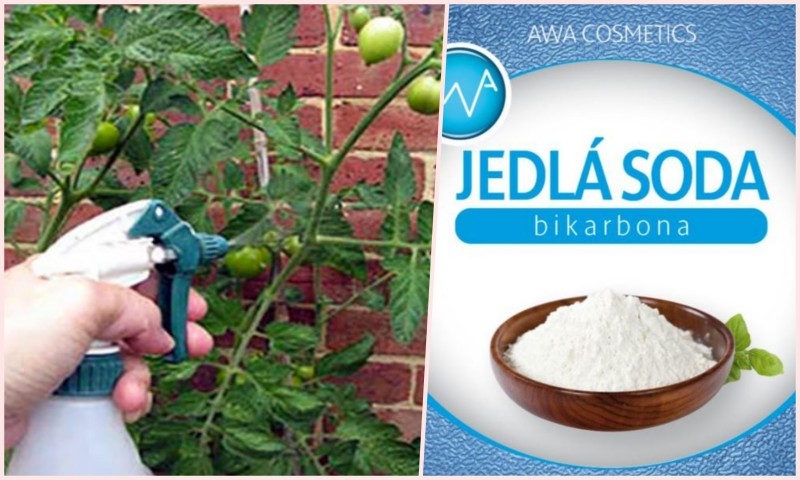
A solution of baking soda and soap will help against molds. Grate forty grams of soap on a grater and dissolve it in hot water. Dilute with ten liters of water, add two tablespoons of baking soda and mix thoroughly. Pour the solution into a sprayer and spray the leaves, especially in the parts most affected by mold. If you use the solution only preventively, apply it once every ten to twenty days.
It is necessary to observe the correct amounts and intervals of use
Otherwise it could harm the plants. When preparing the spray always mix the mixture well so that the baking soda fully dissolves. Spray the plants using a sprayer with small holes and always do it in the evening so that the moisture on the leaves does not cause them to burn. Don’t overdo the care; the minimum interval between treatments is three days.
Attack aphids with a spray
A spray with soda and wood ash will reliably deter aphids. Add two tablespoons of ash to a bowl with a liter of warm water and let it steep while stirring regularly. Add the same amount of baking soda and dilute with ten liters of water. Mix thoroughly and spray the leaves. Aphids usually occur on the underside of the leaf, where they suck the sap from the plant, so apply the spray thoroughly.
Baking soda doesn’t appeal to slugs either
If you sprinkle it around the beds, you create a protective barrier they won’t easily cross. In extreme cases you can pour soda directly onto slugs; it will dry them out immediately. And if ants have overrun your garden, sprinkle their nest and places they frequently visit with baking soda as well. After some time they should move away from the garden.
To support flowering
Baking soda will also benefit geraniums, begonias, hydrangeas, and roses. Prepare a fertilizer for them by stirring a tablespoon of baking soda into two liters of lukewarm water and let it cool. Apply the watering about once every two weeks; the flowers will then grow better and bloom longer. You can further improve the solution with a teaspoon of baker’s yeast, which will provide additional important nutrients and vitamins. The result will be abundant and beautiful flowering.