Article content
The twentieth century brought great progress, especially in medicine. One of the inventions was a machine that saved lives. At the beginning of the 20th century an epidemic of polio was spreading. The disease had many consequences and complications. Among other things, it caused muscle weakness, including the chest muscles, which led to respiratory failure. A vaccine against polio was not discovered until 1955.
Iron lungs
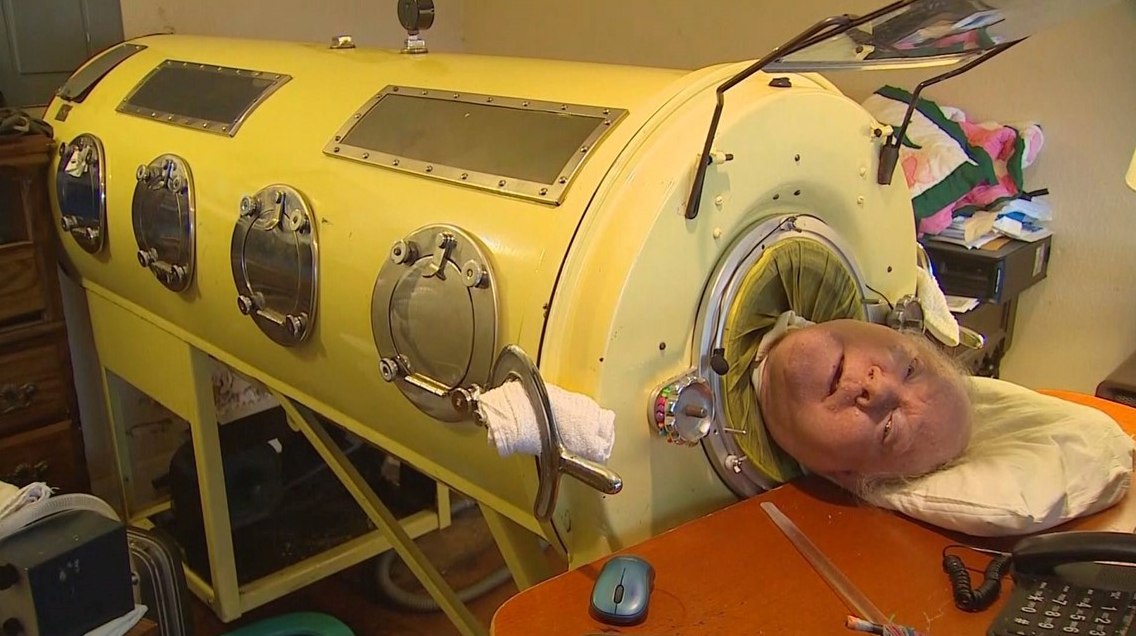
The invention of a device called “iron lungs” was the only chance of survival for many patients. The device created negative pressure that mimicked the physiological mechanism of air exchange. It was a type of respirator that operated using different mechanisms of the breathing process based on high blood pressure.
Paul Alexander from Dallas, Texas
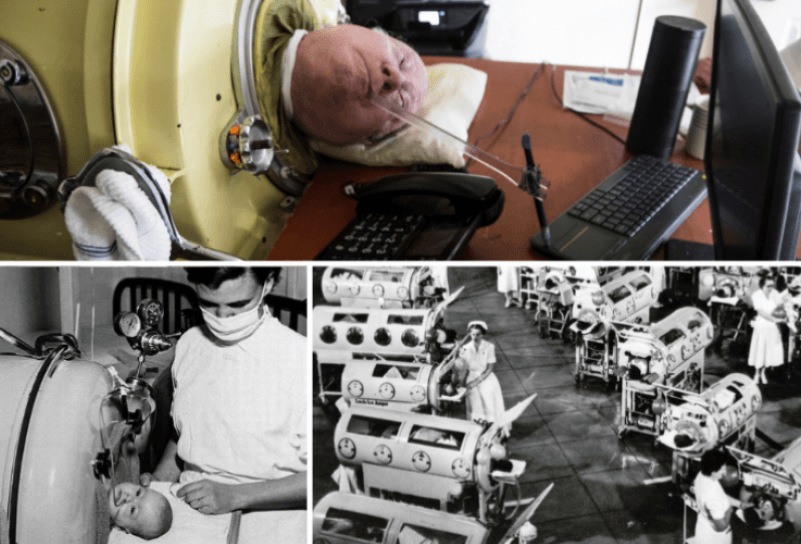
Many people who have lived in them for decades still live in them today. One of them is 70-year-old Paul Alexander from Dallas, Texas, who has been using “iron lungs” since 1952. Paul contracted polio at the age of five. The disease caused him permanent respiratory failure. The principle of the iron lung is placing the patient into a chamber. The device is sealed and creates a vacuum inside. The pump reduces the pressure and causes the chest to expand and you inhale, then the pressure drops and you exhale. Iron lungs are a non-invasive breathing aid. It artificially forces air into the lungs and replaces the chest muscles. Over time, users of iron lungs faced serious problems caused by the discontinuation of this device in the 1960s.
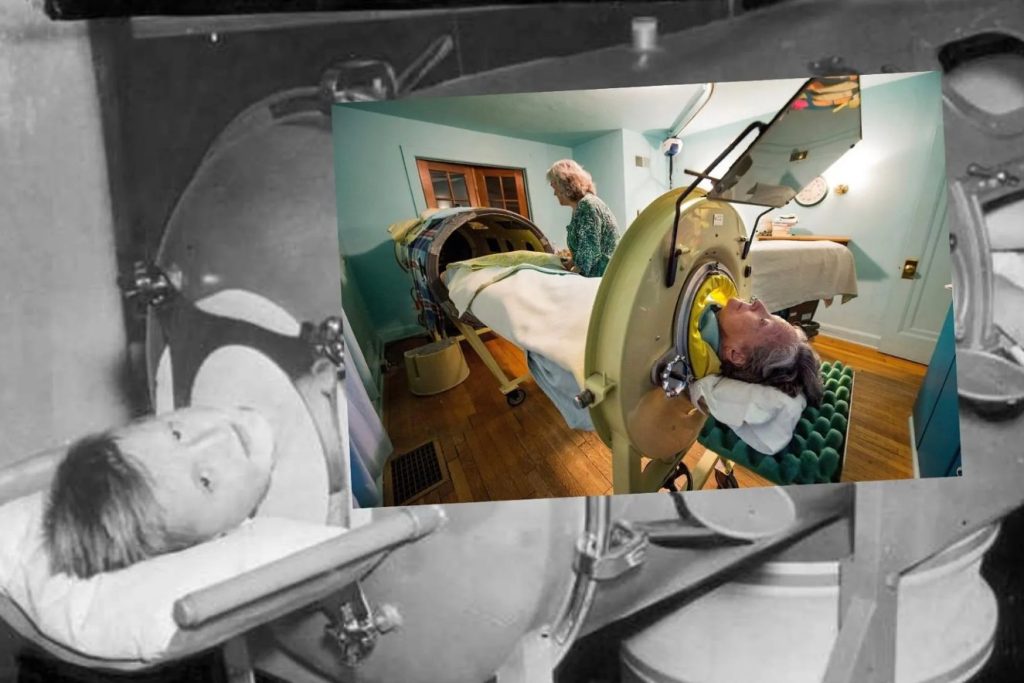
Dozens of people still use iron lungs
A major problem, however, is maintenance and spare parts. A few years ago Paul had big problems with the machine. It began to fail, which immediately threatened his life. He searched the internet for someone who could check and replace the worn parts. Brady Richards approached him and offered his help. The device was so archaic that when Brady brought it into his workshop, the young workers had no idea what it was.
“When we brought the lungs into the workshop, one of the younger workers asked me what I was doing with that grill.” Despite his illness, Paul tried to live a normal life as best he could. Paul even lived in a dormitory, studied law and even got involved in lawsuits after finishing his studies. During that time he was even allowed to leave the “iron lungs” for four hours a day. Now that is no longer possible. Many patients do opt for a tracheostomy (direct connection to the trachea) and portable ventilators, but many of them still live in iron lungs.