
Article content
(TT) – As The Guardian reported in 2008, at a meeting of the Royal Geographical Society in London the Earthwatch Institute declared bees the most valuable animal species on this planet.
If bees disappeared today, humanity would be very quickly replaced!
Scientists and wildlife experts have added bees to the list of species doomed to extinction in the near future, unless humanity does something about its most valuable insect.
The importance of bees
The loss of bees would be a catastrophe for humanity because they are indispensable. The relationship between bees and flowering plants is one of the most extensive, most harmonious and mutually interdependent forms of cooperation on the planet.
A relationship lasting almost 100 million years has led to the proliferation of rich species diversity and has also contributed to the rise of the human species on Earth.
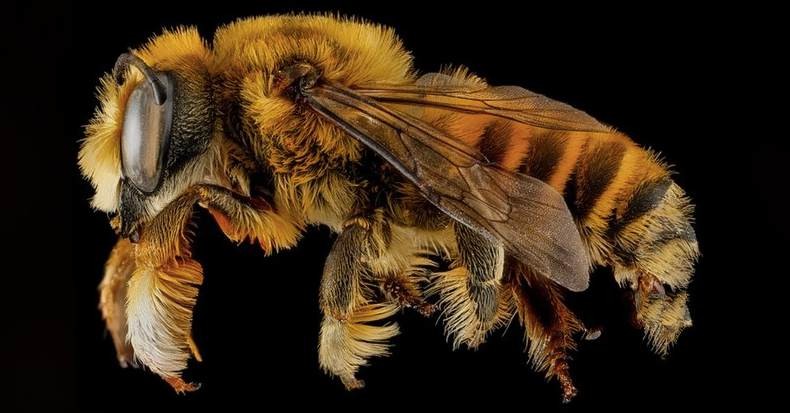
There are more than 20,000 species of bees. The vast majority of them live in hives. Their size ranges from 2 mm to 4 cm and they do not adapt well to new species of plants.
75% of the food crops that produce the seeds and fruits we consume are subject, at least partially, to pollination.
87 major food crops worldwide are entirely or partially dependent on pollination. These in turn feed thousands of species of animals and birds. They are the main reason for the diversity of plant species.
A decline in bee populations would, according to reports from the United Nations Food and Agriculture Organization (FAO), adversely affect major crops such as coffee, cocoa, almonds, tomatoes and apples.
Honey, as the oldest known and at the same time healthiest sweetener, has been sought after since ancient times. The total export from the leading honey-producing countries alone amounted to 2.4 billion dollars in 2009.
It is another huge source of food that would simply disappear with the bees.
The monetary value of crops worldwide that are directly dependent on pollinators ranges between 235 and 577 billion dollars per year.
It was a free gift of nature. Relying on an artificial process is almost impossible. The only way to get out of this is to support the processes leading to natural pollination.
Deforestation and pesticides
We have already set in motion processes that could in the not too distant future lead to the extinction of the planet’s main pollinator and with it countless other species, including humans.
The need to feed an ever-increasing population has led to the use of methods to increase production at any cost, primarily the felling of trees to obtain agricultural land and the ever greater use of pesticides.
40% of invertebrate pollinators, especially bees, face extinction.
This has led to a sharp decline in populations of both wild and domesticated bees. In some parts of the world huge populations have been decimated.
Pests, diseases and mobile phones
The transmission of pests and pathogens from other parts of the world due to globalization has had an adverse effect on bees in some areas.
Blame is also being placed on the waves generated by mobile phones. The Swiss Federal Institute of Technology says that bees are disoriented by the waves emitted during calls.
Biologist Daniel Favre and other researchers, as reported in The Australian, presented evidence showing that bees were disturbed when exposed to electromagnetic waves and that they warned other bees.
It is also immediately necessary to adopt a complete ban on the use of pesticides, especially neurotoxins, and to use natural alternatives. Pollinator-friendly practices are a necessity in agriculture.
Growers must be aware that pollinators need specific crops and act accordingly. Wild habitats must be protected.
Farmers can diversify farms to always provide available food for bees. For example, support the restoration of environmentally friendly practices. This will preserve habitats for our irreplaceable pollinators.


