
Article content
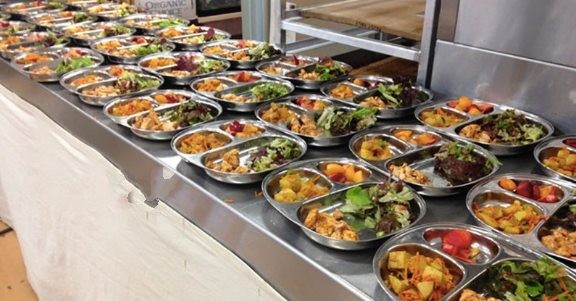
When schools in the California school district of Sausalito Marin return for their first meeting of the new school year, they will be the first schools in the country to provide their students with 100% organic food.
These will be foods that are flawless in terms of sustainability and, moreover, contain no genetically modified organisms (GMOs).
Locally grown organic foods
More than 500 students at Bayside MLK Jr. Academy in Marin City and at Willow Creek Academy in Sausalito will eat fresh food produced by local growers and farmers.
Supplies of ingredients are guaranteed for the whole year thanks to a partnership with Conscious Kitchen, and through a joint project with the nonprofit environmental education organization Turning Green.
Judi Shils, founder of Turning Green, said:
“Students around the world are exposed to pesticide residues and dangerous environmental toxins.
This program not only exceeds the nutritional standards set by authorities, but also connects the health of our children with the health of our planet.
It is the first program in which it was declared that, in principle, one cannot exist without the other.”
The organization says that meals will be accompanied by education in nutrition and gardening. The partnership called Conscious Kitchen previously prepared meals for 156 students at Bayside MLK Jr. Academy, which in August 2013 was the first to pilot this program.
The benefits of organic food have already manifested in the pupils
After two years of operation, the founders reported that the number of student incidents that fell under disciplinary measures decreased and attendance at the school dining facility increased.
The program also deals with the controversial issue of GMOs in school meals. A report published in the environmental news outlet EcoWatch states the following:
“This program is the first of its kind to take a stand against GMO foods.
While the long-term effects of GMOs remain uncertain and unconfirmed, a growing body of evidence links them to various health risks and the damage GMOs cause to the environment.
It is estimated that 80% of products on most supermarket shelves contain genetically modified organisms (GMOs) and they are completely ubiquitous in school feeding programs.”
Nutrition experts have long pointed out that the foods and drinks served and available in schools have a long-term impact on children’s health and overall sense of well-being.
“The Healthy, Hunger-Free Kids Act of 2010 required schools in the USA to update their food procurement systems to meet the new USDA nutrition standards and to offer children who receive subsidized school lunches more whole-grain products, fresh fruit, vegetables, and protein.
As explained in the nonprofit project “The Edible Schoolyard,” focused on nutrition and created in Berkeley, it is equally important to pay attention to nutrition education.
Statements from those involved
Liza Siegler, head of the partnership, commented as follows:
“Schools that have adopted an integrated approach to food education use procurement strategies that combine local and seasonal suppliers.
These strategies also include practical lessons taught in the classroom, in the kitchen, and in the garden. That way, healthy eating in school cafeterias is much more likely to become sustainable.”
Justin Everett, a consultant chef from the Conscious Kitchen partnership, said this:
“By sourcing fresh, local, organic foods that are not genetically modified, this program successfully confronts the cycle of unhealthy, packaged, heat-treated, and pre-served foods that dominate school kitchens.”


