Article content
Did you know that thrombosis, or a blood clot that can appear inside a vein or artery, is not something to be taken lightly? It can cause serious trouble either directly at the site where it formed, or if it detaches and begins to travel through the bloodstream to a place where it becomes lodged in a narrower vessel – unfortunately this is often the brain or the lungs. This phenomenon is called an embolism and it is not something anyone wants to experience. But what are the preconditions for the development of thrombosis and what should you watch out for?
How can thrombosis develop?
Each of us even learned in elementary school about the important process called blood clotting. It is vital because it prevents a person from bleeding to death from even the slightest injury. But how can thrombosis form, and moreover inside a vessel? There is a trio of factors whose combination can cause thrombosis. First, the blood is prone to clotting. Blood flow can also slow down or become immobile in the circulatory system. This happens, for example, during long periods of sitting, e.g., on a plane. Added to this is damage to the inner lining of the vessels and the problem is created. Such damage can occur with vein inflammation, long-term smoking or uncontrolled diabetes.
Listen to your body’s signals
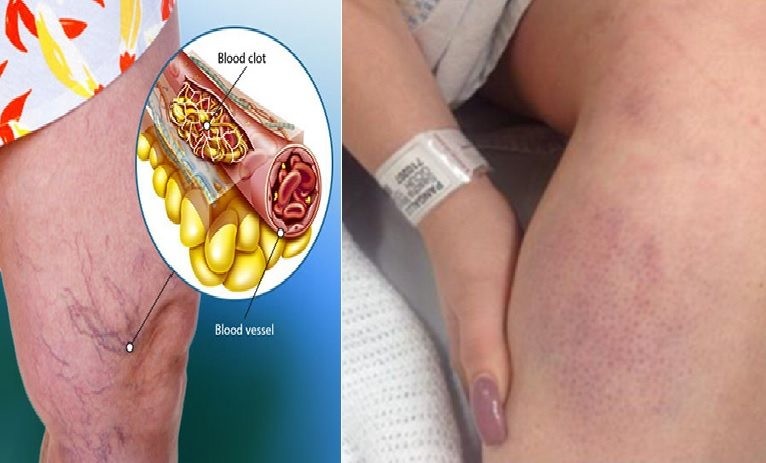
Be careful with yourself and pay attention to the signals your body gives. You should be on guard if you develop severe pain or swelling of a lower limb. The skin in that area may be warmer or may show color changes such as paleness, reddening or bluing. Persistent spots on the skin of the legs (especially after an injury or surgical procedure) are not a good sign overall. If you notice them, you should consult your doctor immediately.
Deal with serious situations immediately
Already very serious signals are sudden shortness of breath or disproportionately rapid breathing, severe chest pain, sudden cough without an obvious cause, which may be associated with coughing up blood. These are symptoms of pulmonary embolism. A heart attack may be signaled by chest pain in the form of an uncomfortable pressure, associated with a feeling of breathlessness. One may also experience excessive sweating, nausea, vomiting or dizziness. A stroke, on the other hand, manifests as weakness or sudden numbness of the face, arm or leg. Often this happens only on one side of the body. It is followed by difficulty speaking, confusion, impaired vision. In these cases call 155 immediately.