
Article content
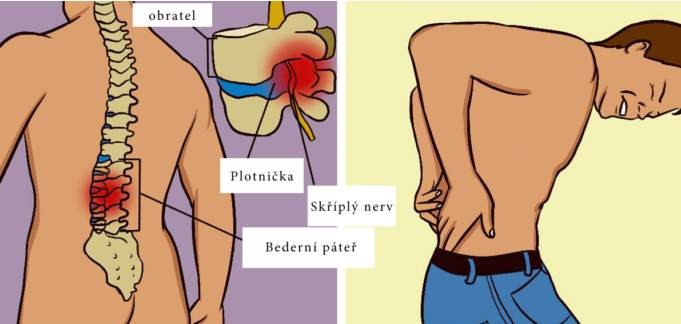
One of the most common types of back pain is a herniated disc. Statistics state that 60 to 80% of people will suffer from this health problem during their lifetime.
The technically correct term is herniated disc . It can be extremely painful and usually affects the lower back. The pain then often radiates down into the legs.
Your spine is made up of a series of stacked bones known as vertebrae.
Each vertebra is separated from the next by a disc that protects against impacts and damage caused by everyday walking, lifting things and twisting.
Causes of a herniated disc
The most common cause of a herniated disc is wear, weakening or even tearing of the outer part due to aging, when the inner soft parts of the disc then protrude out.
A herniated disc can also be caused by certain movements, such as excessive twisting, wrenching or lifting heavy objects.
People who are overweight are also at increased risk because their discs have to bear a higher body weight than they were designed for.
Weakened muscles due to lack of physical activity and exercise also contribute to the damage.
Symptoms of a herniated disc
A herniated disc usually manifests in some way. However, there are also cases where people do not feel any symptoms and have no idea they have a herniated disc.
This health complication most commonly affects the vertebrae in the lower back, but it can also occur in the neck.
In some cases it is very painful, especially when, in addition to the disc bulging out, it also ruptures. Such a damaged disc can then pinch or press on the nerves that exit from that part of the spine.
The most common symptoms of a herniated disc include:
Pain in the arms or legs. Because most herniated discs affect the lower back, people feel pain in the thighs, calves or feet.
Pain in the shoulders and upper limbs. If a disc herniates in the neck area, you will most likely feel pain in the shoulders or upper limbs.
Numbness and tingling. Patients sometimes feel stiffness, numbness or tingling sensations in the part of the body that is controlled by the nerves emerging from the affected area of the spine.
Weakness. It is also possible that with a herniated disc you will experience overall body weakness, trip while walking, or have trouble lifting or holding objects in your hands.
If you notice the above symptoms of a herniated disc, visit a doctor and tell them about these symptoms.
Treatment options for a herniated disc
A herniated disc can be treated with techniques that control back pain, according to the well-known Mayo Clinic in the USA.
This most often includes taking painkillers, cortisone injections, muscle relaxants and in some serious cases stronger narcotics.
Your doctor may also recommend physical therapy to help better manage the pain.
This includes, for example, applying heat and ice, electrical stimulation and the use of short-term supportive devices. In more serious cases the doctor may recommend surgery.
If painkillers and physical therapy do not improve the symptoms, the surgeon will usually propose removing the part of the disc that is protruding and causing problems.
Removal of the entire disc is performed only rarely in the most severe cases.


