Article content
Damp walls are a fairly common problem in many households and need to be addressed. An untreated problem causes the formation of mold, which can lead to various respiratory illnesses.
You should always try to find the cause of wall dampness in order to find the right solution.
In this article we will discuss options for drying wet walls and how to treat them afterwards.
The most common causes of wall dampness
Rainwater
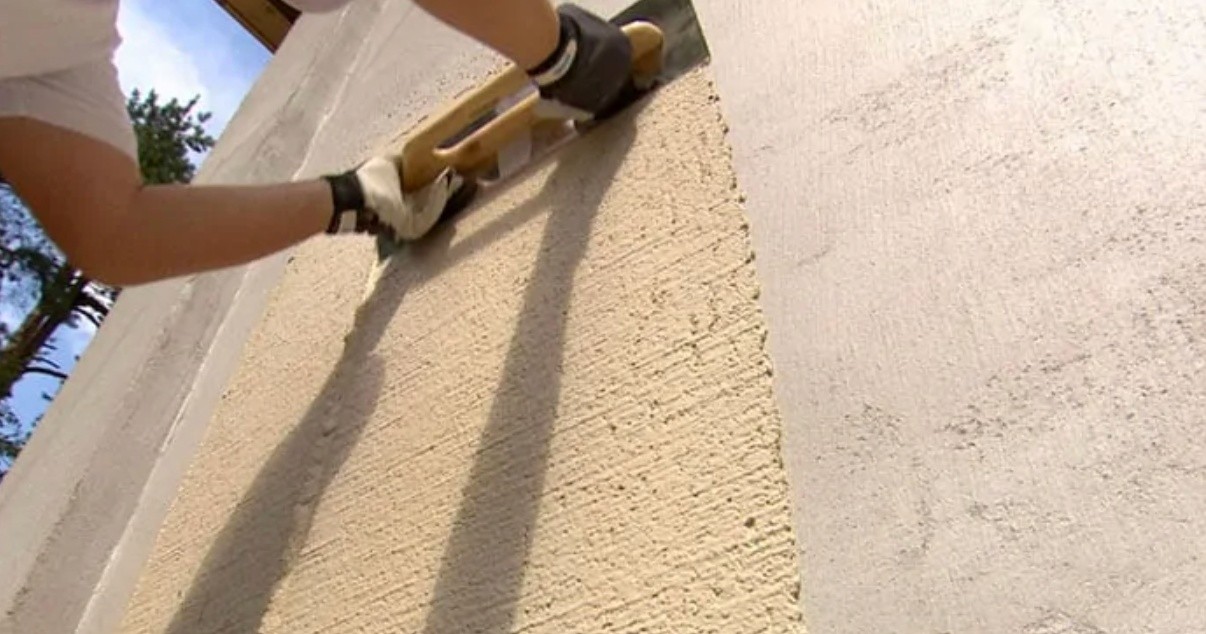
It is possible you didn’t notice a crack in the exterior facade that allows water to penetrate into the interior. Check the condition of the exterior facade where moisture is seeping through, and if this cause is confirmed, use a facade plaster or paint that does not let water into the masonry while remaining breathable and allowing water vapor to pass through.
Water condensation
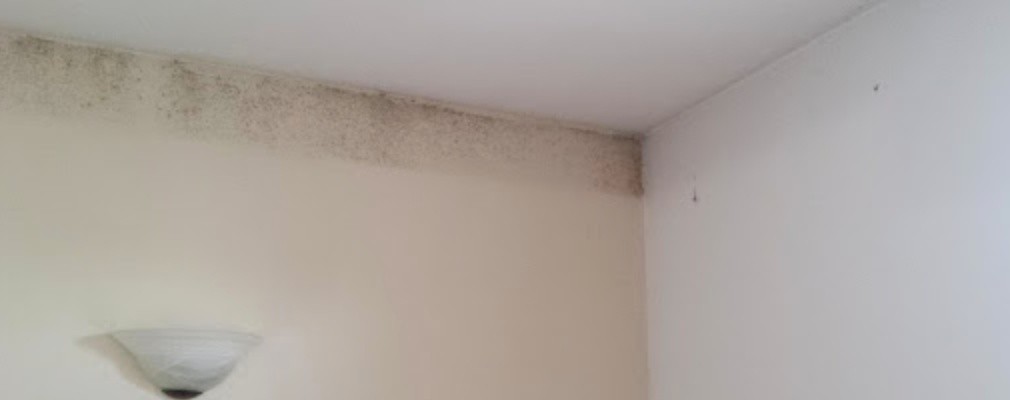
This problem arises when the room temperature is lower, approaching the dew point, and the air humidity is high. Water vapor begins to accumulate in the walls and cannot escape through the insulation (for example in insulated houses). The house practically “doesn’t breathe,” which causes moisture to build up on the walls. This problem usually occurs in less heated and poorly ventilated places such as hallways or basements.
To eliminate this problem, if possible, more frequent ventilation and increasing the temperature by heating may help. If this solution is not possible, it is recommended to paint the walls with a special thermo-ceramic coating that draws moisture out of the wall and prevents mold formation.
In both cases it is necessary to remove any mold that has formed on the walls with an anti-mold agent.
Absorption of water from the ground
This problem occurs when the walls absorb moisture from the ground at the house foundations. An effective solution is to drain the area around the house. You can, for example, dig a sloped trench around the foundation and line it with drainage foil that you extend up above ground level. Place perforated pipes in the trench to divert moisture and backfill with gravel.
Repair of damp walls
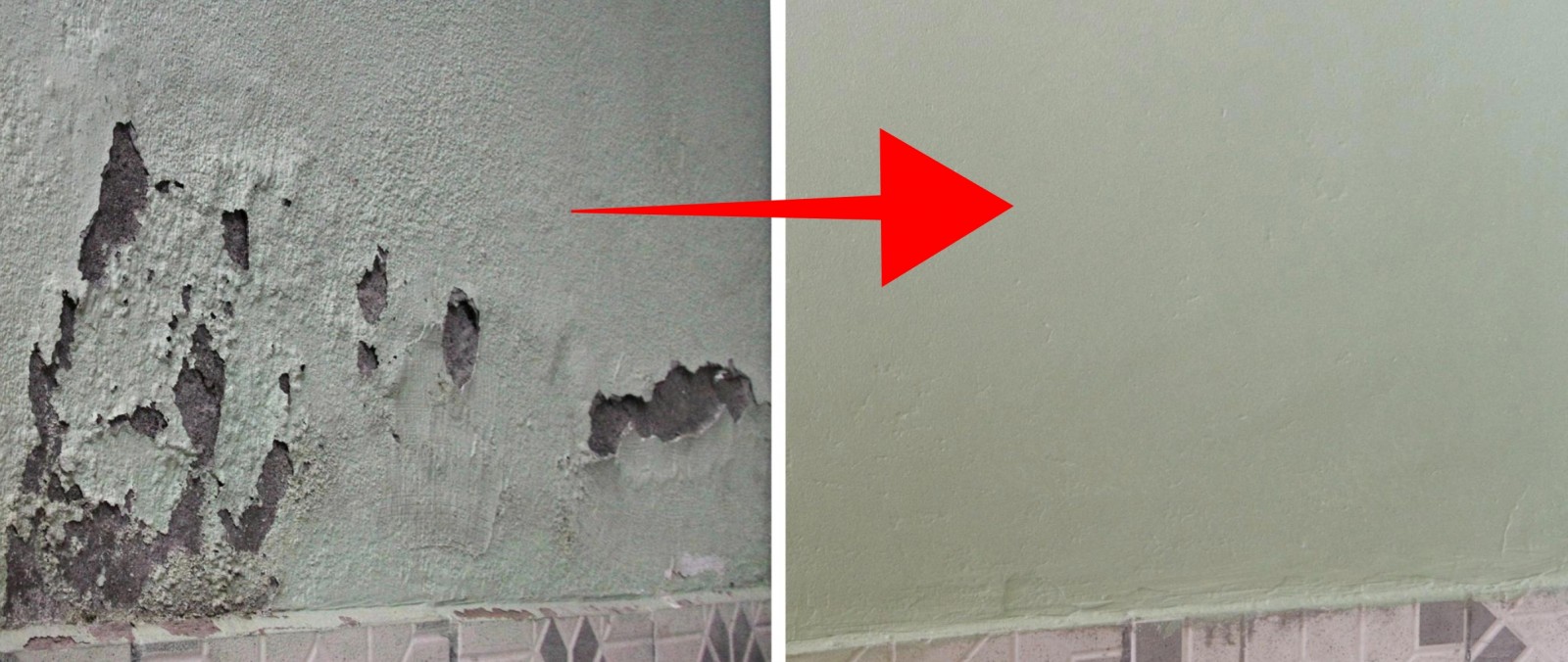
If you have managed to eliminate the moisture problem and need to address the aesthetic side so you are no longer stained by seepage, follow these instructions.
1. Before starting, consider disinfecting the wall with chlorine or hydrogen peroxide and also remove any mold. If mold appears, we recommend spraying colloidal silver on the spots. You can commonly buy it at a pharmacy.
2. Repair any cracks or joints according to the extent of the damage and even them out.
3. From the range of paints on the market, choose a special paint against moisture and mold.
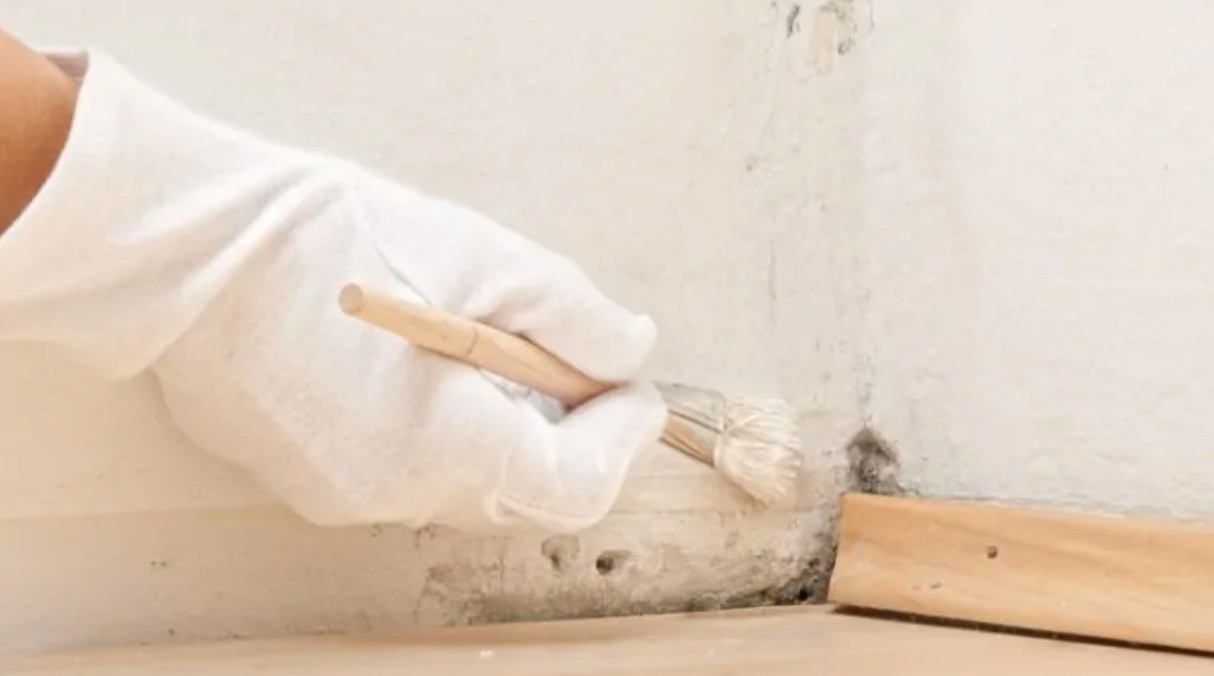
4. Apply it in a thin layer to avoid creating bulging deposits.