Article content
Assigning homework has a considerable effect on pupils – but by no means as good as we might think.
“There is no clear evidence that any amount of homework given to students in the early grades of elementary school somehow improves their academic achievement.”
This statement will probably provoke indignation or even concern in many people, regardless of which side they lean toward on this issue.
However, its author is Harris Cooper, a professor of psychology at Duke University in North Carolina and a leading expert on homework and its effects on students.
Could it really be true, then, that the hours and hours when we forbade our children to play and, despite their tears, forced them to sit over homework were completely pointless?
That millions of families go through a ritual every evening that has no meaning? Homework has always been considered so unquestioningly obvious that most parents never even think to question its justification.
What heretical idea!
However, if we looked at the facts closely, we would find the following – completing homework does bring certain positives to pupils, but these positives depend on the pupil’s age.
Research results reveal that elementary school pupils benefit most from direct classroom instruction – all schoolwork that pupils are expected to do outside of direct classroom teaching, including homework, is simply unnecessary extra work.
Even in the upper grades the situation is no different – the relationship between homework and better academic results is almost nil.
Only at the age when students begin secondary school can a certain correlation be observed between completing homework and a better grade average. Even this, however, has its natural limits.
High school students achieved better results only if they did not spend more than two hours a day on homework. Homework that lasted more than two hours a day had exactly the opposite effect on academic results over time.

Research results speak very clearly
explains Etta Královec, a professor of education at the University of Arizona, “doing homework provides no real benefit for elementary school students”.
Before we go further, it will be useful to dispel one myth that these results are based only on a handful of weak and hastily conducted studies.
The truth is exactly the opposite. As early as 1989 Professor Cooper collected data from 120 studies and experiments on the effects of homework on students, to which another 60 similar studies were added in 2006.
Even a detailed and comprehensive analysis of all these studies did not produce any convincing evidence that assigning homework to primary school pupils led to an improvement in their academic results.
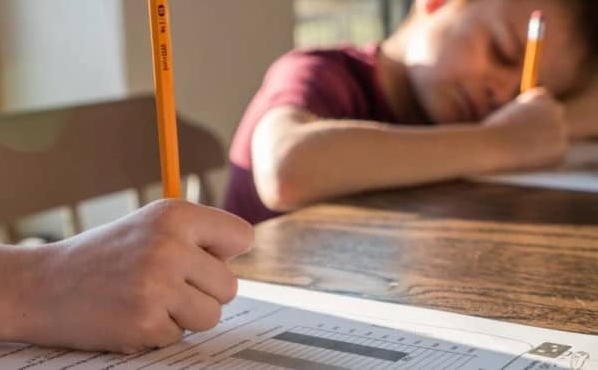
However, this extensive analysis revealed something else, namely that homework gradually led children to develop a negative attitude toward school.
And that is precisely the problem
Homework affects young students, but not positively. A child who has just started going to school surely deserves to develop a positive relationship with learning and a love for it.
Assigning homework from the very first day of school, however, leads to exactly the opposite effect – many children begin to develop an aversion not only to school but also to homework as they grow older, or to learning as such, whether continuing studies in secondary or higher education.
It should be remembered that it is a long road. A child in the first grade of primary school still has 13 years of homework ahead of them.
It should also be mentioned that family relationships suffer in this process. Thousands of families wage a difficult battle over homework day after day. Desperate parents threaten their children at every turn, but then immediately relent.
Overly tired children, in turn, resist and cry. Instead of parents and children ending the day closer to one another and mutually supportive, in far too many families we witness them caught in a vicious circle of “have you done your homework yet?”.
Moreover, it is almost certain that the youngest pupils will not yet be able to handle homework on their own – to remember all the tasks that need to be done, as well as how to do them, they will need the help of an adult.
Children thus gradually and imperceptibly grow accustomed to there always being an adult who will help them with homework, or more precisely, do the homework for them. Parents thus often become a kind of “overseer” of homework.
And besides the fact that being such an “overseer” is a dirty and thankless job, the parent does not shake off this role even when their child is already a high school student.
The result is not only a constant conflict between parent and child, but also that the parent in the role of “overseer” of homework actually undermines one of the main goals of homework – teaching the child responsibility.
Proponents of homework argue that it cultivates responsibility in pupils, consolidates and deepens understanding of the material taught at school, and also helps create a link between school, home and parents.
However, a parent who cares about their child finds out about their progress anyway, simply from the school diary or by talking with the child about what they did at school.
The completion of assigned homework should by no means be regarded as a measure or criterion of the child’s real progress.
Children learn responsibility every day in many ways – taking the dog out, feeding the cat, or tidying up their toys are just a few examples among many.
If we require a 6-year-old child not to forget their hat and lunchbox at school, we are requiring an appropriate level of responsibility from them, and thus they learn it.
If we require an 8-year-old child to get dressed, make their bed, and sit down at the breakfast table on their own every morning, this is similarly an appropriate way to teach them responsibility.
Learning responsibility is only one of many factors in the development and strengthening of a child’s personality, albeit a very important one. For balance and quality of life, extracurricular activities and factors are equally important for the child, such as quality sleep, good family relationships, or regular time set aside for play.
These activities and factors directly affect and support the child’s memory, ability to concentrate, behavior, and learning potential. Essential knowledge in the most important subjects is consolidated by pupils every day at school during lessons.

Time outside school lessons is, however, very precious for the development of other, yet equally necessary, aspects of a child’s personality
If you are thinking about what could be better for a child in the early grades than traditional homework, the answer is simple – reading. This means that when the child is at home, either the parents read aloud to them, or they read on their own.
The essential thing is that reading be fun for the child and something they look forward to. If after a long day at school our little pupil doesn’t have the strength to improve their reading at home, we should read to them and let them simply listen.
Apart from reading, all other tasks or projects that a child brings home from school should be only occasional and voluntary.
If homework does not deepen the child’s love of school or increase their interest in learning, then such homework has no place in the daily schedule of an early elementary school child.
Parents of pupils in the early grades should have the option to decide which and how much homework their children should receive. Implementing this challenging task should, for example, first at least be imagined at the level of the family, the class, or the entire school.
Parents should have the option to decide which homework their child will do. Teachers, in turn, should have the conditions to create a learning environment in which either homework does not exist or, which would be equally rare, assignments are voluntary.
And above all, schools and competent authorities should devote more time to studying the results of modern research and, according to them, gradually reshape the entire educational system so that joy returns to all involved.
Homework simply has no place in the lives of the youngest pupils. It does not improve their academic results and, above all, there are more useful ways for children to spend their time outside of school lessons.