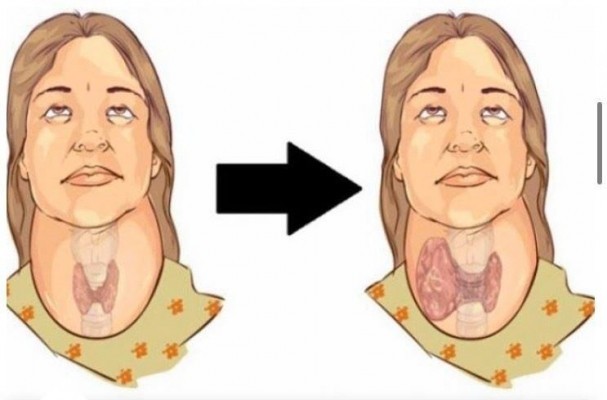
Article content
Thyroid cancer most commonly occurs in women between the ages of forty and fifty. In men it usually appears at a later age. In recent years the number of new cases has been increasing. This is mainly due to the fact that today this type of cancer is more easily diagnosed. Interestingly, in most cases it affects women, but experts still do not know why. It is assumed that female hormones cause it.
Symptoms
In most people with this type of cancer there are no symptoms, and it is often discovered during other examinations. In advanced stages, however, these symptoms may appear:
- change of voice and hoarseness
- problems with breathing or swallowing
- coughing up blood
- diarrhea lasting for months
- a lump in the lower part of the neck
- swelling of lymph nodes
However, swollen lymph nodes in the neck can also be caused by a common cold. Therefore thyroid cancer rarely hides behind this symptom. If, however, any of these other symptoms appear in you, be sure to see a doctor for an examination. It is better to go there unnecessarily several times than to neglect something.
Three types
There are three types of thyroid cancer. The most widespread is differentiated, which appears in up to 90 % of cases. It is the mildest form, which is not as aggressive as the other types. The prognosis for a cure is very good and most patients survive.
The next type is medullary thyroid cancer. Approximately in 25 % patients this type is hereditary.
The most aggressive and rarest type is anaplastic thyroid cancer. It occurs primarily in older people, predominantly men. With this type the thyroid grows rapidly and is very painful to the touch. With this diagnosis, unfortunately, up to 80 % of patients die.
Treatment
Because there is a very wide spectrum of thyroid cancers and each is differently aggressive, the method of treatment is determined entirely individually. In differentiated and medullary carcinoma the entire thyroid gland or at least part of it is surgically removed. If necessary, removal of the lymph nodes in the surrounding area is then also performed. Furthermore, after surgical removal, it is important to undergo hormone replacement therapy. Such treatment is the most effective.
In some cases, if the differentiated carcinoma is small, patients are not treated but are only under medical supervision. This means they go for regular medical check-ups. The checks are performed by ultrasound. During the first two years the carcinoma is monitored at intervals of four to six months. Subsequently, check-ups every six months to one year are sufficient.
Treatment of the most aggressive form of carcinoma looks completely different, given its aggressiveness. Until recently there was no treatment option for it. Currently, however, chemotherapy can be used to treat it. These allow patients with this serious illness to live, in good quality, for another 1-2 years of life.