Do you get stressed before travelling abroad because you don’t speak the language? Don’t despair. Not everyone is a fish in foreign languages. For many, not knowing the language can literally lower their self-confidence, but that’s the end of that feeling. We recently provided you with a quick guide to the most useful keyboard shortcuts and their use, and today we’ve prepared the most important English for you. Ten minutes a day will be enough and after just a week you’ll see incredible progress. For basic communication abroad, a few words, phrases and sentences will suffice.
Of course, if someone wants to, they can communicate literally with their hands and feet. But we’ll certainly make it easier for you. The following tables will become something like the alphabet of necessary English for you. If you are a complete beginner, this aid will come in handy anywhere and you can learn from it, for example on the bus or while waiting in line at the post office. Print the following tables and put them in your diary, wallet or stick them on the fridge. Every day a few minutes will be enough to learn new words and a few minutes to review words from previous days. With these tables, learning won’t be an obligation but fun.
The basis is pronouns and nouns, which will form the core of your vocabulary. In practice you can get by with such a number of words that name everything necessary.
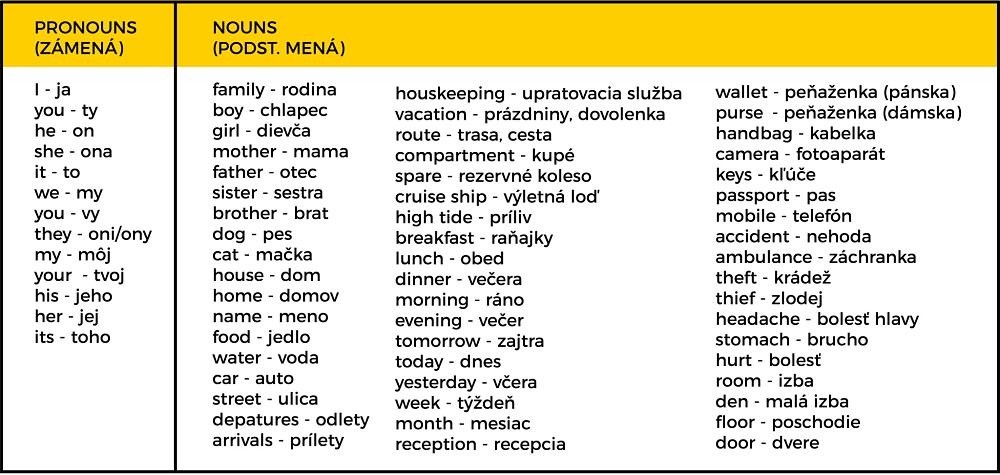
When you know pronouns to designate people and have the core of vocabulary, you have a decent foundation from which sentences can be developed. Try a small exercise at home and try replacing Slovak words with the English ones you have already learned. If you use them in a sentence and visualize what they represent, you’ll remember them much more easily.
The next step is, for example, colours, important signs on building doors, labels or markings and also basic phrases that people use every day.
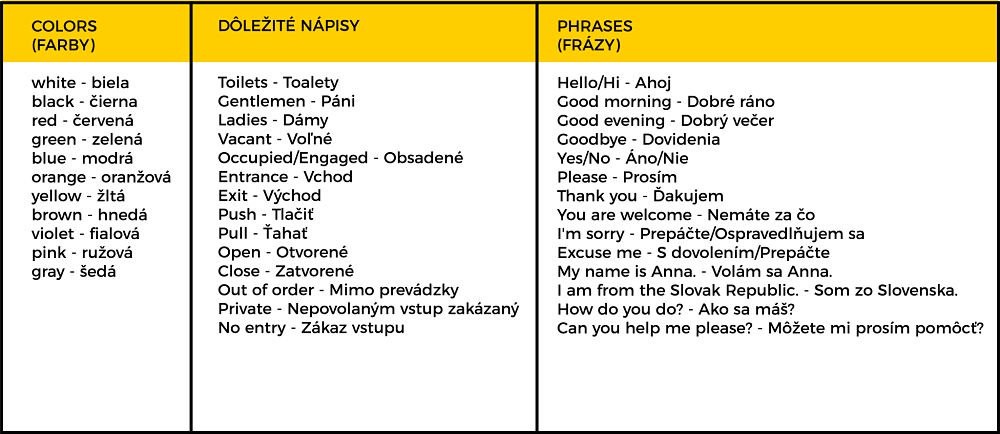
Thanks to knowing signs you won’t enter the wrong door and you’ll avoid misunderstandings. Phrases will accompany you in everyday contact with people in the shop, restaurant, hotel or wherever you go abroad. It’s nice to behave respectfully even away from home and words like thank you and please will therefore always be with you.
The final phase is whole sentences that you will use very often. You should memorise these before a trip or holiday because they will be useful in any situation. These are basic sentences you will use in a bar, grocery store, restaurant, upon arrival at a hotel, … The tables also contain so-called safety sentences and phrases which we hope you will not need. However, it is very good to know them in case of emergency, illness, accidents or danger.
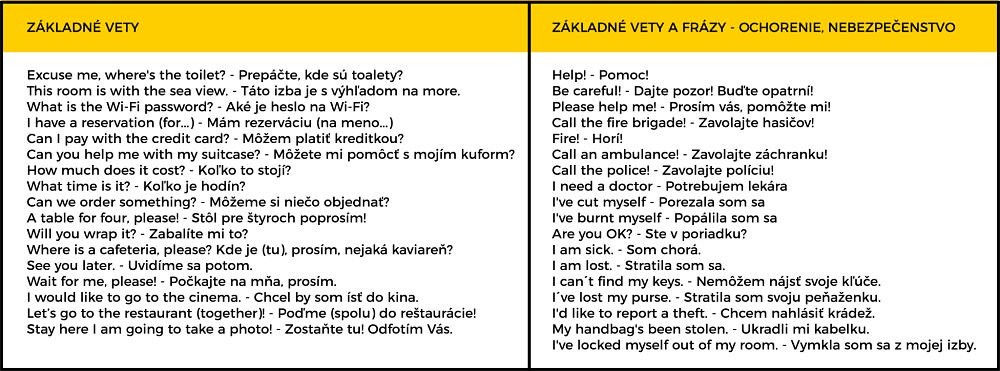
We believe that on your next trip abroad you won’t get lost thanks to these tables and of course we wish you to enjoy your trip as much as possible. Hopefully you won’t need the vocabulary from the last box at all.