
Article content
None of us knows when we will face a critical situation where every second counts. We are talking about saving a human life, and it is a sad truth that many deaths could be prevented if we knew how to react correctly. First aid is a necessary foundation that everyone should know just like reading and writing. This is a simple aid that can be extremely helpful in a critical moment. Tell everyone about it!
It is best to supplement this aid with a practical course and training with professionals!
First aid can be provided by any person who happens to be next to the victim at the critical moment. It is an important skill, indeed indispensable for every person. In each of the following situations you can become a real lifesaver.
First aid in emergency situations
Fainting
Fainting is an unpleasant condition that anyone can encounter. This short-term and sudden loss of consciousness occurs when cerebral blood circulation is impaired. Causes can vary: fear, nervous shock, physical exhaustion, or insufficient fresh air in the room. How to recognize unconsciousness and provide the victim with the necessary first aid?
SYMPTOMS
The following indicative symptoms may precede unconsciousness: dizziness, nausea, sudden weakness, blurring of vision, ringing in the ears, numbness in the limbs.
When loss of consciousness occurs, the victim falls. Of course there is a reason: in the horizontal position blood flow to the brain improves, and after some time the victim will regain consciousness even without external help.
The airway of the affected person is usually clear, but breathing is still shallow and superficial.
The pulse is weak and almost imperceptible.
The skin is pale and cold sweat may appear.
FIRST AID
The affected person should be placed on their back in the so-called Trendelenburg position, where the legs are raised at a 45 ° angle and the head and shoulders are below the level of the pelvis. If you cannot place the person on a sofa, it is enough to raise the legs above ground level.
It is necessary to immediately remove restrictive clothing: collar, belt, tie …
If the incident occurred in a room, open the windows and let in fresh air.
You can place a wet cold towel on the victim’s forehead or moisten their face with cold water, pat their cheeks, or massage the earlobes.
If vomiting occurs, turn the victim’s head to the side. This will prevent vomit from entering the airways.
An effective and also the best-known way to overcome fainting is ammonia. Inhaling ammonia fumes usually helps restore the victim’s consciousness.
In no case should you lift the victim after they regain consciousness! First call for emergency services, after all fainting can be a symptom of a serious illness and the victim in any case needs a professional examination.
HEART ATTACK
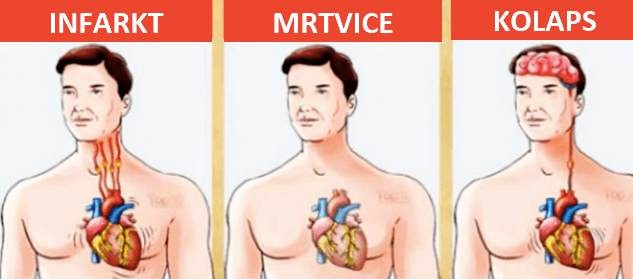
Myocardial infarction is one form of ischemic heart disease that occurs as a result of necrosis of part of the heart muscle due to disruption of its blood supply. An infarction occurs at the moment when a coronary artery of the heart is blocked by a blood clot.
Causes of a heart attack vary: atherosclerosis, hypertension, spasm of the coronary arteries of the heart, diabetes, overweight, alcoholism. If a heart attack occurs, quality first aid in its first minutes can save the victim’s life!
SYMPTOMS
The first and main symptom of a heart attack is severe pain behind the breastbone — a feeling of pressure that radiates to the left shoulder, shoulder blade and arm. The pain may last sometimes 15 minutes, other times hours or days.
The affected person is restless, often irritable and unpleasant.
Nausea, vomiting, and increased sweating may also occur.
There may be shortness of breath, coughing, a feeling of lack of air even though the airways are patent. Breathing is rapid and shallow.
The pulse is weak, rapid, sometimes irregular. Cardiac arrest may even occur.
FIRST AID
The first thing to do is call an ambulance.
If the affected person is conscious, immediately sit them in a chair with a backrest or place them in a lying position, bend their knees and try to calm them.
It is necessary to immediately remove tight clothing, loosen the collar and tie.
It is also possible that if the patient has cardiovascular problems not for the first time, give them the medications they have with them. Blood-thinning medications that are available over the counter, such as aspirin, are also recommended (however, it is necessary to know whether the patient is taking other medications that would be a contraindication).
If the patient uses nitroglycerin, you have given it to him and within 3 minutes after administration the pain does not subside, it means that the patient is having a real heart attack that cannot be resolved with the medication. This method helps distinguish whether it is a serious heart problem or just a less serious attack.
It is also necessary to carefully monitor the patient’s breathing and heart. In the event of cardiac arrest, resuscitation must be started immediately. Its use before the arrival of the ambulance increases the victim’s chances of survival up to 1000 times! Check the victim’s pulse and if absent, immediately begin chest compressions and artificial respiration. The rule is 30 chest compressions and 2 rescue breaths.
Stroke
A stroke is damage to brain tissue and disruption of its functions caused by impaired blood flow to the brain. Causes vary: insufficient blood supply to a part of the brain, bleeding into the brain, thrombosis or embolism associated with blood, heart, or blood vessel problems.
The first symptoms of a stroke should be known to everyone so that they can help in time, because in these cases every minute counts!
SYMPTOMS
- Sudden stabbing headache without cause.
- Muscle weakness, numbness of half or various parts of the body (arm, leg, face).
- Visual problems may arise, possibly double vision.
- There may be a sudden loss of balance and coordination, nausea and loss of consciousness.
- Speech disturbance or slowness often occurs and one side of the mouth may droop. This paralysis often spreads to the entire affected side.
- If you notice the above symptoms, act immediately and call emergency services!
FIRST AID
It is essential to call an ambulance immediately — a stroke victim needs professional first aid right away.
If the victim is unconscious, make sure they can breathe freely. If you detect impaired breathing, free the airway by turning the head to the side.
Move the affected person to a comfortable position. Many claim that patients must not be moved at all, but do not hesitate to do everything necessary so that nothing obstructs the patient’s breathing.
If possible, measure the patient’s blood pressure and write down the result.
If the patient is conscious, it is necessary to determine how long ago the stroke occurred. During the first 3 hours of stroke onset the patient may be given emergency therapy — thrombolysis.
This procedure involves intravenous administration of a drug that dissolves blood clots blocking the cerebral vessels. In this way it is possible to completely eliminate or at least minimize brain damage.
Do not give the victim any fluids or food under any circumstances.
Under no circumstances should you give the victim any medications! Lowering blood pressure is also not recommended. Hypertension in the first hours of a stroke is normal; it is associated with brain adaptation.
Epileptic seizure
An epileptic seizure can look very frightening, but in reality it does not necessarily require immediate medical help. Still, everyone should know the signs of epilepsy and simple rules for treating a person affected!
SYMPTOMS
Most often the seizure begins with an “aura”. A pre-epileptic aura can be olfactory, visual or auditory, when the affected person smells unusual odors, hears sounds, or sees complex images. Sometimes an epileptic patient can warn others about an impending seizure, thereby protecting themselves.
Often an uninformed person thinks the seizure began without reason — the affected person suddenly falls to the ground unconscious, sometimes a cry precedes the seizure.
- The patient has difficulty breathing, may have bluish lips.
- Convulsions occur. Muscles randomly contract and relax.
- Sometimes the affected person may bite their tongue or inner cheek.
- The affected person does not respond to light stimuli.
- Involuntary bowel emptying, vomiting, drooling are possible. Foam may come from the mouth.
FIRST AID
- First of all you must calm down. If the patient has warned you of a possible seizure, make sure that nothing will injure them when they fall (sharp corners, hard objects, etc.).
- If nothing threatens the patient during the seizure, do not touch them. However, stay with them throughout the seizure.
- Do not try to calm the patient or otherwise stop the convulsions. It will not help and may only cause unwanted injuries.
- Remember to note the start time of the seizure. If the seizure lasts longer than 5 minutes, call an ambulance immediately. A prolonged seizure can cause permanent brain damage.
- Important! Do not put any foreign objects into the victim’s mouth.
- Many think that a person’s tongue can block the airway during an epileptic seizure. Unfortunately this is a misconception. All muscles, including the tongue, are in hypertonus during a seizure. Under no circumstances attempt to open the victim’s jaws or insert a hard object between them. There is a risk that the patient may bite you during the seizure, injure their teeth, or choke on fragments of the object.
- When the seizure ends, place the affected person in a comfortable position. Make sure that breathing has returned to normal: check that the airways are clear (they may be blocked by food remnants or a dental prosthesis).
- If the patient was injured during the seizure, treat all wounds.
Do not leave the person alone until they have fully returned to normal. If a second seizure occurs, or if the patient had a seizure for the first time, hospitalization is necessary. - Only timely and correctly provided first aid followed immediately by qualified medical care can help save a life. And if a friend, colleague or a stranger experiences a similar situation, each of us should know what to do.
Providing first aid in an emergency is a skill that every person should have. Don’t forget to share the article with friends. No one is insured against misfortune!


