Article content
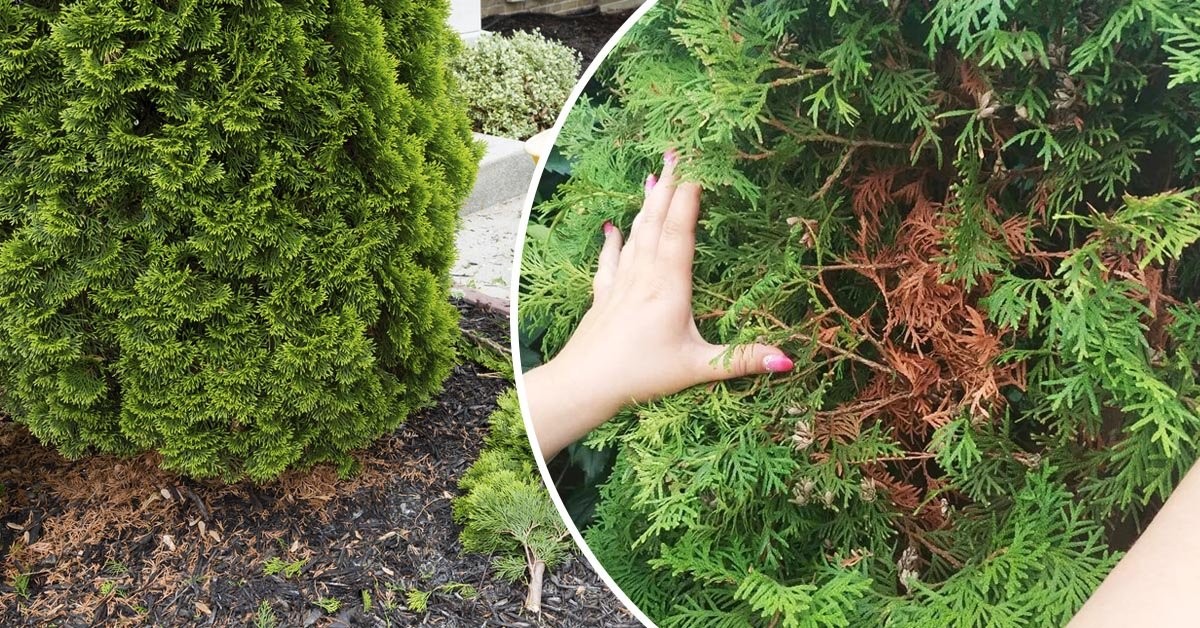
The problem of sultry summer days that has been occurring lately particularly affects plants that require a lot of water. And thuja belong to such plants. Periods of drought show up on them especially as visual changes that are not attractive to the eye. The first thing a grower may notice are especially yellow branches that later dry out. They thus acquire an unsightly rusty color. These branches are completely dry to the touch. You don’t have to cut down and dispose of a thuja in this condition immediately. There is also a gentler way to deal with them. You can even save their life. You just need to know how. For a perfect appearance of thuja, the period just after winter is key.
Why thuja dry out
We see the dry parts of thuja most of all right after winter, in February or March, when the plants are waking up from the vegetative period to their growth period. If you find only some brown and dried branches, you have a good chance to save the plant. The first sun rays are not only dangerous for people who like to sunbathe, but also for the branches of thuja. It is the first sunshine that causes these problems. If the last remnants of snow are still shining on the ground and the spring sun is beating down, it can be a deadly combination for a thuja. The shine and reflection of the sun from the snowy blanket further intensify the problem that spring sun can cause. So how should you properly protect thuja?
How to avoid these problems
These problems are relatively easy to avoid. If it is within your power, prune the unsightly branches already in autumn. Wrap the rest of the thuja preferably in transparent plastic, into which you make a few holes for air circulation. If autumn has already passed and you have no chance to correct your autumn mistake, don’t despair. Everything can still be made up for. In February darken the thuja so that the first spring rays have no chance to scorch it. However, darken thuja in February only in the situation when there is still snow on the ground. If the ground is snow-free, there is no reason to darken the plant. As the snow melts, free the thuja and let it enjoy the sunshine.