Article content
A thirty-four-year-old man from Leicester in the United Kingdom visited the hospital with a bizarre health problem. It all began with a very severe throat pain that rapidly worsened, until he could not even swallow and had difficulty speaking. He hurried to the nearest hospital.
Suppressing a sneeze may not pay off
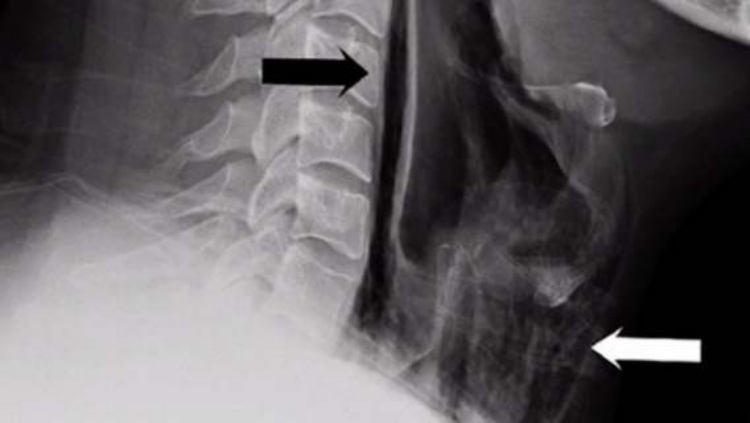
This unusual case was also described in the British medical journal BMJ Case Reports. It was found that this young man had been suppressing sneezes essentially his whole life, simply because he felt sneezing in public was improper. It took a while to discover this bizarre cause of his troubles. First, by palpation (touch) the doctors found that the soft tissues of his neck were significantly damaged. Odd sounds were also heard on auscultation, some cracking and popping. The cause then became clear from the X-ray. Air bubbles had entered the soft tissues of his neck. It therefore likely resulted from a perforation of the soft tissue of the neck due to excessive pressure while suppressing a sneeze, and air got where it shouldn’t. A widespread emphysema was found in the front of the neck, i.e., air bubbles in the soft tissue and subcutaneous tissue.
Surgery was not necessary
The doctors decided not to operate on the patient, because it was not necessary. This unwanted air is gradually absorbed on its own, so they opted for conservative treatment. They controlled the pain, started antibiotics, and in the first week the man’s food had to be given through a tube. After a week the young man began to eat mashed foods and his condition improved rapidly. Fortunately, no permanent damage occurred. The doctors also reassured the public that this case is very unusual. However, they do recommend not suppressing sneezes. Better to cover your mouth.
Why do we actually sneeze?
Sneezing is one of the body’s basic defensive reflexes, both in humans and in animals. By sneezing the body gets rid of unwanted particles (bacteria, microorganisms, dust, pollen) that enter the nasal cavity. Before the sneeze itself, a considerable amount of air under high pressure accumulates in the lungs and needs to be expelled. Besides damage to the soft tissues in the neck and throat, suppressing a sneeze also risks damage to the inner ear and eardrum and increases susceptibility to ear infections. It is said that you cannot sneeze with your eyes open. That is not true, but there is a risk of tiny blood vessels in the eye bursting. And one interesting fact to end with – during a sneeze all bodily functions stop for a moment, including the heart!