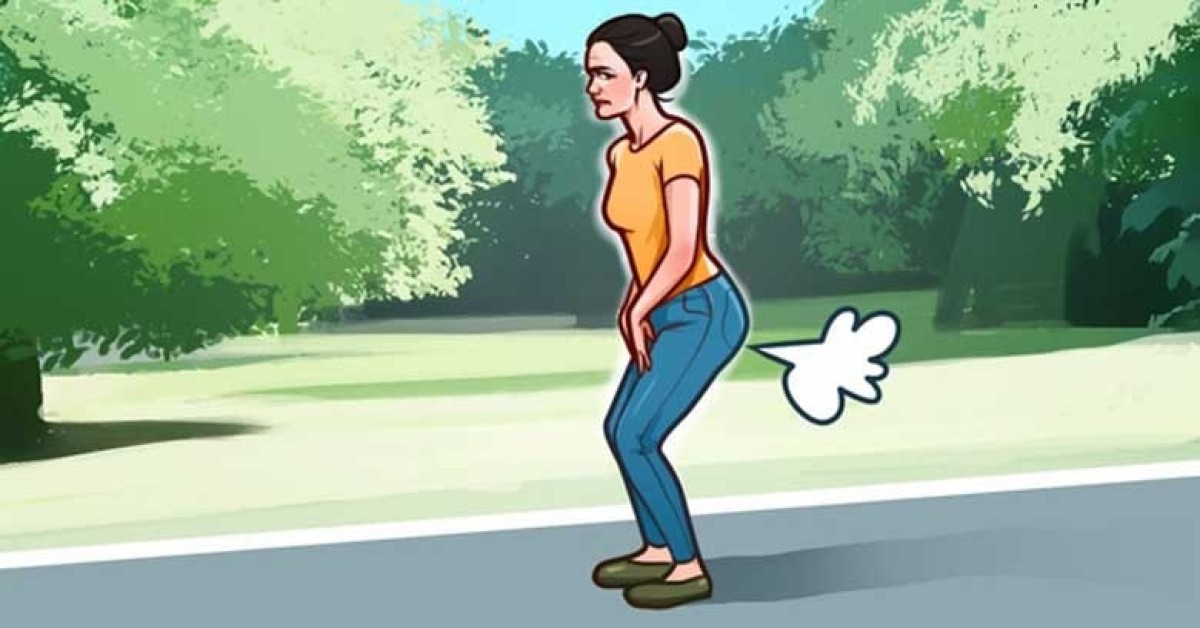
Article content
How does it occur and what happens if you try to hold in gases? We answer all your questions in today’s article. Flatulence has at some point brought each of us into an embarrassing social situation, and that’s why we tried to hold it in as much as possible. Although it’s a topic we’d rather avoid, we shouldn’t turn a blind eye to it. Come clarify a few facts with us.
Accumulation of gases in the digestive system causes unpleasant pressure in the lower abdomen. Some of these gases can be absorbed into the bloodstream and expelled during exhalation through the mouth. However, trapped gas can also cause an uncontrollable release.
How are gases formed?
During digestion, processed food moves through the body and organs further along. There are bacteria in the intestines that break down food similar to the stomach so that fermentation occurs. It is precisely during this process that the following are released
- gases
- fatty acids
Some of these „products“ are absorbed by the intestinal wall and are essentially exhaled, while others find their way out lower down through the rectum. Many experts have dealt with this topic. During one experiment, the amount of gas commonly released through the rectal opening was measured.
On average it is 705 milliliters of gas per day (from 476 ml up to 1490 ml per person). The gas was usually composed mainly of hydrogen and a little carbon dioxide. Methane traces were found in only three people. Another common component was nitrogen.
What you didn’t know about gases
Both men and women produce almost the same amount of intestinal gases. The level of these gases increases significantly one hour after each meal. For interest – the gases we release during sleep are up to twice as fast as the gases during the day. The „most toxic“ gases, the ones that smell the most, contain sulfur. What is present in the gases depends primarily on eating habits.
How to behave when you have gas problems?
Although it can be really unpleasant and completely inappropriate given the situation, you should not try to hold gases in. If you want to save face and not embarrass yourself in company, find a secluded place where no one will disturb you and let the process that started in your stomach finish what it must. And finally, bad news for travelers. Under pressure, which you find for example on board an aircraft, the level of gases increases and it is much harder to keep them inside.