Article content
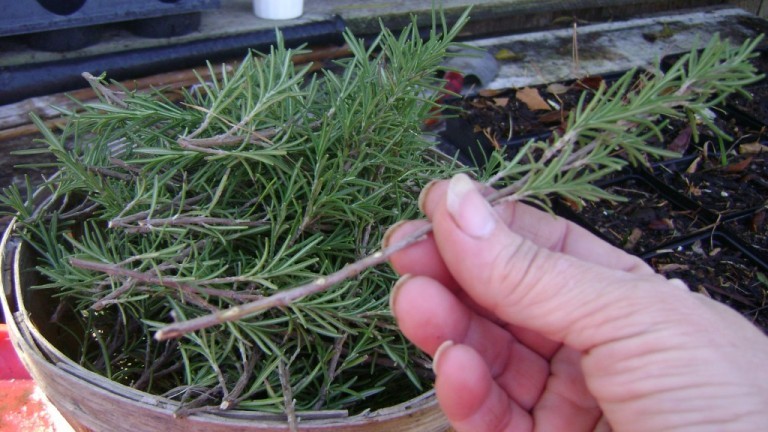
A reference to this small unobtrusive plant can already be found in Hamlet’s line “Rosemary is for remembrance: Pray, love, and remember.” It is a truly remarkable herb whose leaves have been used in folk medicine for centuries.
Carnosolic acid
Among the other substances found in rosemary, it can prevent cell damage in the brain. In addition, it prevents degradation of other cells in the body. This mainly concerns DNA as a result of the action of free radicals that damage it. This substance has a protective effect especially on acetylcholine, which is known for stimulating brain cells to remember things and to communicate with each other.
Only a very small amount of carnosolic acid is enough for the described effect to manifest
So little, in fact, that active levels are reached simply by sniffing rosemary. It is estimated that by regularly sniffing it every day you can increase your memory capacity by 60 to 75% compared to other people.
Cineole 1,8 is another substance in rosemary that affects memory
Recently, scientists in a study published in the journal Therapeutic Advances in Psychopharmacology found that cineole 1,8 has beneficial effects on the brain and on improving memory abilities. The researchers exposed 20 study participants to different levels of rosemary scent and then took blood samples to analyze how much cineole 1,8 they had absorbed.
Better memory
They then had them perform several types of tests on speed, accuracy and mood to determine whether rosemary had any effect on them. The result was that the higher its level in the blood, the more noticeable its positive effects. Specifically, they measured higher speed and greater accuracy. The effect on mood was somewhat smaller.
Students in ancient Greece got into the habit of placing sprigs of rosemary around their heads while studying or preparing for exams. As you can see, the history of rosemary for supporting the brain goes back over 2500 years.
Even in modern medicine this plant is very popular.
It is often used for the following purposes:
- to relieve headaches
- for migraines
- for digestive problems
- for itchy skin
- to relax muscles
Rosemary truly has a wide range of uses
You can use either its fresh sprigs or, if you can’t find them, a substitute can be rosemary essential oil. It can be found in many health food stores or in shops dedicated to aromatherapy, or purchased online.