Article content
On “today’s” roads you have to watch out for almost everything. Despite the codification of the rules, many people do not follow them or somehow forget them. So today it’s less about whether you know these laws and more about whether you are sufficiently foresighted.
There are many hotshots on the roads for whom the law means nothing, or people who were probably given their driver’s license by a veterinarian. Do you know and conscientiously follow these 5 regulations?
1 Signaling with turn indicators even when you continue on the main road
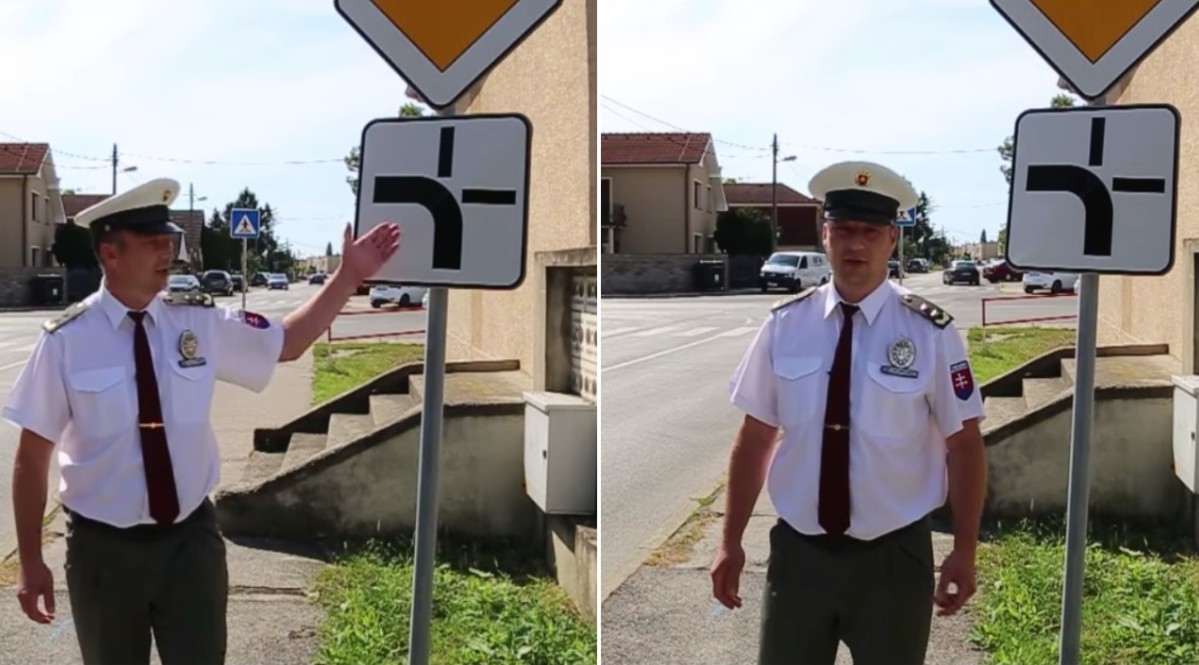
Yes, it sounds strange to give a signal of a change of direction when you continue on the main road. But what if the main road changes its direction? In driving school we were all clearly taught that when you deviate from your direction of travel you need to inform the other road users.
Nevertheless some people think that if they continue on the main road, a direction signal is not necessary, but they are mistaken.
“By violating this provision you not only risk the sanction that may be imposed on you for this act but also risk a collision with other road users,” explains the Czech Police in its video on Facebook.
2 Does the bus have right of way?
In another video published by the Czech Police the drivers’ debate about whether they are obliged to allow regular public passenger transport vehicles in a municipality to depart from a stop or bus bay is settled once and for all.
So what do you think — what does the law actually say? The law states the obligation to allow such vehicles in a municipality to exit a stop or a bus lane.
Drivers are thus obliged to reduce speed or, if necessary, stop the vehicle. However they must not endanger drivers traveling in the same direction. So if you next see a bus with its “turn signal” on at a stop, remember to give it right of way!
3 How to drive in pedestrian, residential and school zones
In these zones “pedestrians are allowed to use the road over its entire width, and children’s games are permitted on the road”.
But what laws apply to drivers? In all three zones drivers may drive at a maximum speed of 20 km/h. In residential and pedestrian zones, parking of vehicles is forbidden only if a traffic sign does not indicate otherwise.
How fast have you been driving in these zones so far?
4 What to do when the traffic light turns orange?
This question may seem completely unnecessary but you have surely experienced more than once when other drivers did not respect this signal at all. If the yellow light is illuminated together with the red, it means drivers should prepare to drive.
However, if only the yellow light is lit on its own, “the driver must stop before the intersection, but if at the moment this signal lights up the driver is already so close that they cannot stop safely, they may continue driving”.
Hand on heart, how many of you have ever exploited this exception and, despite the great risk of collision, gone through on orange, or even red?
5 Mandatory “zipper merging” effective from March 2020
Did you know that as of March 1, 2020 the law regarding alternating or zipper merging of vehicles was amended? Until that time it applied that if you want to change into the second lane while signalling a change of direction you also had to give way to the driver traveling in the lane you want to enter. The same was true when two lanes merged and it was not clear which of them was the through lane.
In that case a driver in the left lane had to give way to a driver in the right lane only if there was no sign along the road mandating alternating/zipper merging.
Since April it has applied that zipper merging is used both when driving side-by-side before an obstacle and when lanes merge. “The condition of the so-called zippering is concurrent driving,” they explained in the video. For anyone who has trouble with the term “concurrent driving”, in layman’s terms it’s simply a traffic jam.