
Article content
The use of glyphosate is completely out of control. It seems this chemical is living a life of its own.
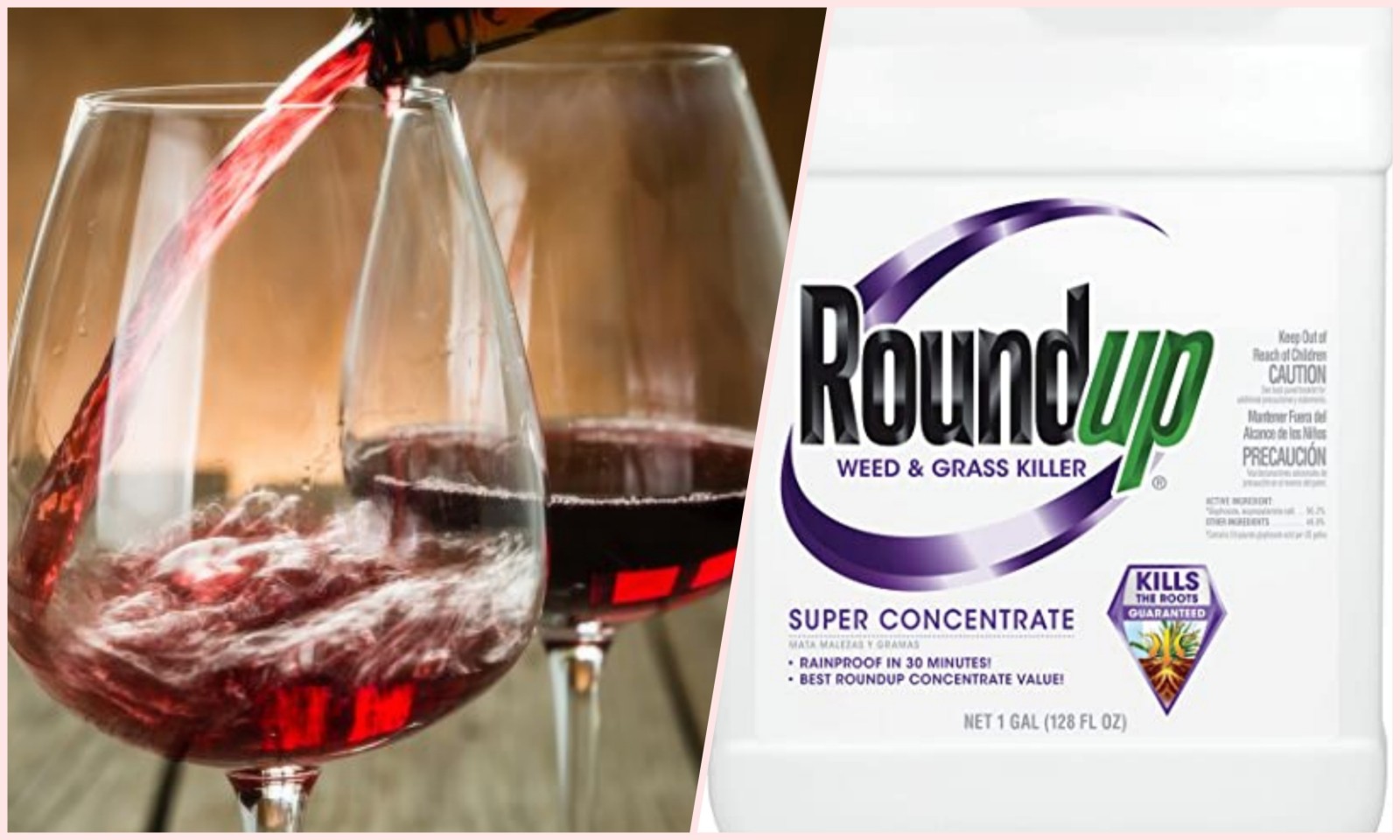
We are finding it more and more often in foods that have not been treated at all. Specifically, it concerns grapes from which organic („organic“) wine is made.
Glyphosate, the active ingredient in Monsanto’s Roundup herbicide, is the most widely used agricultural chemical in history. It is present in various herbicides (around 700 in total), but most commonly used as Roundup.
Glyphosate was first used in 1974. Since then, 1.8 million tons have been used in American fields and over the last 10 years 1.2 million tons have been sprayed.
Analyses confirmed that in 2014 approximately 360 g of chemical spray was applied per acre (about 4,000 m2) of agricultural land in the United States and nearly 230 g per the same area worldwide.
If you buy organic foods or beverages, you should theoretically be protected from glyphosate. Growing organic crops does not allow the use of this chemical.
Recent research, however, found that glyphosate was detected not only in wines, but even in organic wines.
Which wines failed the tests?
An anonymous advocate from the group Moms Across America had 10 wine samples tested for the presence of glyphosate. Glyphosate was confirmed in all examined samples – even in organic wines (although the glyphosate content was significantly lower).
The largest amount of glyphosate – 18.74 ppb – was measured in Caber Sauvignon from 2013 from a conventional vineyard. This amount is 28 times higher than in other tested wines.
The lowest level of glyphosate – 0.659 ppb – was contained in a Syrah from 2013. The Syrah comes from a biodynamically managed vineyard that focuses on producing organic wines.
Another organic wine from 2012, which is a blend of red and white grapes, had a glyphosate level of 0.913 ppb.
How does glyphosate get into wine?
Vines are not sprayed directly because they would be damaged and destroyed. However, the soil is sprayed with glyphosate on both sides of the vine row. Moms Across America reported, for example:
“The result is a strip of soil spray 60 to 120 cm with the vine in the middle.”
Dr. Don Huber stated in December 2011 during an agricultural conference at Acres USA that the vine trunk cannot be avoided during spraying.
Roundup gets into the plant roots and through the bark. From there it goes into the leaves and grapes.”
Glyphosate likely gets into organic and biodynamic vineyards from surrounding conventional vineyards. That is why glyphosate was also confirmed in organic wines.
It is likely that originally conventional vineyards were converted to vineyards producing organic wine. However, glyphosate can remain in the soil for up to 20 years! That would also explain why some organic wines contain it.
Glyphosate was also confirmed in 14 German beers
A study by the Munich Ecological Institute dealing with glyphosate residues found that glyphosate is present in 14 of the most popular German beers.
All tested beers contained more than 0.1 micrograms of glyphosate, a large amount of glyphosate that was also found in drinking water.
The concentration of glyphosate varied depending on the brewery – Hasseroeder contained up to 29.74 micrograms of glyphosate per liter, Augustiner had 0.46 micrograms per liter.
American beers have not yet been tested in this way, but will very likely also confirm the presence of glyphosate.
Laboratory tests spurred legal actions across America and Sustainable Pulse expect that glyphosate is now present everywhere, including in blood, urine, breast milk, drinking water and elsewhere.
Confirmation of glyphosate in beers could affect and weaken the German brewing industry. Germany is the largest beer producer in Europe and has long been proud that its beer is of the highest quality.
One of the oldest laws in the world is the German food “purity” law “Das Reinheitsgebot”. This law limits the ingredients used in brewing beer to water, barley and hops (yeast was later added to the list).
In the current German tradition and reputation for producing “pure” beer there is a threat from Monsanto’s chemicals. As The Local reports:
„Unlike foreign users who know substances intended for flavoring, enzymes or preservatives,“ Hans-Georg Eils, president of the Federation of German Breweries, at the World Green Week fair for agriculture, food and horticulture in Berlin.
Beer specialist from the National Food Institute of the Technical University in Berlin Frank-Juergen
In times of healthy eating and demand for beer that will be produced according to the beer purity law Reinheitsgebot, the last. “
Glyphosate can cause cancer and other health problems
Many people do not know that glyphosate was originally patented as an antibiotic. Its purpose is to destroy bacteria, and therefore it destroys soil and human health.
Recent research even found that Roundup and some other pesticides promote antibiotic resistance.
Scientist Anthony Samsel, Ph.D., demonstrated that glyphosate is a biocide and an antibiotic. A study examining the effects of glyphosate in poultry found that the chemical destroys beneficial gut bacteria and promotes the spread of pathogenic bacteria.
Samsel also found that oral administration of low doses of glyphosate disrupted the gut microbiome. This results in an increase of pathogens, chronic intestinal inflammation and a damaged intestinal barrier.
According to Samsel’s research, Monsanto already knew in 1981 that glyphosate caused an increase in adenomas and carcinomas in rats.
The results of Monsanto’s research were also confirmed by the International Agency for Research on Cancer (IARC).
IARC classified glyphosate in group 2A and as a „probable carcinogen“ to humans. Monsanto, however, is trying to cover up this claim.
Further research has shown that glyphosate can also:
- stimulate the growth of breast cancer cells
- disrupt the endocrine system and affect reproductive ability and fetal development
- cause oxidative damage and neurotoxicity in the brain
- disrupt the balance of sex hormones
- cause birth defects


