Article content
Roses are among the most popular shrubs here in the Czech Republic, the ones we most often see in gardens. There are different types of roses, for example tea hybrids, climbers, floribundas and many others. These shrubs are prepared for winter, but it can happen that after uncovering in spring the shoots and stems of the roses are covered with black spots or even entire lower parts of individual canes up to the root may have blackened. What to do in such a situation?
The rose froze
If you winter the rose bush poorly, it can freeze, and frost can cause the blackening of the twigs. However, if the entire lower part of the rose is not black but only some shoots are frozen or only black spots have appeared, the plant can be saved.
Rot and mold
Spots can also be related to rot or mold. This can be because you provided the rose with too tight winter protection and rain or melted snow had no chance to wash away or seep deeper into the ground. That is one possibility. Another possibility is infectious cane cancer, which you can recognize by black spots with a red-brown edge. Such spots penetrate deep into the structure of the branch. Unfortunately, there is no cure for such a rose disease. The best approach is to prevent this problem. That means ventilating the rose during winter. However, it must not be colder than minus five degrees and there must not be a snow cover.
What to do with black shoots
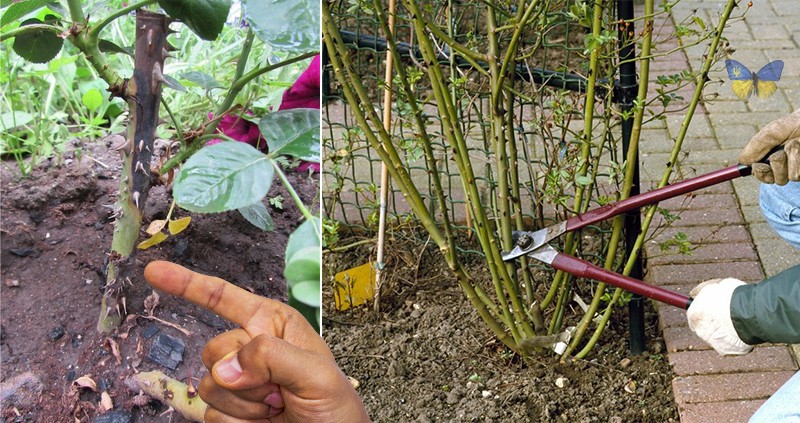
If you find that the rose is infected with canker, remove it immediately and burn it or the infection will spread further. If you find only one spot of this infection, you can try to act. For treatment, obtain a 1% solution of copper sulfate, which you mix into water. It is best to treat roses preventively with copper sulfate, every spring. Mix a 3% solution of the sulfate and spray it over the buds. Also remember to prune roses after uncovering them in spring, but only three to four days after uncovering. It is also necessary to fertilize roses with a complete fertilizer, such as DCM and others.