Article content
If you want to have a rich apple harvest, you should now in April give your apple trees this nourishment! Fertilizing apple trees is important and you should do it twice a year, in spring and in autumn. Usually apple trees bear fruit every other year, because after a rich harvest the tree is exhausted and needs to take up new nutrients. With the right fertilization you can change this and it will be ready to start fruiting again even sooner.
It is important to know that nitrogen stimulates the growth of leaves and shoots , but if a tree has too much nitrogen, this will promote the growth of green parts and it may happen that the trees will not bloom and will instead be more susceptible to disease. Phosphorus, on the other hand, supports tree flowering, fruiting and strengthens the roots.
April fertilization
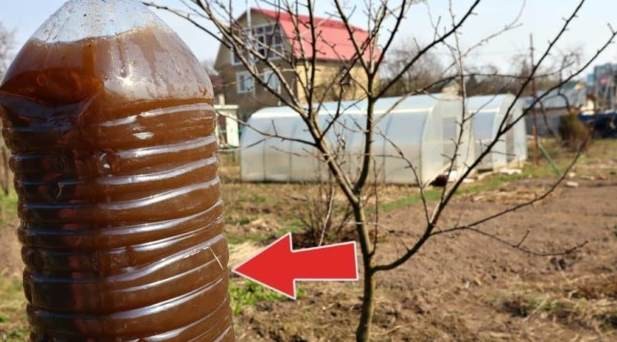
In April each fruiting tree should be fertilized with 30 g of urea, 40 g of saltpeter and a bucket of humus. You can also choose liquid fertilization: for 10 l of water add 100 g of superphosphate and 60 g of potassium sulfate. Add half a liter of fermented poultry manure to that. In the case of young trees you should consider fertilizing with fresh manure, because you could burn the roots. In the case of fresh manure it is appropriate in spring to use more quickly decomposing manures such as horse manure or fermented and thoroughly diluted poultry manure, sheep manure, pig manure, or adding compost or peat is also a suitable solution.
Pruning apple trees
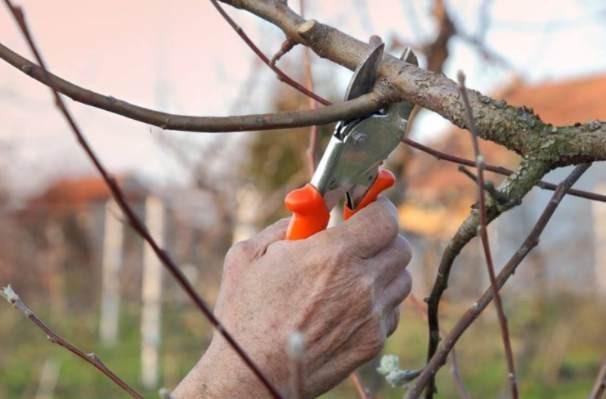
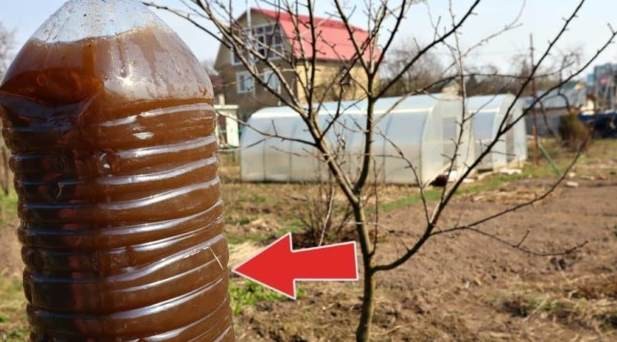
For apple trees the most important timing is at the end of winter, before the trees start to bud. A supplementary pruning time for pome fruits is the summer pruning, which should be carried out during the growing season.
This removes all unwanted shoots that would take water and nutrients from the more promising ones. By early summer pruning, for example, we shorten by pinching young shoots of varieties that bear on long wood, thereby forcing them to branch. As a result the crown will be more compact and the yield of these varieties should be greater.