
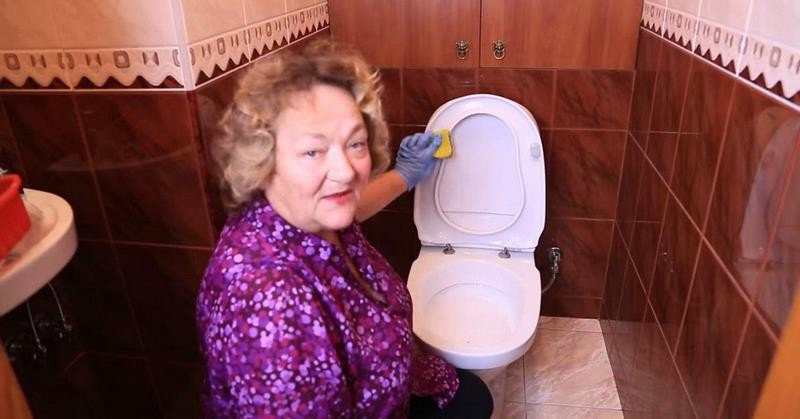
Article content
If you want to know what kind of housewife a woman is, look at her bathroom and toilet. Although that may seem a bit exaggerated, there’s something to it. A rusty toilet bowl full of limescale deposits, and in the bathroom limescale on the tiles, faucets, bathtub, sink — that’s not exactly a good calling card for a good housewife. At a time when we have a product for cleaning anything, it seems like an easy job. But let’s be honest. Every such product is a chemical compound of several substances, none of which is safe for our health or for nature. And when we use them, we have to rinse them off with water, and that goes through the sewer into the river and beyond. And yet at home we have things that do the same job for us and do not endanger our health or nature. And from them we’ll make a bathroom and toilet cleaner in a few minutes.
3 ingredients to make a cleaner
First of all it is baking soda, then citric acid, and warm water. Also a cloth or a brush. Take a spray bottle and pour warm water into it. Add the citric acid, close it and shake well. If the spray bottle is transparent, check whether the acid has dissolved. Then simply spray the mixture onto the toilet bowl, tiles, faucet, or sink, and let it sit for 10 – 15 minutes. The acid dissolves all the deposits. If they don’t fully dissolve on their own, you can use a brush to further disturb the structure and surface so the acid can penetrate deeper. Then rinse with a stream of water. Repeat the procedure until everything gleams with cleanliness.
What to do with baking soda?
Pour the soda directly into the toilet bowl, and when it starts to react with the acid solution, try to clean the whole bowl with a brush, or the sink or bathtub if needed. Soda has strong bleaching effects, so after rinsing everything will be brilliantly white. Be careful with tiles and flooring. If they don’t have a glaze, the acid could damage them. Therefore it’s advisable to test the effect on a small piece first.
How often should you clean?
It largely depends on how much you use everything and how hard your water is. All of that affects the build-up of limescale and salts on your toilet and other sanitary ware. If you do a regular weekly cleaning, you can combine it with cleaning the sanitary fixtures. If you leave salts and scale for a long time, you’ll need more time to remove them. You’ll notice that over time, and then you won’t let the build-up reach a stage where you have to get really hands-on. Occasionally it also helps to pour ordinary vinegar directly into the toilet bowl. It has the same effect as citric acid, only it’s even cheaper. Moreover, you can leave it to work overnight.


