
Article content
If you like boiled eggs, then it has surely happened to you that when peeling the shell came off together with pieces of the white, or that it could be peeled only in very small pieces. If you have to peel several such eggs, a seemingly trivial task becomes a lengthy and annoying chore. Maybe you’re just peeling the eggs wrong. Take a look at a brilliant trick that will have the eggs peeled in no time.
A simple chefs’ trick
First of all, avoid overly fresh eggs, because they are harder to peel. After boiling, ideally leave them in the fridge for a few days — the shell will then come off more easily. During the actual boiling of the eggs, add a little baking soda to the water. It will balance the pH and thus make the subsequent preparation easier.
But chefs also swear by one more trick that saves them a lot of time
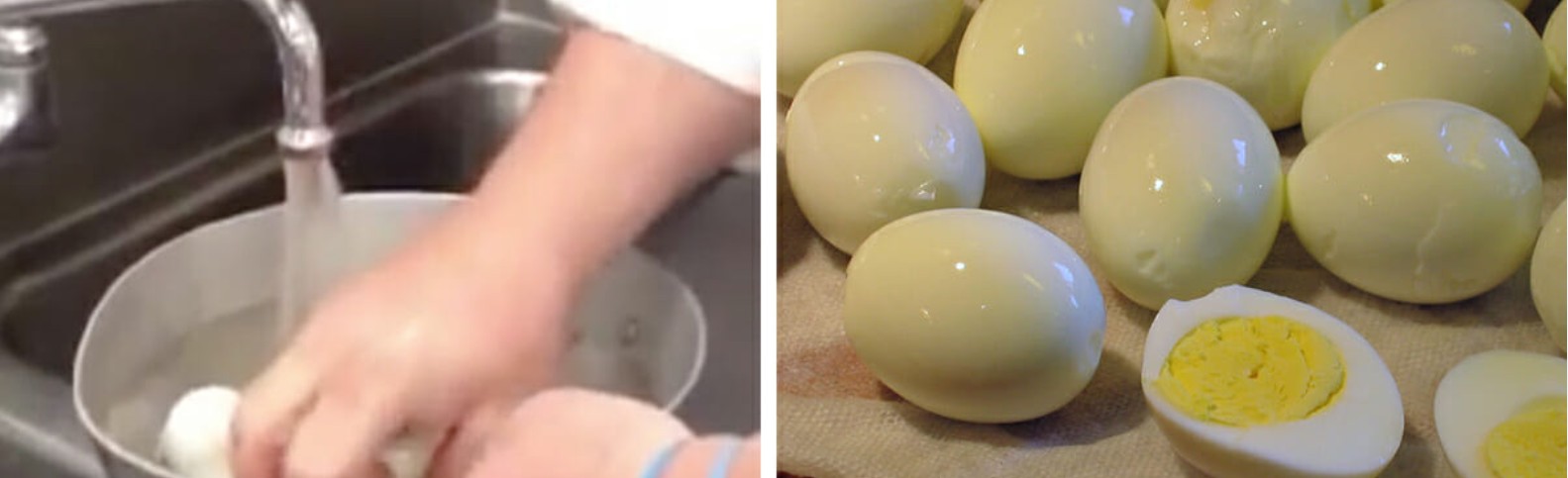
Cook the eggs as usual, just with a bit of baking soda. Immediately after boiling, drain the water from the eggs and place the eggs into a bowl of cold water. Under running water, start rattling and shaking the eggs. When you look at the eggs after a while, you’ll find that the shell has peeled off almost by itself. Just collect the shells and the eggs are ready to eat.
How long do eggs last?
Eggs are more durable than most people think. They are usually perfectly fine even after the best-before date found on the carton. Moreover, if you store eggs in the fridge pointier end down, their shelf life will even double. They can thus stay fresh for up to two months. But don’t store eggs in cardboard trays; rather move them into special plastic compartments in the fridge.
Contrary to popular belief, eggs should not be stored in the fridge door. Put them nearer the back instead.
Eggs do not tolerate temperature changes well
If you bought them in a store that kept them refrigerated, ideally store them in the fridge as well. If you have home eggs, or if you bought them from a farmer and they haven’t been chilled yet, refrigeration is not necessary. It’s enough to keep them at a temperature of 5 to 15 °C.


