
Article content
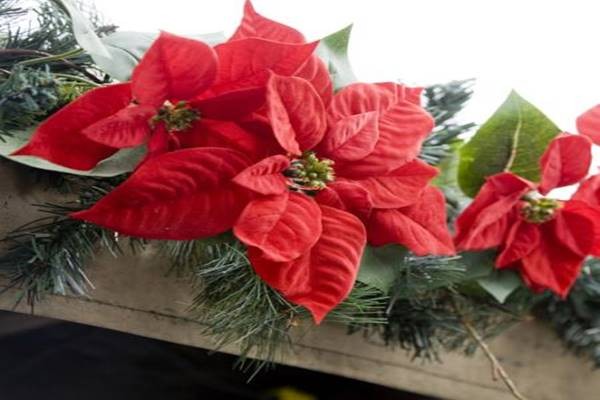
Poinsettia – who would not know this plant with brightly red leaves. We have found it on store shelves for a good few years, and many of us have had it at home for just as long. Not everyone, however, knows that this beautiful plant is poisonous. Especially its white milky sap that flows out when it is injured. It belongs to the spurge family. Keep that in mind when you bring it home and you have small children. Or perhaps pets.
How to grow it properly so it lasts longer than a week
Although it is a Christmas plant, we can successfully grow it at home all year round so that it will bloom again for the next Christmas. This plant is native to Central America, and the local Indians used its leaves as a raw material for producing a red dye. It was brought to Europe roughly 100 years ago, not for dye production but for its beauty. In warm regions of Europe, such as the Canary Islands, it can reach heights of over 2 m. The conditions there are therefore more than suitable.
Before we bring it home
When you decide to purchase a poinsettia, think about whether you can provide suitable conditions for it at home. Only then will it last. Choose carefully right in the store. It matters that you don’t buy a sick specimen. You can tell by yellowed leaves, soil that is too dry – especially in shopping centers, where the air is often not humid. That one will die at home, possibly even before Christmas. You certainly don’t want that. Brown leaves or spots on them can also indicate disease or pest infestation. If it is wrapped in cellophane, have it unwrapped in the store so you can see whether it is healthy. Also choose a specimen that is not yet fully in bloom. You can tell by the pollen that is often settled on the leaves. If you buy it when it’s cold outside, leave it in the cold upon arrival so it has time to acclimatize. If it is wrapped from the store, unwrap it. The roots are sensitive to oxygen supply, and cellophane prevents them from breathing, which can damage the plant. At home place it in a sunny but cool spot; it will last longer. It’s good to water it.
How to care for it at home so it blooms as long as possible.
The poinsettia does not like drafts or temperature fluctuations. Therefore do not place it close to doors or windows. As for light, it likes light but not direct sunlight. The ideal temperature is between 16 – 20°C. Dry air and high temperatures cause rapid death; do not place it above radiators or in places where the temperature consistently exceeds 20°C. Remember to water so the soil does not dry out. Water every two days if the surface of the soil has dried. Be careful not to overwater, as the roots can begin to rot. After watering, pour off excess water from the saucer. Or once a week you can immerse the pot in standing water, leave it there until it soaks up water, and then remove it. This way the poinsettia will remain watered for about a week. Lots of light means more flowers and a longer time with beautifully colored leaves. When the poinsettia finishes blooming, it is not necessary to discard it. Next we will explain how to prolong its life and how you can propagate it at home to give as a gift to someone close who will be pleased. Don’t forget to fertilize the plant from time to time with liquid fertilizer.
Additional necessary care for the plant’s survival
When the Christmas period ends, the poinsettia will still bloom for some time. To keep it until the next season and avoid buying a new one, you need to follow a few rules. The poinsettia will bloom until February, and by May its leaves fall off. During this period prune the side shoots to a length of about 15 – 20 cm, and shorten the main shoot to about 20 cm, above a side shoot. Store it in a cool, dark place and water occasionally. The plant can be stored in a light, slightly acidic soil, pH 6.2. In autumn plant it into a pot again in slightly acidic soil, and begin to water and fertilize. Fertilizing once every 3 weeks is sufficient. When you move it into a room, increase watering and the frequency of fertilizing to once every 2 weeks. You will have a beautiful poinsettia for Christmas without buying a new one.
Propagation in home conditions
You can also propagate poinsettia at home and have a gift for your nearest and dearest or friends. We now bring you advice on how to do it. In spring or summer cut off the grown shoots and put them in water. At a temperature of 20 – 25°C they will root in approximately 4 weeks. Then simply plant these shoots into a pot in a light, slightly acidic soil. Always plant 2 – 3 shoots so the plant looks fuller when it blooms. If you plant freshly cut shoots directly into the ground, they may not take and it will take much longer. When cutting the shoots, a white sticky sap oozes from the cut. It is highly poisonous. If exposed, immediately wash the affected area with water. To help the cut seal, put it under running lukewarm water. Remember that the poinsettia blooms when it has no light. Therefore you can cover the young plant with newspapers for up to 14 hours. This prepares it for bud set. During this time do not uncover it; it will not bloom. Nowadays there are, besides the bright red cultivar, varieties that have pink or white leaves. So if you already have one bought, try planting different colors in the pot. Your poinsettia will then be beautifully multicolored.


