Article content
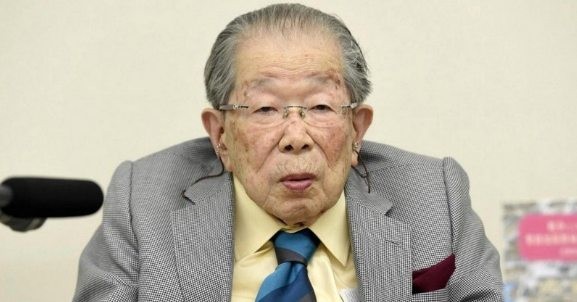
At the beginning of the summer of 2017 Japan lost one of its national treasures. This treasure was the doctor Shigeaki Hinohara, who reached the incredible age of 105.
Dr. Hinohara has a lion’s share in the enviable state of modern healthcare in Japan, in which he served both as a treating physician and as a chief physician.
Briefly about Dr. Hinohara
He served as director of St. Luke’s International Hospital in Tokyo and, in addition, held leadership positions in five different foundations.
One of his greatest achievements is the introduction of annual thorough health check-ups in Japan, the result of which, according to experts, is the significantly longer average life expectancy of the Japanese population.
All of this is undoubtedly a commendable result of Dr. Hinohara’s lifelong work.
However, what completely overturns our notions about old age in Dr. Hinohara’s case is that he himself was a clear example of longevity, and especially the fact that he continued to examine his patients just a few months before his death.
You may already be asking yourself:
- How did he manage to live to such an advanced age?
- And how did he maintain good health during all those active years?
- Did he follow some sensible strict diet? No.
- Did he pay attention to balancing work and other aspects of life? Also no.
- Or did he regularly indulge in plenty of sleep? Not that either.
- Dr. Hinohara, who worked 18 hours a day, 7 days a week, was interviewed for the Japanese newspaper The Japan Times by journalist Judith Kawaguchi.
In this interview he revealed some of his thoughts and opinions that could be the secret to longevity and a contented life.
Findings of Dr. Hinohara
Here are some of his most important findings:
1. We will have enough energy only when we feel good. Neither a good diet nor enough sleep will give you that energy.
2. The best thing you can do is not burden your mind and body with too many unnecessary rules, such as when to eat and when to go to sleep.
Just remember what it was like when you were children — you often completely forgot about food or feeling sleepy because of play and fun. I believe that with a little willpower we could carry some of this principle into adulthood.
3. If you want to live to a ripe old age, you should avoid being overweight. For breakfast I usually have coffee, a glass of milk and some orange juice, to which I also add a small tablespoon of olive oil.
For lunch I have milk again and a couple of biscuits or pastries, or if I’m too busy, I don’t eat lunch at all. And for dinner I have vegetables, a piece of fish and rice.
Twice a week for dinner, instead of fish, I have 100 grams of lean meat.
4. There is no reason why you should stop being active and retire in your senior years. If you still feel that you must retire, it should be much later than at 65.
The current retirement age, which in Japan is 65, was set about half a century ago, at a time when the average life expectancy was 68. But today people live longer, and therefore they can work longer.
Besides these tips, Dr. Hinohara also revealed some other ones that concern especially the treatment of illnesses and that will certainly surprise you.
Dr. Hinohara advises us that we should never regard our doctor’s “verdict” as the sole, “sacred” truth.
And the healthcare system, besides standard medical procedures, should certainly make room for so-called animal therapy, that is treatment with animals, and finally should also use all forms of art in treatment.
More recommendations from Dr. Hinohara
“When a doctor suggests that you undergo a test or operation, ask him whether he would recommend this particular procedure to his own wife or children.
Unlike common assumptions, I think it’s important to realize that it is not within the power of one doctor to be able to cure everyone. So why should you take the risk of an operation and cause yourself unnecessary pain if there are other methods available?”
“Treatment with music and also treatment with animals are more effective than most doctors can imagine or are willing to admit.”
“Pain is a mystery, but having fun and feeling joy is the best way to forget it. Hospitals should take care of the basic need of all patients, which is that we all need a bit of entertainment and cheering up.
In our St. Luke’s hospital we have all of this — music therapy, animal-assisted therapy and also art classes, because art overall has a strong healing potential.”
“Science alone is not enough to truly heal a patient. Science, in a sense, throws us all into one bag, yet every disease is always individual, because every patient is an individual and each of his illnesses has its origin in his heart.
If we want to know the exact cause of each disease and thus help the patient heal, art will help us a lot in that, and it should be used to the same extent as standard medical procedures.”
Well, we must simply acknowledge that Dr. Hinohara has given us quite a few things to think about.